Vacheron Constantin
8models
10collections
83reviews
Vacheron Constantin
Big 5Oldest watch manufacturer in continuous operation; refined complications & finishing
Geneva, Switzerland · est. 1755
part of Richemont
$20,000–$300,000+
My tier · 3
Vacheron Constantin traces its origin to 1755, when the 24 year old master watchmaker Jean-Marc Vacheron engaged his first apprentice in Geneva. That contract survives as the Maison's birth certificate. It makes the brand the oldest watch manufacturer in continuous operation.
More about Vacheron Constantin
History
In 1819 the founder's grandson Jacques-Barthélémy Vacheron partnered with the businessman François Constantin, giving the house its lasting name. Constantin's correspondence produced the famous motto, "Do better if possible, and that is always possible." This commercial drive pushed the brand into export markets across Europe and the Americas.
In 1839 the company hired the engineer Georges-Auguste Leschot, who built a pantograph that allowed interchangeable movement parts. This gave Vacheron a decisive lead in precision and method at the dawn of industrial watchmaking. The brand registered its Maltese cross emblem in 1880, drawn from a component of the mainspring barrel.
Through the late 1800s and early 1900s the Maison built a reputation for precision, submitting watches to the Geneva Observatory for chronometer testing. It supplied richly complicated pieces to industrialists and royalty, including a celebrated grand complication for the American magnate James Ward Packard in 1918.
The early twentieth century added the Chronomètre Royal, launched in 1907 as a statement of observatory grade precision for everyday wear. During the First World War the Maison supplied sturdy wristwatches to the American Army Corps of Engineers, proof that it could build tools as well as treasures. In 1932 it delivered a world time pocket watch built on Louis Cottier's universal hours system, a display style the brand still champions today.
Even at the height of the quartz era the house made headlines with the Kallista of 1979, a bracelet watch carved from a solid gold ingot and set with around 118 emerald cut diamonds. It sold for roughly $5 million, at the time the most expensive wristwatch ever made. The commission showed a Maison willing to defend its crown even when mechanical watchmaking looked finished.
The brand survived the quartz crisis of the 1970s and 1980s without abandoning mechanical haute horlogerie. Vacheron joined the Vendôme Luxury Group, which later became Richemont, in 1996. It now sits alongside Patek Philippe and Audemars Piguet as one of the so called Holy Trinity of haute horlogerie.
Movement and technical mastery
Vacheron builds a deep range of in house calibers, from simple time only movements to monumental grand complications. The clearest statement of that ambition is Reference 57260, completed in 2015 for the brand's 260th anniversary.
That double dialed pocket watch carries 57 complications across roughly 2,826 components, and took three watchmakers eight years to assemble. It reclaimed the title of most complicated watch in the world from Patek Philippe's Calibre 89. Several of its functions were entirely new to horology at the time.
In 2024 the brand went further with Les Cabinotiers The Berkley Grand Complication, a pocket watch with 63 complications built over 11 years. It now holds the record as the most complicated watch ever made, and it introduced the first fully mechanical Chinese perpetual calendar, programmed through to the year 2200. Both record holders were commissioned by the same collector, William F. Berkley.
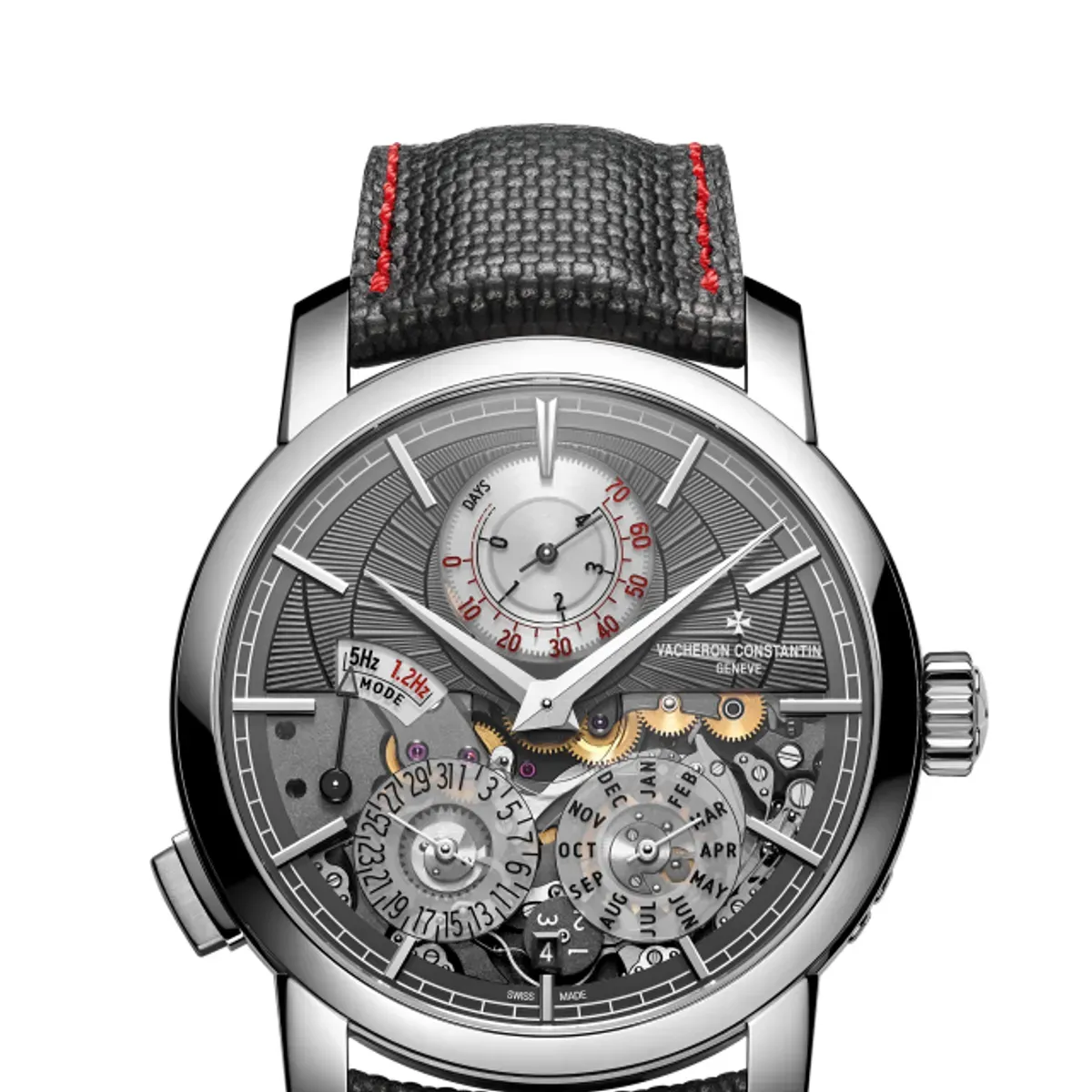
In series production the Twin Beat Perpetual Calendar of 2019 uses two balance wheels to reach a 65 day power reserve in standby mode. Everyday calibers such as the automatic 5100 in the Overseas deliver around 60 hours of reserve behind a soft iron cage for magnetic resistance.
Vacheron also holds deep roots in ultra thin watchmaking, including the manual caliber 1003 of 1955. Its caliber 1120 and 1121 family, slim automatics derived from a Jaeger-LeCoultre design (the 920) shared with Audemars Piguet and Patek Philippe, powered the 222 and the early Overseas. This shared engineering links the brand directly to the great integrated bracelet sports watches of the 1970s.
Notable calibers
| Caliber | Type | Claim to fame |
|---|---|---|
| 1003 | Manual, ultra thin | Launched in 1955 at just 1.64mm, among the thinnest manual movements ever made |
| 1120 / 1121 | Automatic, ultra thin | Derived from the Jaeger-LeCoultre 920, powered the 222 and the early Overseas |
| 5100 | Automatic | Modern Overseas workhorse with about 60 hours of reserve and a 22k gold rotor |
| 5200 | Automatic chronograph | In house column wheel chronograph developed for the Overseas line |
| 1731 | Manual minute repeater | Only 3.90mm thick, among the thinnest repeater calibers at its launch |
| 2160 | Automatic tourbillon | Peripheral rotor keeps the watch slim while leaving the movement in full view |
| 3610 QP | Twin Beat perpetual calendar | Dual frequency design reaches a 65 day standby power reserve |
| 2755 | Grand complication | Combines tourbillon, minute repeater, and perpetual calendar in one wristwatch |
Finishing and the Hallmark of Geneva
Much of Vacheron's value lies in finishing rather than raw complication count. The brand qualifies many movements for the Hallmark of Geneva, an independent quality standard tied to the canton of its birth.
Hand applied anglage, polished countersinks, and Côtes de Genève striping define the visual signature inside the caseback. The Métiers d'Art line extends this craft outward into enamel, engraving, gem setting, and guilloché dials.
Model lineup
| Collection | Identity | Highlights |
|---|---|---|
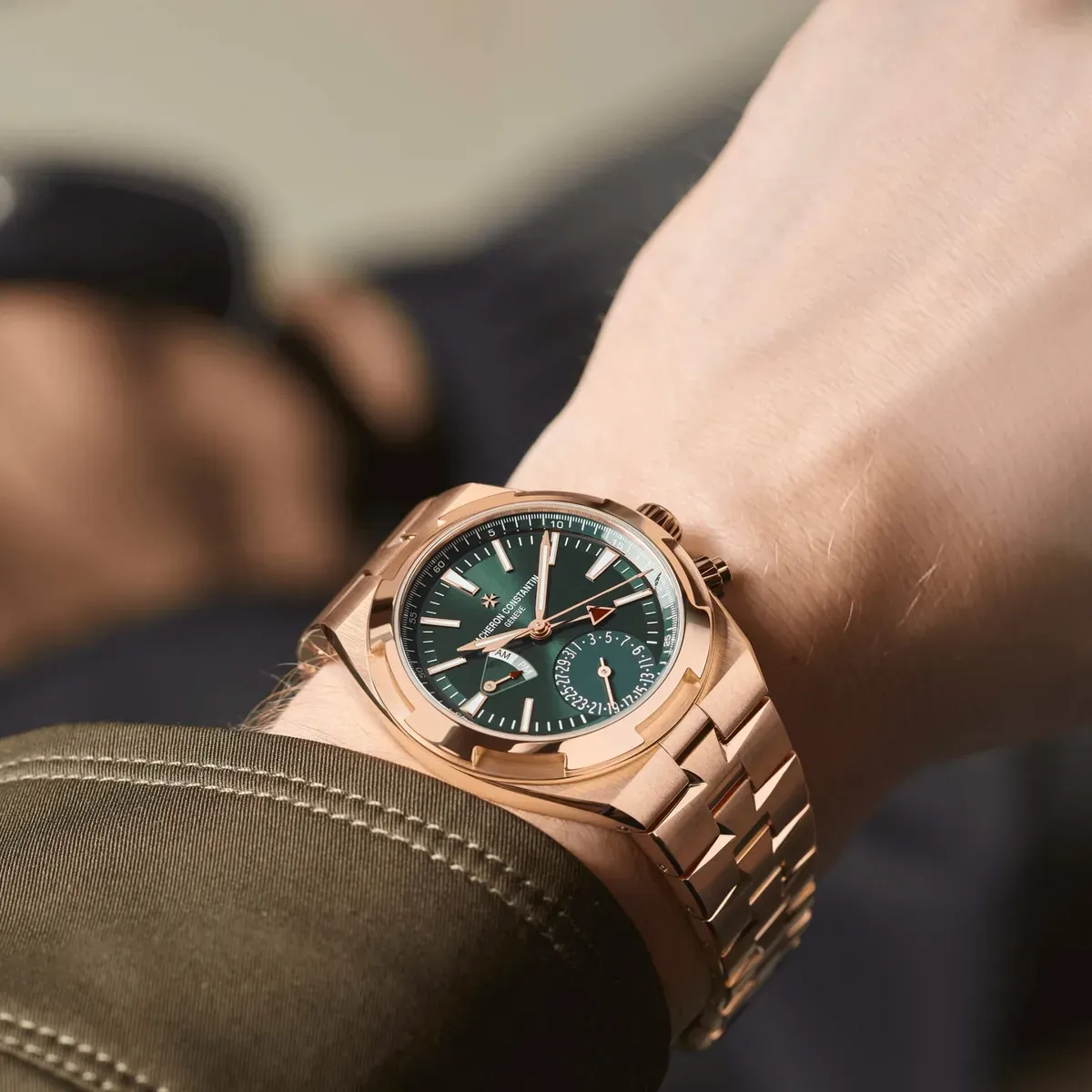
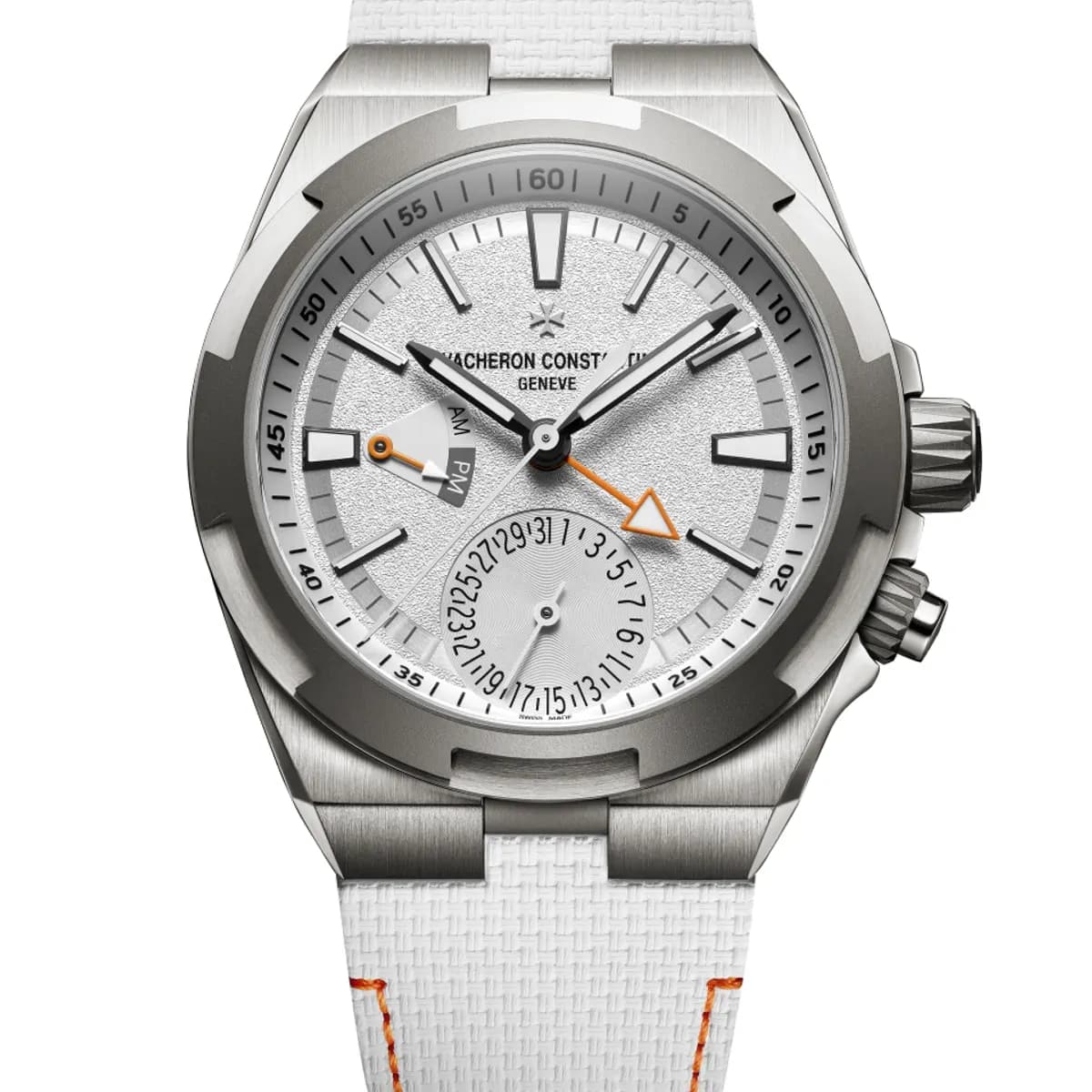
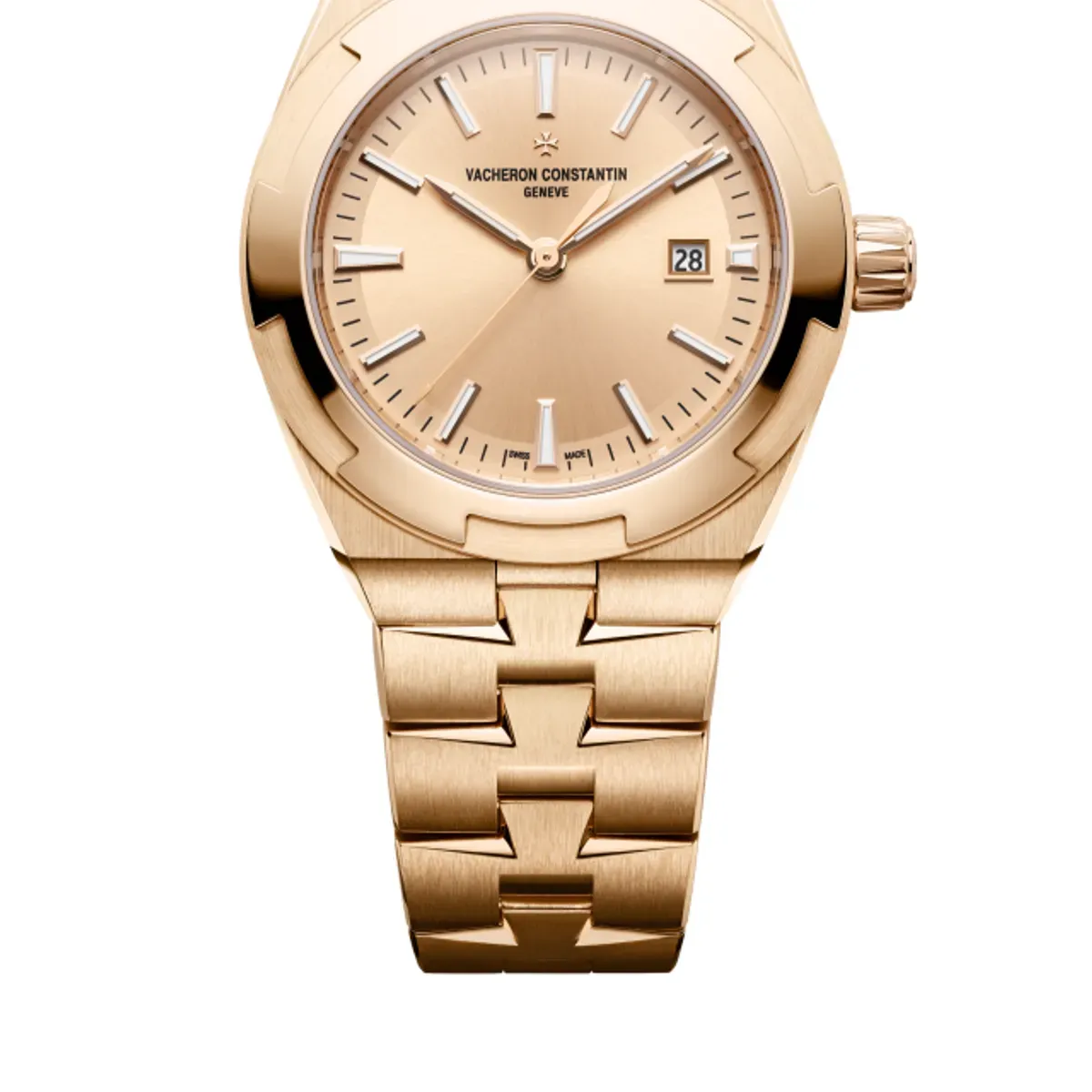
| Overseas | Luxury sports watch with integrated bracelet | Self winding 5100 caliber, quick change strap and bracelet system, 150m water resistance |
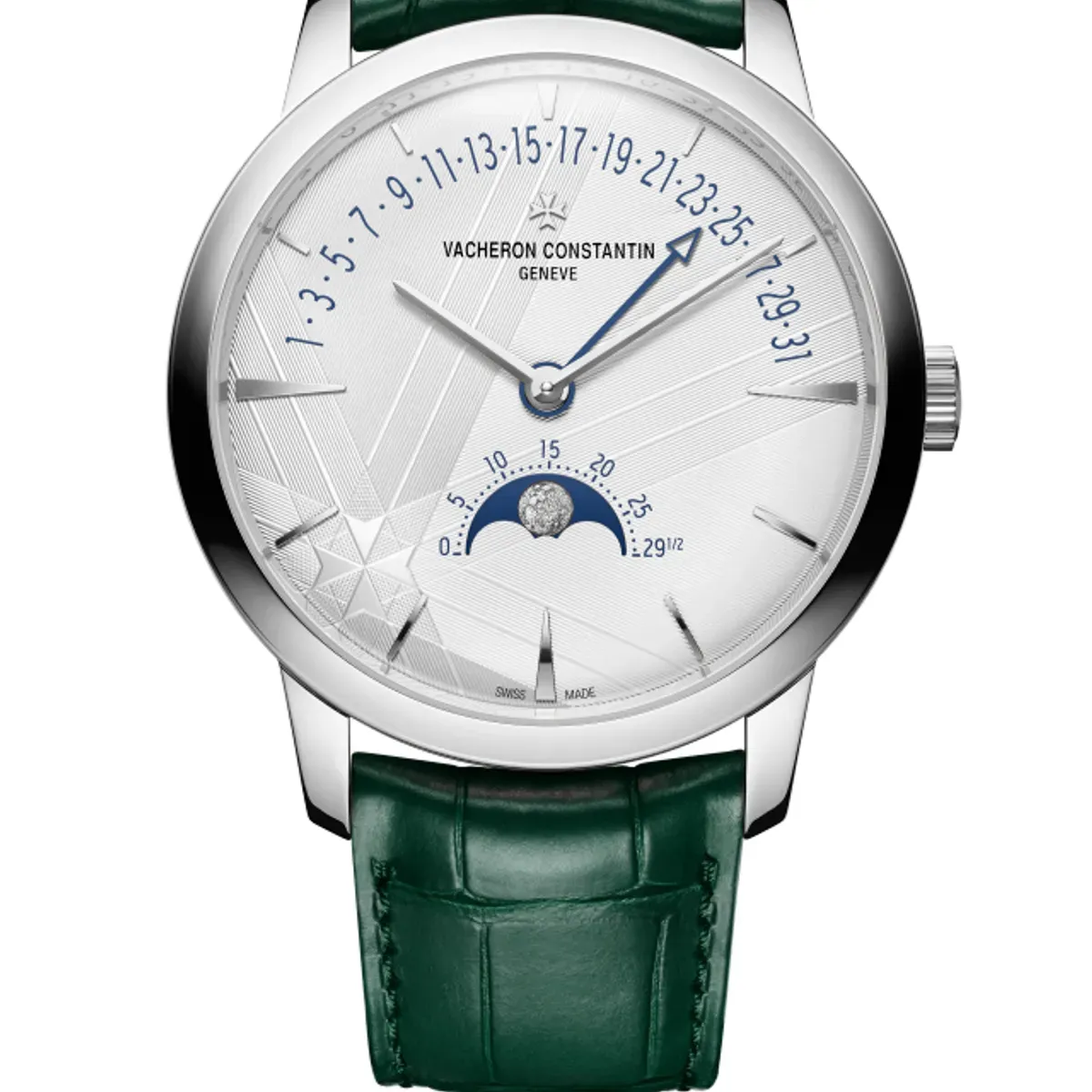
| Patrimony | Minimalist round dress watch | Ultra thin profiles, 1950s inspired dial purity |
| Traditionnelle | Classical haute horlogerie | Home to tourbillons, minute repeaters, and the Twin Beat perpetual calendar |
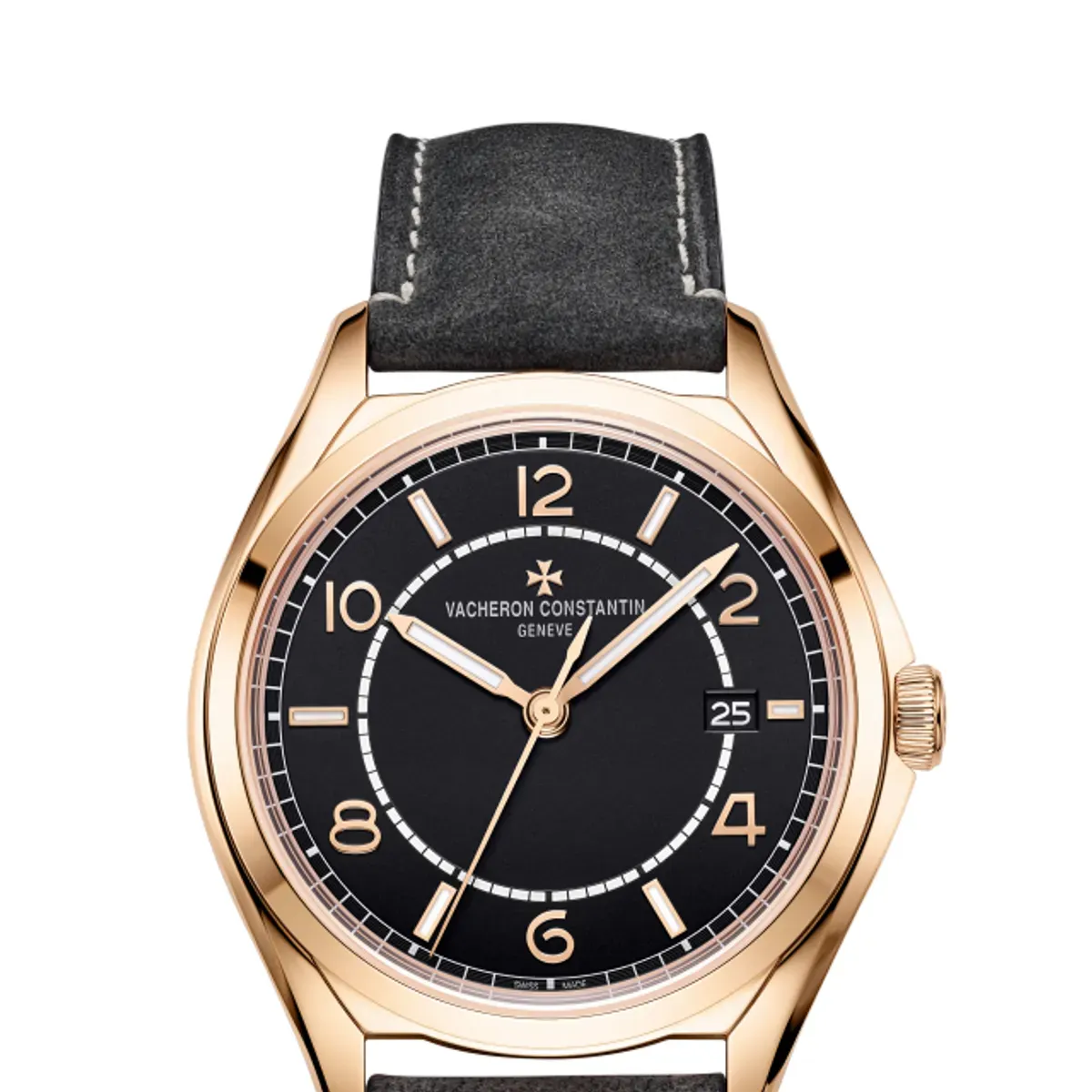
| Fiftysix | Accessible everyday entry line | Inspired by 1956 reference 6073, sector dials, Maltese cross rotor |
| Historiques | Faithful reissues of archive models | Includes the 222 in yellow gold and in steel |
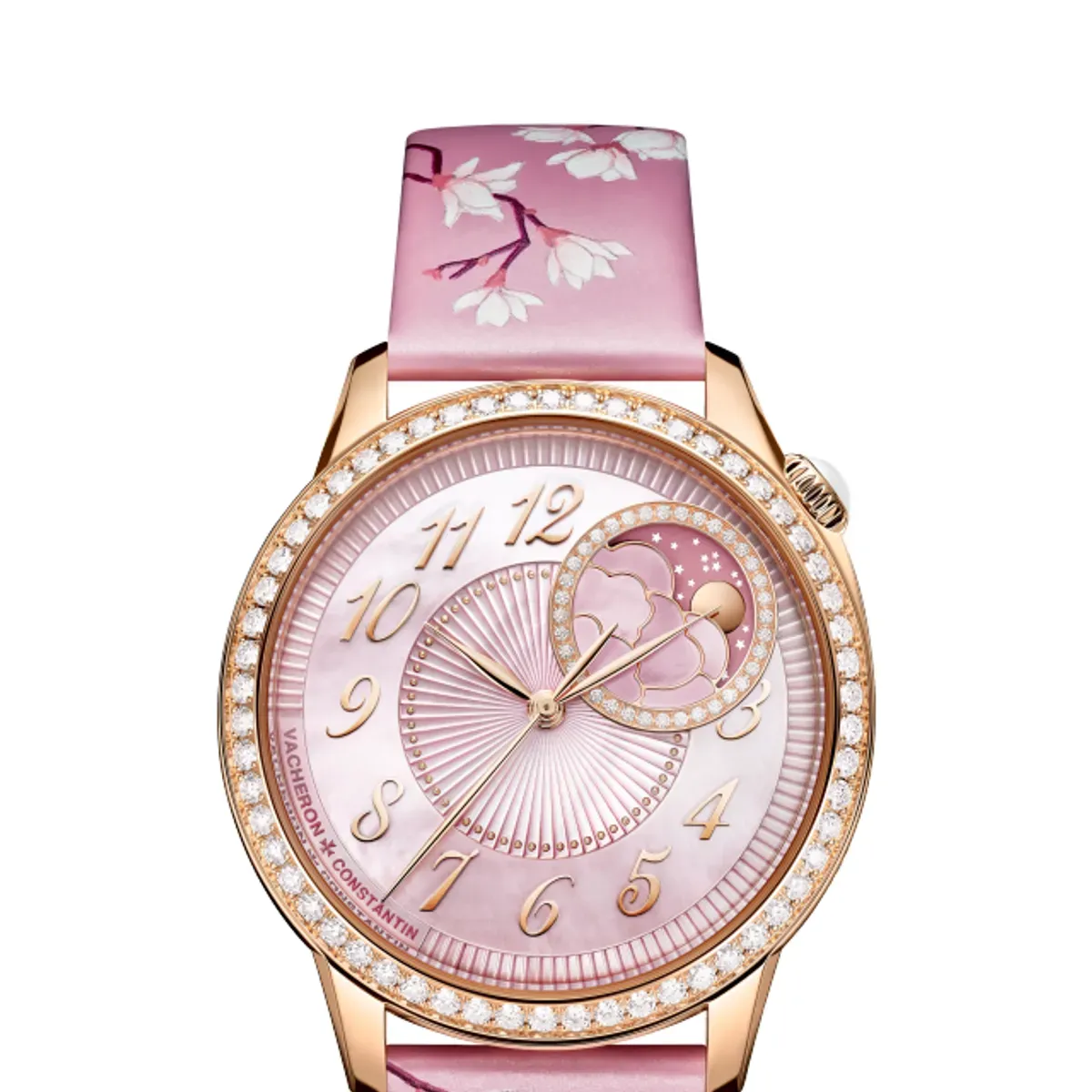
| Égérie | Feminine collection | Pleated dials, moon phases, and creative complications for women |
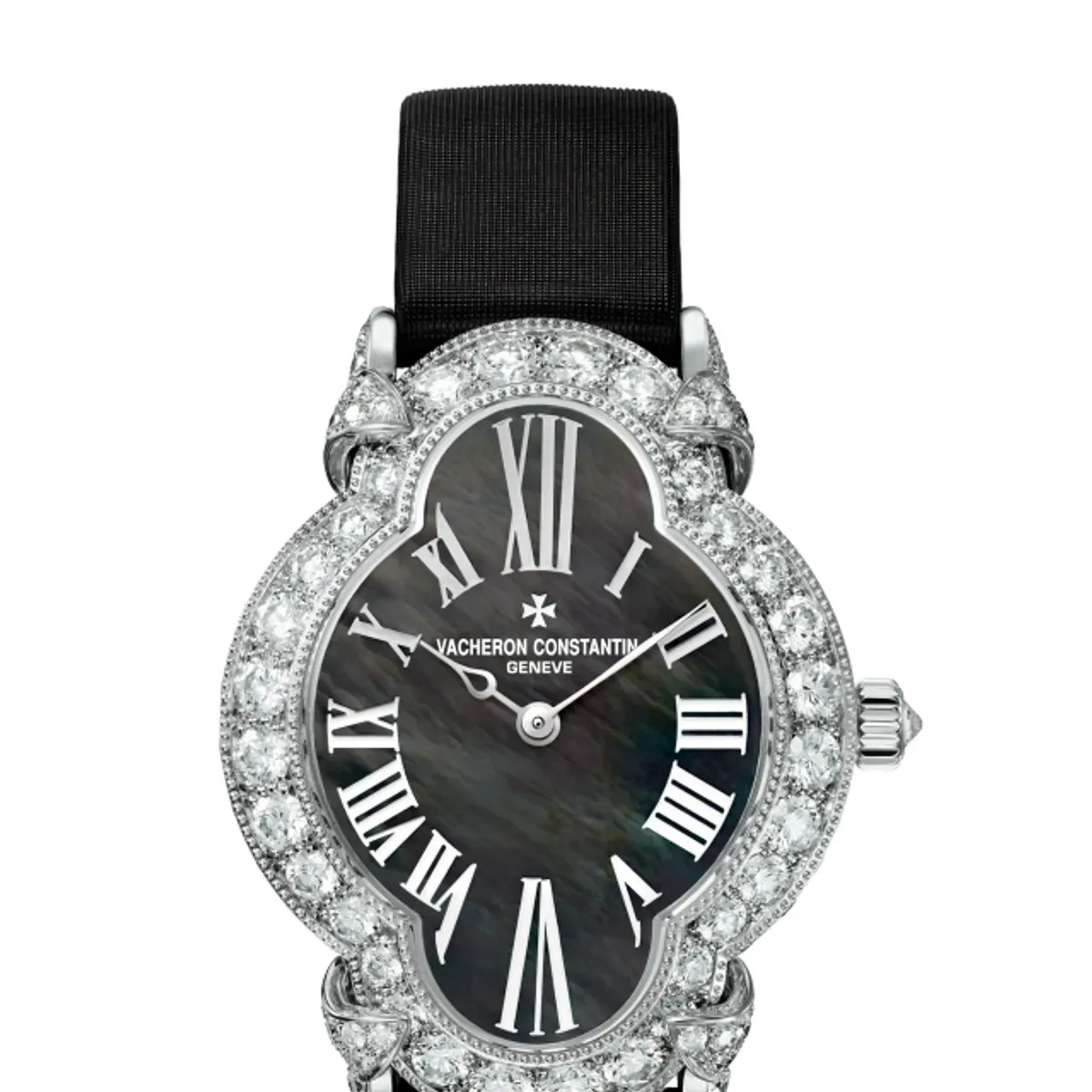
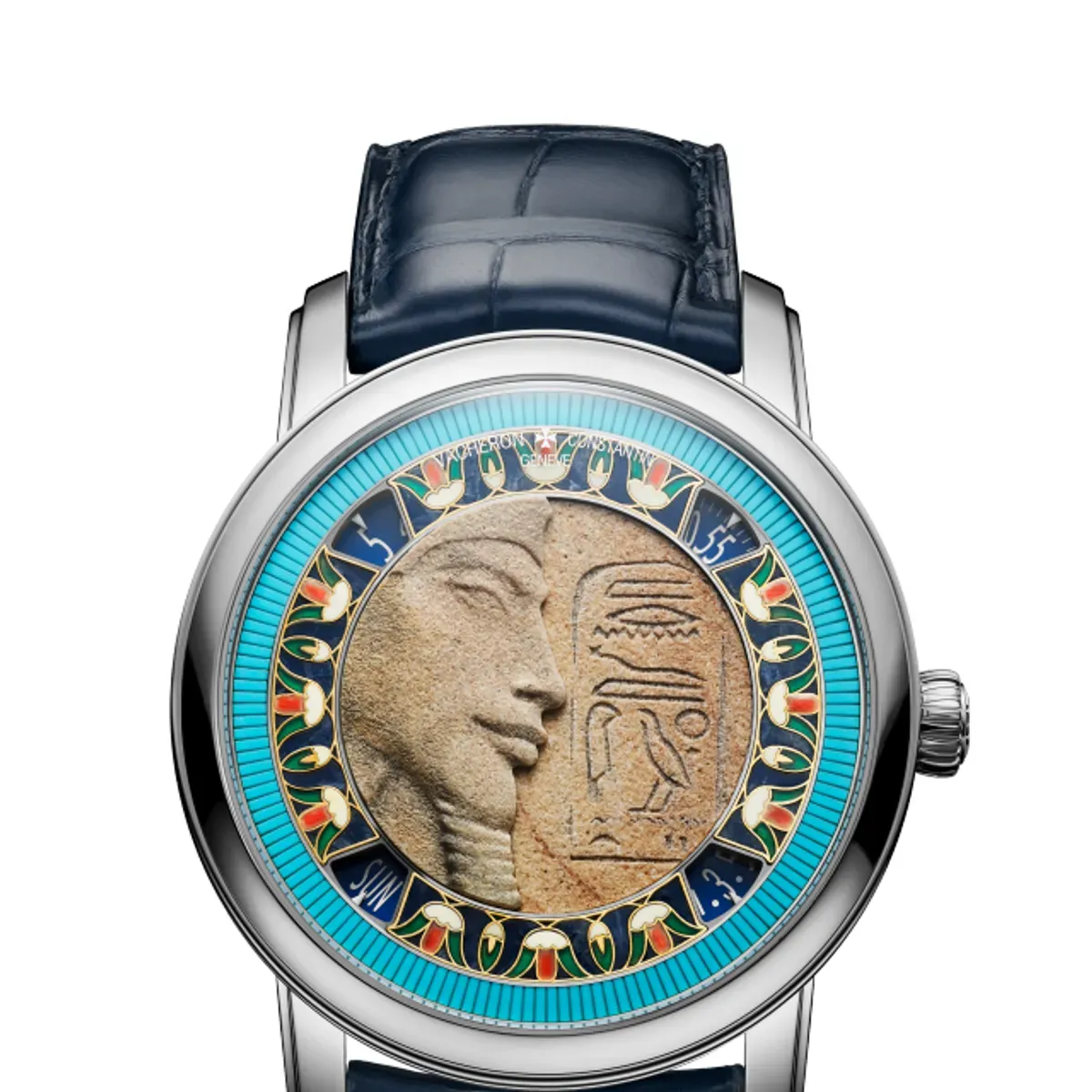
| Métiers d'Art | Artistic craft showcase | Enamel, engraving, and gem set limited series |
| Les Cabinotiers | Bespoke and unique pieces | Home of Reference 57260 and made to order grand complications |
The 222 and the integrated bracelet sports watch
In 1977 Vacheron marked its 222nd anniversary with the 222, designed by a then 24 year old Jörg Hysek. Its notched bezel, integrated bracelet, and case mounted Maltese cross made it a touchstone of 1970s luxury sport design.
The original 222 ran on the automatic caliber 1121, with dials attributed to Stern and the integrated bracelet built by the renowned specialist Gay Frères. It arrived in the same era as the Royal Oak and Nautilus, yet kept a slimmer and more restrained character.
The model spiritually anticipated the modern Overseas, first launched in 1996 and redesigned in 2016 by Vincent Kaufmann. Vacheron revived the original in 2022 as the Historiques 222 in yellow gold, followed by a contemporary steel edition. These releases reconnected the brand to one of its most collectible designs.
Les Cabinotiers and bespoke watchmaking
The Les Cabinotiers department revives the old Geneva tradition of independent master watchmakers who worked in sunlit attic workshops. It produces unique commissions and astronomical grand complications built to a single client's request.
This service places Vacheron among the very few houses able to deliver fully bespoke high complications. It reinforces the brand's claim to the absolute summit of the craft.
Heritage revivals and the American 1921
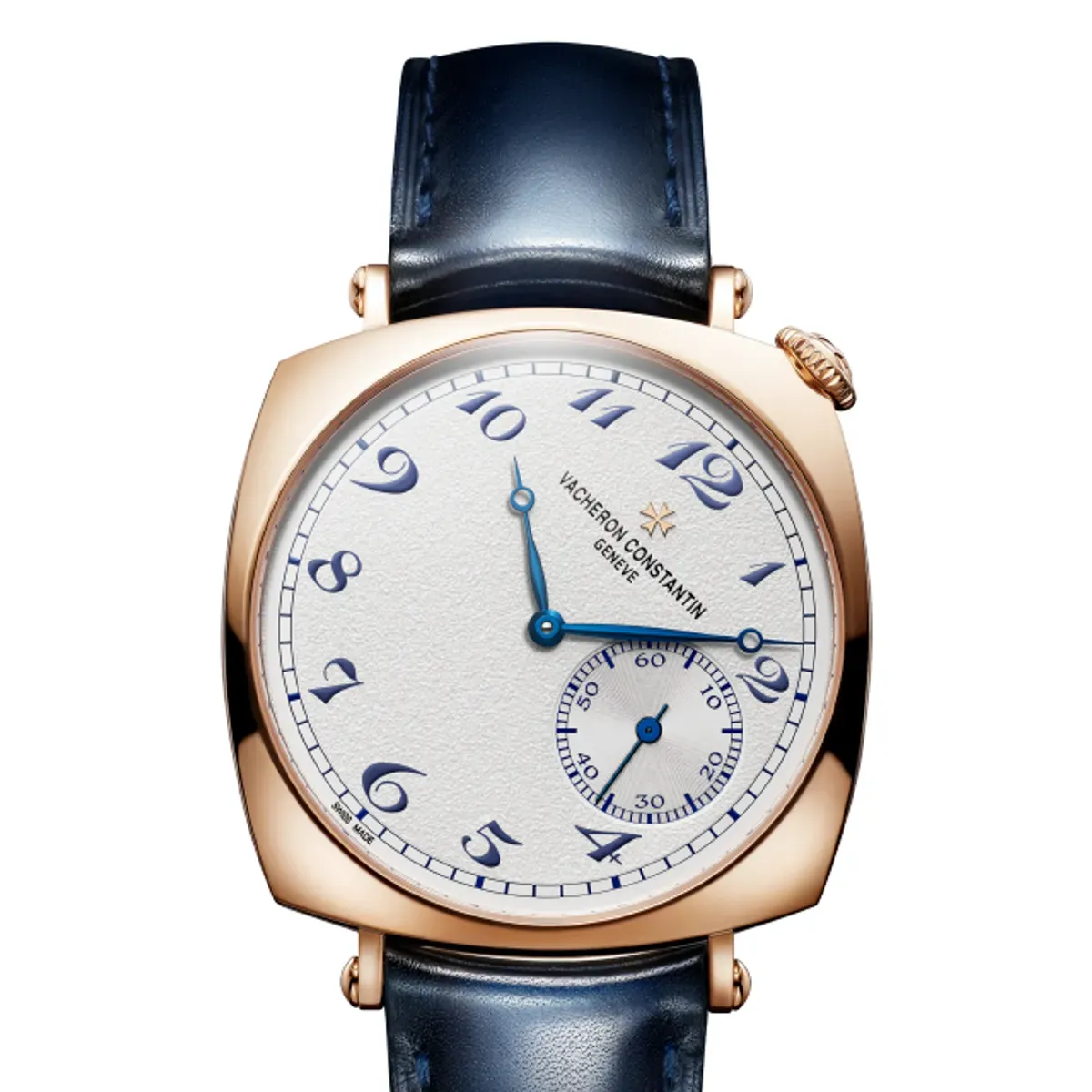
Vacheron treats its archive as a living resource through the Historiques line and a dedicated Restoration Workshop and Heritage Department. In 2021 it recreated the asymmetric American 1921 as a faithful one off piece, reproducing even the period correct case alloy and vintage parts from its own archives.
The American 1921 itself dates to a small run made for the United States market, with its dial rotated 45 degrees and the crown placed for easy reading by a driver. This blend of conservation and reissue is a genuine point of difference for the Maison.
Why it stands out
Unbroken lineage since 1755: It is the oldest watchmaker in continuous operation, a heritage no rival can claim.
Membership of the Holy Trinity: It shares the top tier of Swiss watchmaking with Patek Philippe and Audemars Piguet.
Breadth of complication: From simple Patrimony pieces to Reference 57260, few brands span so wide a technical range.
Exceptional finishing: The Hallmark of Geneva and extensive hand finishing place its movements among the best decorated in the industry.
Genuine bespoke capability: Les Cabinotiers offers truly made to order grand complications, a rare service at this level.
Record setting complications: The 57260 and the Berkley Grand Complication show engineering ambition unmatched by any rival.
Versatile single brand range: Few makers cover steel sports watches, classical dress pieces, and artistic crafts under one roof.
Weaknesses
Lower public recognition: Outside collector circles it trails Rolex and Patek Philippe in awareness, which can dampen perceived prestige.
Softer secondary market: Resale values generally lag Patek Philippe and Rolex, so depreciation can be steeper for many references.
Overseas allocation pressure: The steel Overseas is hard to secure at retail, pushing buyers toward grey market premiums.
Quiet design language: The understatement that connoisseurs prize can read as anonymous to casual observers.
Premium pricing for the name: Prices sit beside Patek Philippe while commanding less mainstream cachet, a tough value case for some buyers.
Limited boutique footprint: Its retail and service network is smaller than that of larger rivals, which can complicate access and servicing in some regions.
Conservative core catalog: Outside the Overseas, much of the range leans classical, offering less for buyers who want bold or overtly sporty design.
Key milestones
| Year | Milestone |
|---|---|
| 1755 | Jean-Marc Vacheron signs his first apprentice, founding the Maison in Geneva |
| 1819 | Partnership with François Constantin creates the lasting name of the house |
| 1839 | Georges-Auguste Leschot introduces the pantograph and interchangeable parts |
| 1880 | The Maltese cross is registered as the brand emblem |
| 1907 | Launch of the Chronomètre Royal, a benchmark of everyday precision |
| 1921 | Driver style American 1921 with rotated dial made for the US market |
| 1955 | Caliber 1003 arrives at 1.64mm for the 200th anniversary |
| 1977 | The 222 integrated bracelet sports watch marks the 222nd anniversary |
| 1979 | The Kallista becomes the most expensive wristwatch ever sold at the time |
| 1996 | Joins the Vendôme group, later Richemont, and launches the Overseas |
| 2005 | Tour de l'Île, then the most complicated wristwatch, celebrates 250 years |
| 2015 | Reference 57260 reclaims the overall complication record with 57 functions |
| 2019 | Twin Beat Perpetual Calendar introduces the 65 day standby reserve |
| 2022 | Historiques 222 revival launches in yellow gold, with steel following |
| 2024 | Berkley Grand Complication sets a new world record with 63 complications |
Vacheron within the Holy Trinity
The label Holy Trinity groups Vacheron Constantin with Patek Philippe and Audemars Piguet as the three historic pillars of Geneva school haute horlogerie. All three combine in house movements, hand finishing, and unbroken prestige at the top of the market. Within the trio Vacheron is the oldest by a wide margin, yet the quietest in public awareness.
| Brand | Founded | Estimated annual output | Signature sports model | Typical entry price, new | Secondary market behavior |
|---|---|---|---|---|---|
| Patek Philippe | 1839 | Roughly 70,000 pieces | Nautilus, Aquanaut | Around $25,000 | Strongest of the trio, steel sports models often trade above retail |
| Audemars Piguet | 1875 | Roughly 50,000 pieces | Royal Oak | Around $25,000 | Very strong, the Royal Oak commonly holds or exceeds retail |
| Vacheron Constantin | 1755 | Roughly 25,000 to 30,000 pieces | Overseas, Historiques 222 | Around $14,000 to $20,000 | Softer overall, most references trade below retail, the 222 is a notable exception |
This positioning cuts both ways. Buyers pay Trinity level prices but rarely enjoy Trinity level liquidity when selling. On the other hand, the same softness means patient buyers can acquire superbly finished pre owned pieces at meaningful discounts to new prices.
Buying and collecting guide
Vacheron rewards research more than most luxury brands, because value varies sharply between lines and channels. The table below sketches sensible targets at each budget level for new or recent pieces.
| Budget, USD | Sensible targets | Notes |
|---|---|---|
| Under $20,000 | Fiftysix Self Winding, Égérie quartz, pre owned Patrimony | The most accessible doors into the Maison, with finishing well above the price class |
| $20,000 to $45,000 | Overseas Self Winding, Patrimony, Traditionnelle time only | The core of the catalog, though the steel Overseas can require patience at retail |
| $45,000 to $90,000 | Overseas Chronograph, Historiques 222, gold complete calendars | Serious collector territory with in house complications and precious metals |
| Above $90,000 | Overseas Perpetual Calendar Ultra Thin, Traditionnelle tourbillons, minute repeaters, Métiers d'Art, Les Cabinotiers commissions | Haute horlogerie proper, often limited, boutique only, or unique pieces |
On the secondary market, condition, box, and papers matter greatly, and full sets command clear premiums. Because many references trade below retail, buying pre owned is often the rational route for dress models. Sports models like the steel Overseas and the Historiques 222 behave differently, holding value far better than the rest of the range.
Ownership is supported by an extendable warranty upon registration and a global network of boutiques and authorized service centers. A full mechanical service is typically recommended every several years, and complicated pieces should return to the manufacture. The in house Restoration Workshop can service almost anything the Maison has ever made, a rare guarantee among watch brands.
Cultural footprint and notable patrons
Vacheron's client book reads like a history of wealth itself. King Fouad I of Egypt received a spectacular grand complication in 1929, and his son King Farouk later commissioned his own monumental piece. The American industrialist James Ward Packard and the modern collector William F. Berkley bookend a century of record chasing commissions.
In contemporary culture the brand benefits from the shift toward quiet luxury, where insiders prize watches that signal knowledge rather than volume. Its name surfaces increasingly in music, film styling, and collector media as the connoisseur's alternative to more obvious status symbols. The One of Not Many campaign leans directly into this identity of rarity and discretion.
Summary
Vacheron Constantin pairs the deepest continuous history in watchmaking with finishing and complication work at the highest level. It rewards buyers who value craft and discretion over logo recognition.
Its range runs from the everyday Overseas and Fiftysix to the monumental Reference 57260. New retail pricing spans roughly $20,000 to $300,000 and beyond, placing it firmly in the haute horlogerie tier.
The main trade offs are a modest public profile and a softer resale market relative to its closest peers. Yet its blend of unbroken history, record breaking complications, and serious hand finishing is genuinely hard to replicate. For the informed enthusiast it remains one of the most rewarding and quietly confident names in fine watchmaking.