Tissot
3models
14collections
169reviews
Tissot
MiddleAffordable Swiss-made watches; innovation and broad accessibility
Le Locle, Switzerland · est. 1853
part of Swatch Group
$300–$1,500
My tier · Holding
Tissot was founded in 1853 by Charles-Félicien Tissot and his son Charles-Émile Tissot in Le Locle, in the Neuchâtel region of the Swiss Jura. The father worked as a casemaker and the son as a watchmaker, and together they assembled pocket watches from supplied parts. The young company quickly built a reputation for reliable, well finished timepieces.
More about Tissot
History
Tissot moved beyond pocket watches early, building wristwatches from around 1915 and starting its own movement production by 1920. This gave the firm real manufacturing depth for its size, and by the 1920s its watches had an international following that even included the actress Sarah Bernhardt.
In 1858 Charles-Émile Tissot traveled to Russia and opened the brand's first great export market, selling savonnette pocket watches across the Russian Empire. Russia grew so important that the family later ran a branch in Moscow. Tissot is widely credited with one of the first series produced pocket watches to show two time zones.
In 1930 Tissot joined with Omega to form SSIH (Société Suisse pour l'Industrie Horlogère), a defensive response to the 1929 financial crisis. SSIH merged with ASUAG in 1983 to create what became the Swatch Group, where Tissot still sits today. The brand now exports several million watches a year, making it one of Switzerland's highest volume names.
Innovation as tradition
Tissot's longtime motto is "Innovators by tradition," and its story is a run of technical experiments aimed at accessibility rather than haute horlogerie. As early as 1930 it offered one of the first antimagnetic wristwatches, solving a practical reliability problem for everyday wearers.
In 1971 it went further with the Astrolon, also sold as the Idea 2001, which used the first mechanical movement built largely from injection moulded plastic. The caliber had only about twenty parts and needed no lubrication, a radical attempt to drive down the cost of a mechanical watch.
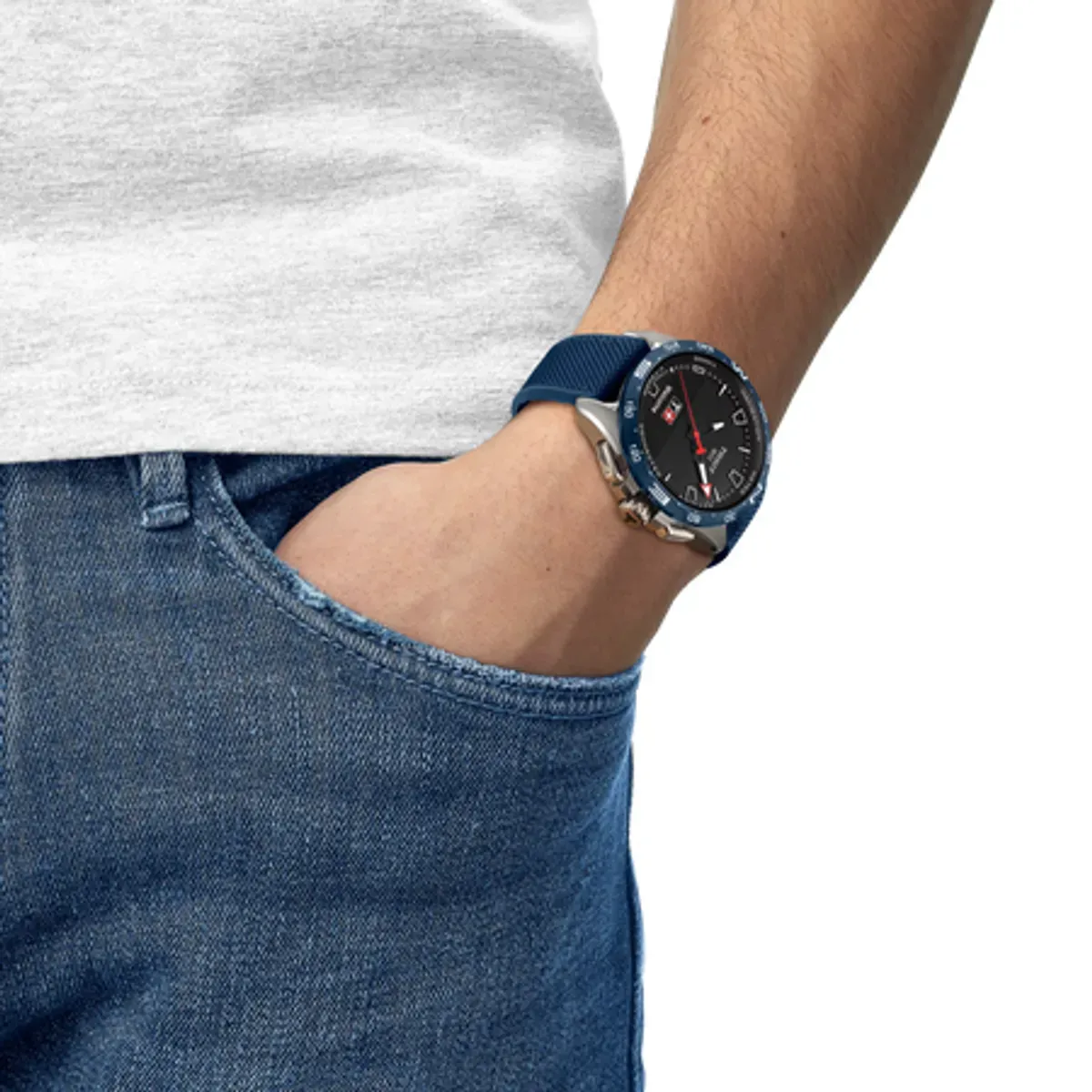
The defining example is the T-Touch of 1999, presented as the world's first tactile watch. Its sapphire crystal responds to touch to reach functions such as compass, altimeter, barometer and thermometer. The line endures today in solar and connected versions, and remains the brand's signature technical statement.
Tissot has also chased novelty through materials, producing cases in stone, wood, mother of pearl and plastic across its history. This habit of experimenting at low cost is central to how the brand presents itself.
The boldest examples came in the 1980s. The Rock Watch of 1985 carried a case carved from Alpine granite, and Tissot followed it with wood and mother of pearl editions. These were marketing curiosities, yet they cemented the idea that the brand would try concepts grander houses avoided.
Surviving the quartz crisis
The rise of cheap, accurate quartz watches in the 1970s nearly destroyed the Swiss industry, and Tissot sat directly in the firing line. As part of SSIH, it bled losses while Japanese quartz brands seized the mass market. By the early 1980s the group was close to collapse.
Rescue arrived with the 1983 restructuring led by Nicolas Hayek, which fused SSIH and ASUAG into the company that became the Swatch Group. Inside the new structure Tissot was cast as the high volume, value Swiss brand. That role handed it scale, shared movements and a clear identity that still defines it today.
The Powermatic 80 and value engineering
The brand's most important modern contribution is the Powermatic 80, introduced in 2013. It is an evolution of the workhorse ETA 2824 caliber, with the balance frequency lowered from 4 Hz to 3 Hz to stretch the power reserve to 80 hours.
Later versions pair it with a Nivachron balance spring, a titanium based alloy that sharply improves resistance to magnetic fields. Offering roughly three days of autonomy at this price point is unusual and underpins much of Tissot's appeal. The brand also fields the Swissmatic, an automated and lower cost automatic caliber with a 72 hour reserve.
The PRX and the integrated bracelet icon
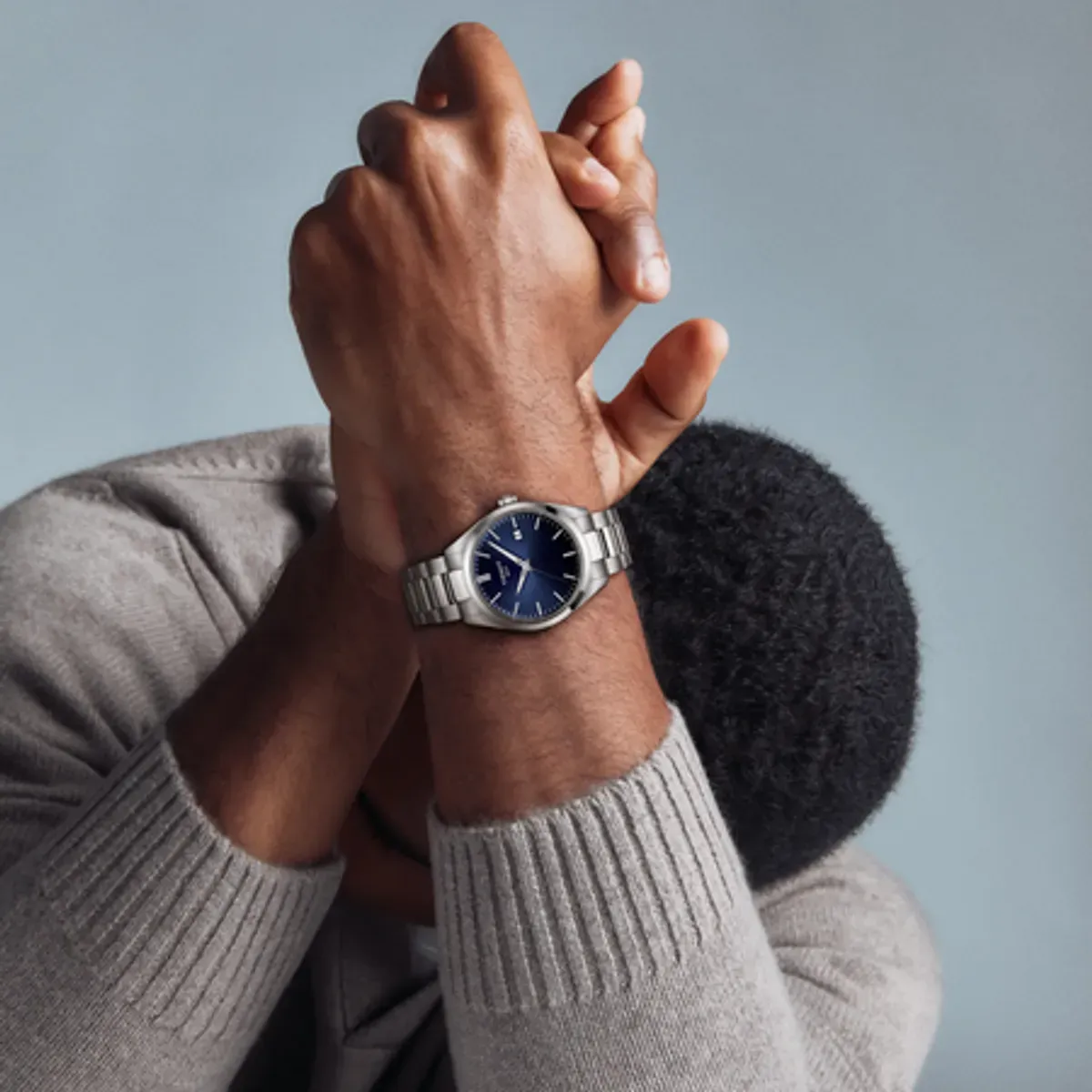
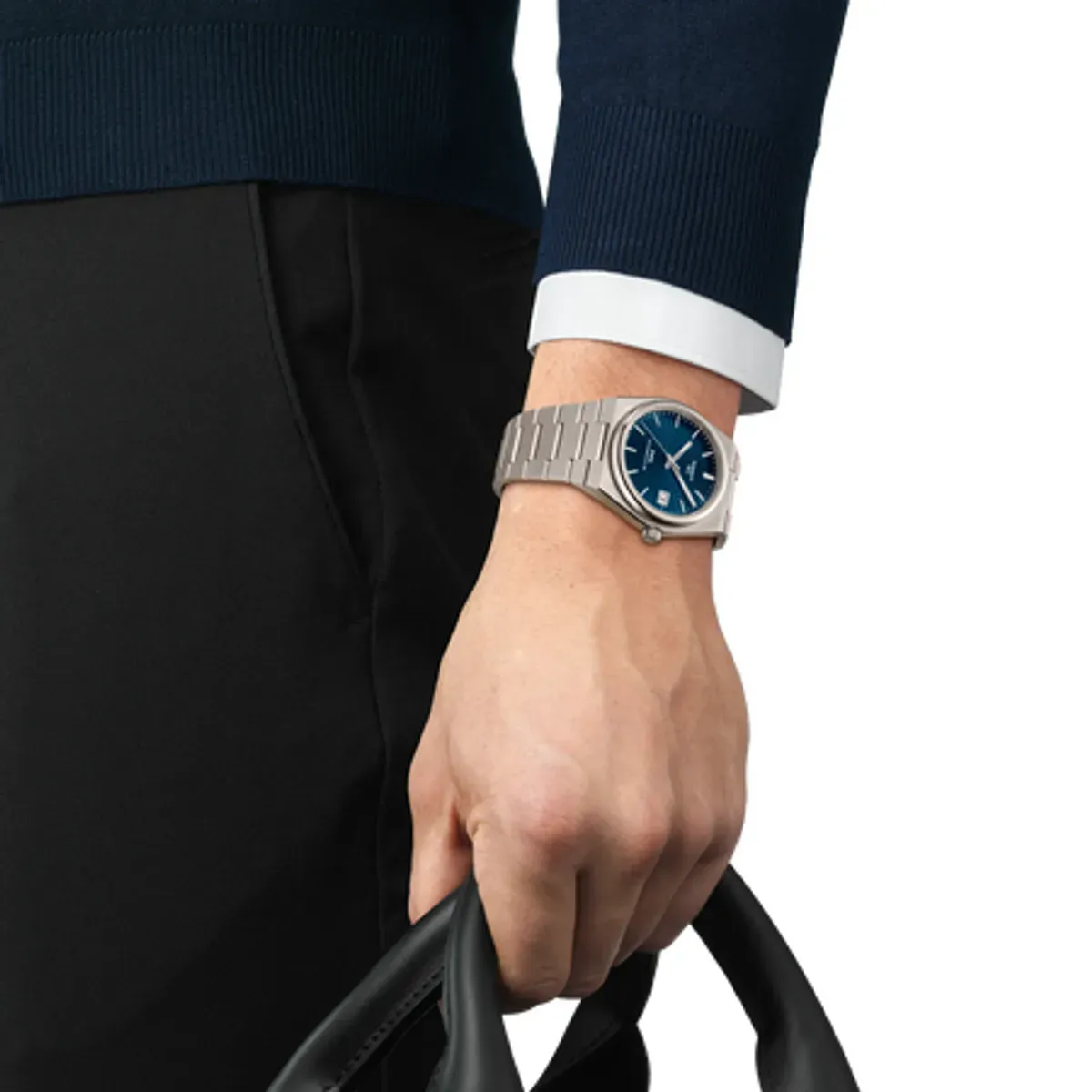
The PRX is the brand's defining modern icon. Its origin is the 1978 Seastar quartz, a flat tonneau case with an integrated steel bracelet in the spirit of 1970s sports watches. The PRX name signaled "precise and robust," with quartz accuracy and 100 m water resistance.
CEO Sylvain Dolla rediscovered the design in the archives and relaunched it in 2021, first as a quartz model and then with the Powermatic 80. Priced from roughly $375 to $725, the revived PRX became a runaway hit and the entry point that pulled a younger audience toward the brand.
The family expanded fast after launch. Tissot added 35mm and 25mm sizes, a chronograph built on a Valjoux based automatic, gem set and gold tone variants, and a retro PRX Digital. What began as a single revival became one of the most discussed ranges in affordable watchmaking.
Model lineup
| Collection | Identity | Highlights |
|---|---|---|
| PRX | Integrated bracelet sports watch | 1978 origins, quartz and Powermatic 80, faceted tonneau case |
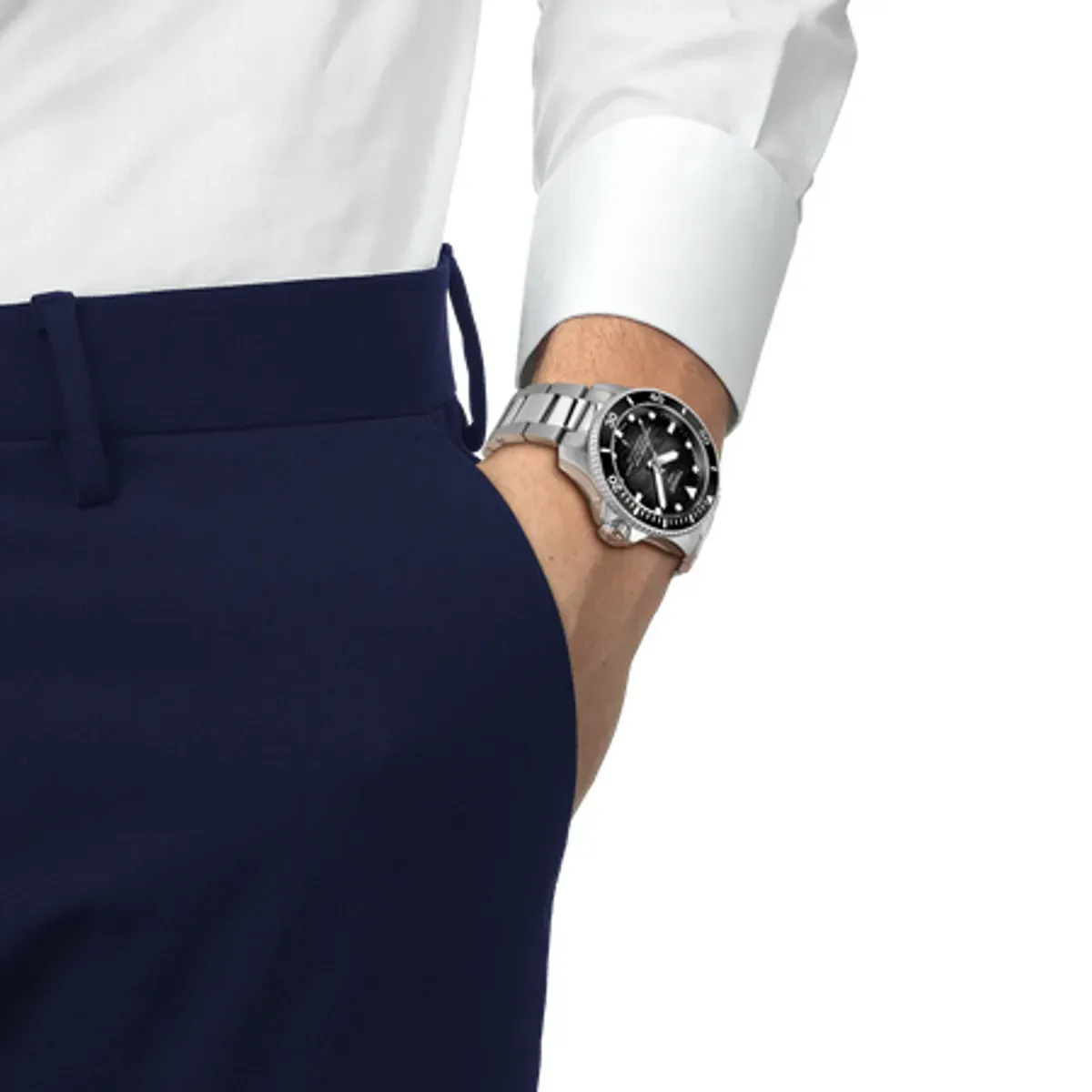
| Seastar | Accessible Swiss dive watch | Up to 300 m water resistance, ceramic bezel, Powermatic 80 options |
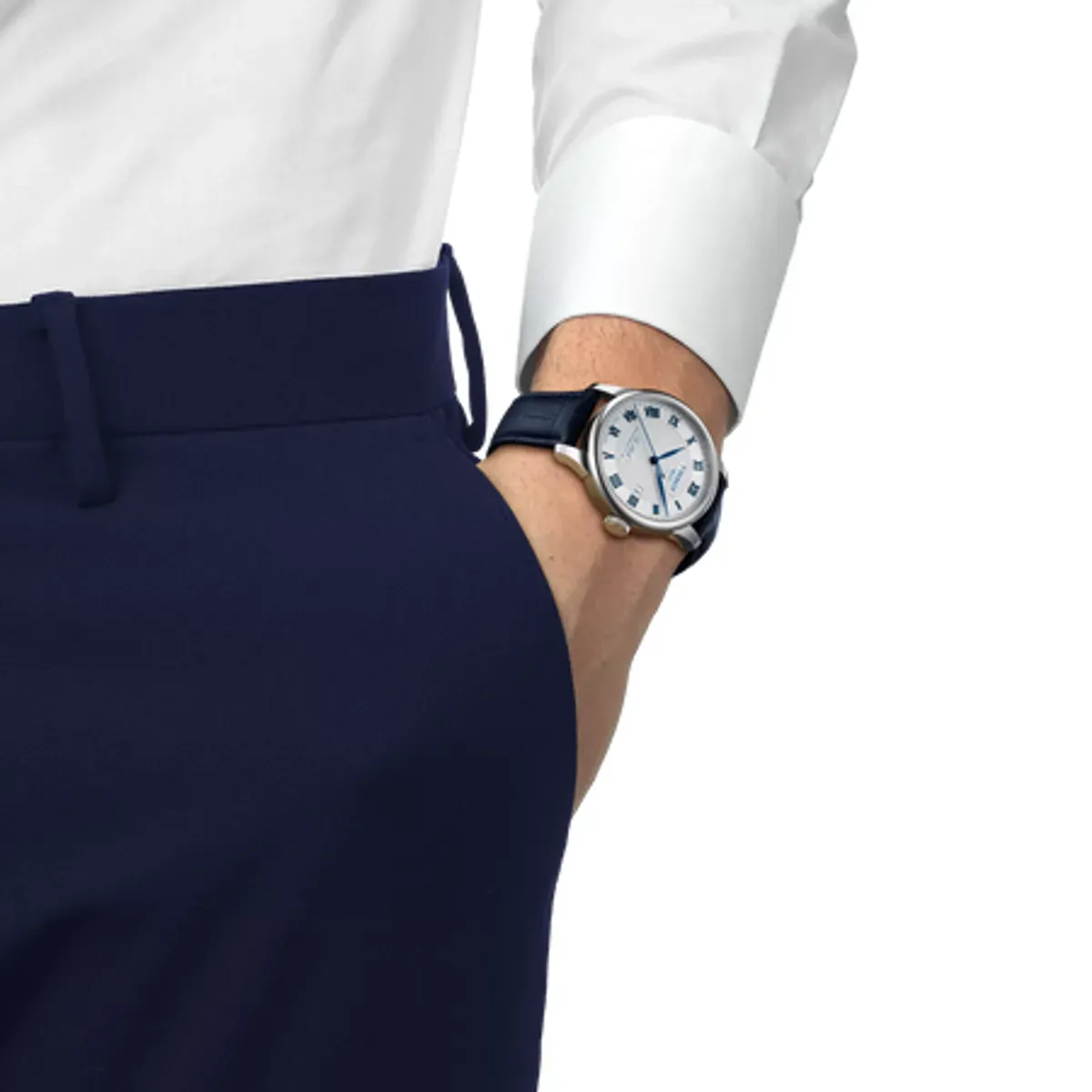
| Le Locle | Classic dress watch named for the home town | Roman numerals, guilloché dial, automatic movement |
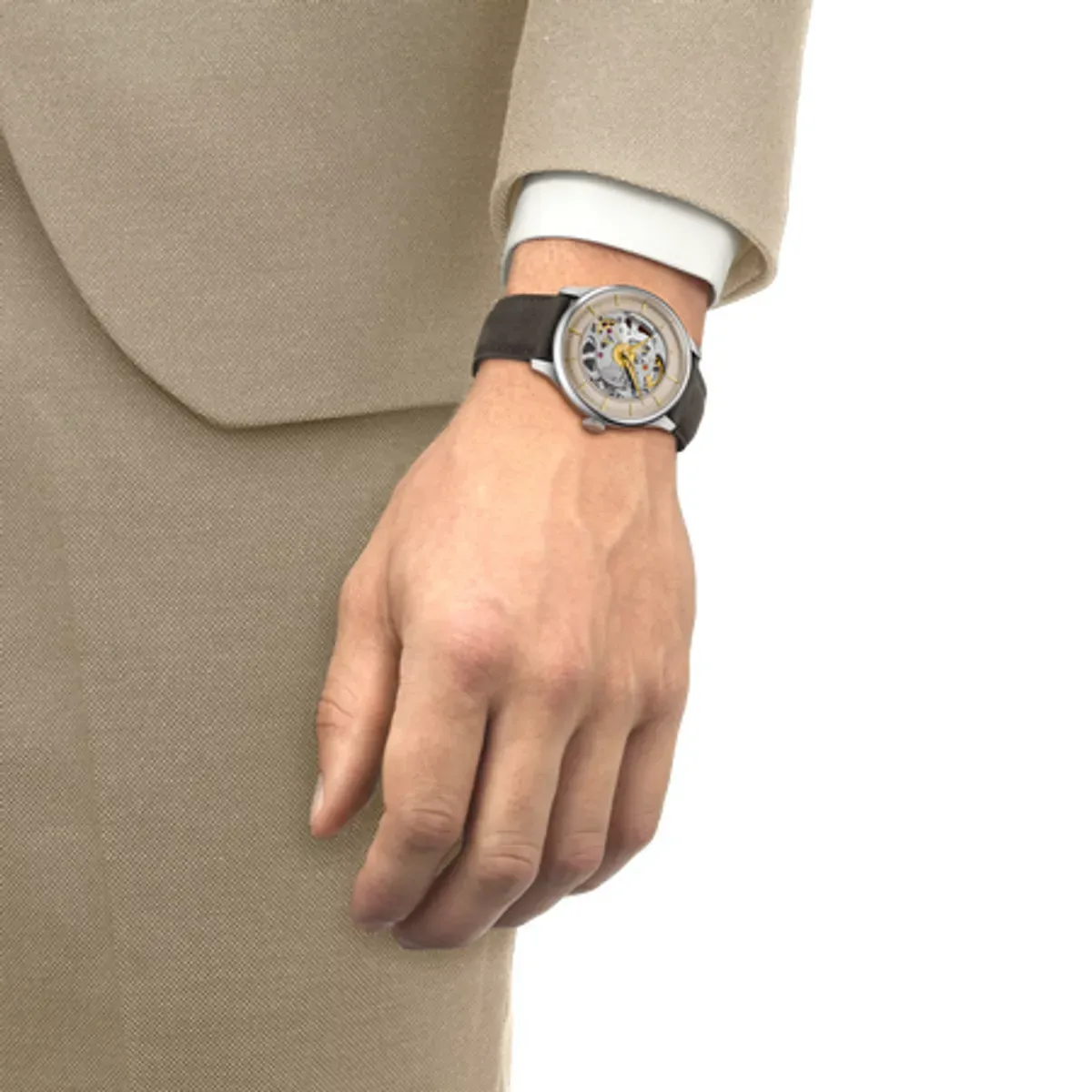
| Chemin des Tourelles | Refined heritage dress line | Powermatic 80, open caseback, COSC chronometer options |
| Gentleman | Versatile everyday dress watch | Powermatic 80 with Nivachron and Silicium variants |
| T-Touch | Tactile multifunction tool watch | Touch sensitive crystal, solar and connected versions |
| T-Race / Supersport | Motorsport inspired chronographs | Bold cases, MotoGP special editions |
| Heritage | Vintage reissues | Faithful redesigns such as the Navigator and Visodate |
| PR100 / PR516 | Everyday classics and racing styles | Quartz and automatic options, broad accessibility |
| Ballade | Chronometer certified dress watch | Powermatic 80 with Silicium balance spring, COSC certification |
| Carson | Slim traditional dress watch | Classic round case, quartz and automatic options |
Why it stands out
- Unmatched value: Few brands deliver genuine Swiss made automatics with sapphire crystals and 80 hour movements at Tissot's prices.
- Genuine innovation: The tactile T-Touch and the Powermatic 80 show real engineering ambition rather than cosmetic updates.
- Swatch Group backing: Access to ETA movements and shared research lets Tissot punch above its price tier.
- A true modern icon: The PRX gave the brand a design with cultural weight and a clear visual signature.
- Breadth of catalog: From dive and dress to tool and motorsport watches, the range covers almost every taste.
- Global sport presence: Timekeeping roles in cycling, MotoGP and the NBA give the brand visibility far above its price.
Weaknesses
- Sourced movements, not exclusive ones: The Powermatic 80 is an ETA base shared across the group, so there is little mechanical exclusivity.
- Finishing reflects the price: Case and dial detailing is good for the money but plain next to higher tiers like Longines or Omega.
- A prestige ceiling: Inside the Swatch hierarchy Tissot is positioned as the value brand, which caps its standing among collectors.
- Quartz heavy in places: Many core references remain quartz, which can disappoint buyers seeking mechanical watches.
- PRX ubiquity: The model's success has made it extremely common, and hype driven demand may cool over time.
- Soft resale value: Like most watches in this segment, Tissot pieces tend to depreciate rather than hold value.
Sport and timekeeping partnerships
Tissot has turned official timekeeping into a core marketing pillar and a source of credibility. It has served as Official Timekeeper of MotoGP since 2001, of the NBA since 2015, and of the Tour de France and other A.S.O. cycling races since 2016.
These roles also feed the catalog, inspiring the T-Race and Supersport chronographs and various special editions. The result is a brand that feels connected to elite sport while staying affordable.
Tissot reinforces these ties with a broad roster of ambassadors. Recent and past faces include the NBA stars Tony Parker and Damian Lillard and the MotoGP rider Enea Bastianini, alongside film and entertainment figures who widen the brand's reach in markets such as India and China. The aim is constant mainstream visibility rather than a narrow collector following.
Price positioning
Tissot occupies the accessible Swiss made tier, with core models running from about $300 to $1,500. It sits above fashion quartz labels and below Hamilton, Longines and Omega within the Swatch Group ladder. Its old slogan, "gold value at silver price," still captures the proposition cleanly.
Who it is for
Tissot is the natural pick for a first serious Swiss watch, where the buyer wants mechanical credibility without a luxury outlay. The PRX Powermatic 80 suits someone after one versatile steel watch, the Seastar answers divers on a budget, and the Le Locle or Chemin des Tourelles cover classic dress taste.
It is a weaker fit for buyers chasing exclusivity, elaborate hand finishing or strong resale value, who are better served higher up the Swatch ladder or among independents. Read correctly, Tissot is a benchmark for honest value rather than a status symbol.
Summary
Tissot is one of the most important value brands in Swiss watchmaking, defined by 170 years of accessible innovation rather than luxury prestige. Its strengths are clear: real Swiss movements, the long running Powermatic 80, the inventive T-Touch, and a genuine modern icon in the PRX.
The trade offs are equally clear, since the movements are shared, the finishing is modest, and the brand carries a built in prestige ceiling. For a buyer who wants the most credible Swiss watch per dollar, Tissot is close to the benchmark, and for collectors chasing exclusivity it is better seen as a smart entry point than an end goal.
Its wider importance is both historical and practical. Tissot helped shape the modern Swiss industry through SSIH and the Swatch Group, and it still introduces more people to mechanical watchmaking than almost any other Swiss name. That mix of heritage and reach is what keeps the brand relevant.