Omega
6models
4collections
558reviews
Omega
LuxurySpace & dive heritage, Co-Axial / Master Chronometer movements; official Olympic timekeeper
Biel/Bienne, Switzerland · est. 1848
part of Swatch Group
$3,000–$15,000
My tier · 3
Omega began in 1848 in the Swiss town of La Chaux de Fonds, where Louis Brandt, then 23 years old, set up a small workshop assembling pocket watches from parts supplied by local craftsmen. This was the classic Swiss "établissage" model, where a young entrepreneur coordinated a network of independent specialists.
More about Omega
Origins and early history
When Louis Brandt died in 1879, his two sons, Louis Paul and César, took over and made a decisive strategic shift. They moved the company to Biel/Bienne, a town with better access to labor, transport, and energy, and they pivoted from piecemeal assembly toward in house, mechanized production of standardized parts.
The turning point came in 1894, when the brothers and their technicians developed a movement they called the "Omega" caliber. It was remarkable for its precision, its ease of service, and the fact that any part could be replaced by any watchmaker without custom fitting.
The movement was such a commercial triumph that the company eventually adopted its name for the entire business, formally becoming Omega in the early 1900s. The Greek letter Ω was chosen to signal accomplishment, maturity, and a kind of "final word" in watchmaking quality.
Building a reputation for precision
From the beginning, Omega tied its identity to measurable accuracy rather than pure decoration. The brand earned a long series of records and certificates at the official observatory trials in Switzerland and Britain, which were the closest thing the era had to objective performance competition. This obsession with timing accuracy led naturally to its most enduring institutional relationship.
In 1932, Omega became the official timekeeper of the Olympic Games, supplying the chronographs and, later, the electronic and photographic timing systems used to settle races. That role has continued across many decades and remains one of the strongest proof points the brand can claim, because it ties the name to real performance under public scrutiny rather than to marketing alone.
The professional era and the Moon
The single most important chapter in Omega's modern story arrived in 1957, when the company released three tool watches designed for specific professions. These were the Speedmaster chronograph for motorsport and engineering, the Seamaster 300 for divers, and the Railmaster for people working near magnetic fields such as scientists and electrical engineers. Together they defined Omega's character as a maker of rugged, legible, purpose built instruments.
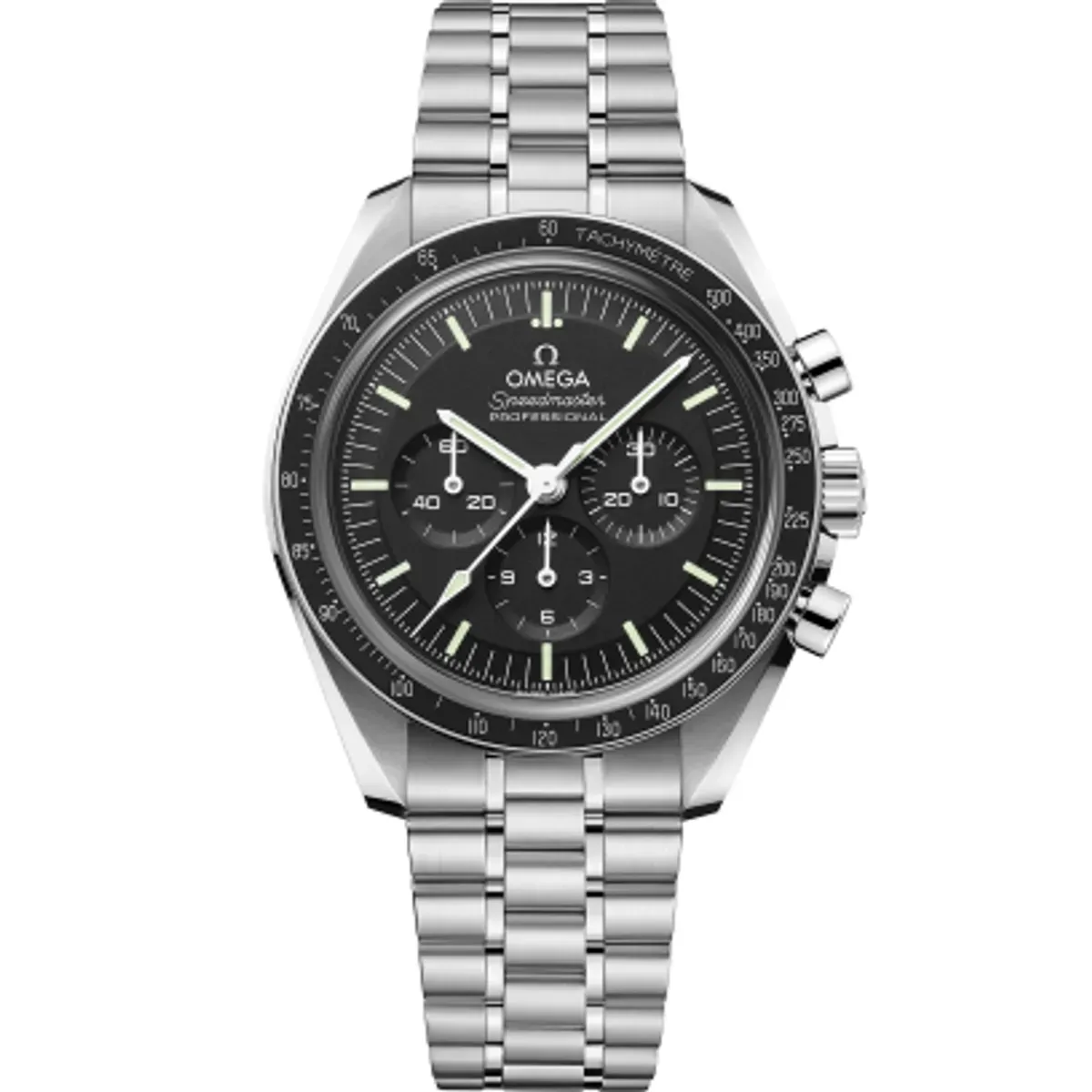
The Speedmaster then earned the distinction that still defines the brand in the public imagination. After a demanding series of qualification tests, NASA certified it for all crewed space missions, and in 1969 astronaut Buzz Aldrin wore one on the lunar surface during Apollo 11, making it the first watch worn on the Moon.
It later played a genuine functional role during the Apollo 13 crisis, when the crew used it to time a critical engine burn after their instruments were powered down. This blend of real utility and cultural symbolism is something very few products in any category can match.
Bond and the modern revival
In 1995, the Seamaster became the on screen watch of James Bond, beginning with GoldenEye, and that partnership has continued through the modern films. This gave Omega a second powerful cultural anchor alongside the space program, one aimed at a more fashionable and cinematic audience.
On the technical side, the modern revival was driven by the Coaxial escapement, an invention of the independent watchmaker George Daniels that Omega industrialized starting in 1999. The escapement reduces sliding friction inside the movement, which improves long term stability and lengthens the interval between services. This was a rare case of a genuinely new mechanical idea reaching mass production, and it gave Omega a credible engineering story rather than a purely historical one.
The brand pushed further with its Master Chronometer standard, introduced around 2015 and certified by the independent Swiss federal metrology institute known as METAS. Watches carrying this label are tested for accuracy, water resistance, power reserve, and resistance to magnetic fields as strong as 15,000 gauss, a level that renders them effectively immune to the magnets found in everyday phones, laptops, and bags. This standard goes meaningfully beyond the older accuracy certificate used by most of the industry.
Throughout the modern period, Omega has been part of The Swatch Group, the large Swiss conglomerate. This gives it scale, deep research resources, and secure access to movement manufacturing, which together help explain how it can offer advanced technology at relatively controlled prices.
Model lineup
| Collection | Identity | Highlights |
|---|---|---|
| Speedmaster | The flagship chronograph and spiritual core of the brand | Manually wound Moonwatch close to the Apollo design, plus automatic, racing dial, and ceramic "Dark Side of the Moon" variants |
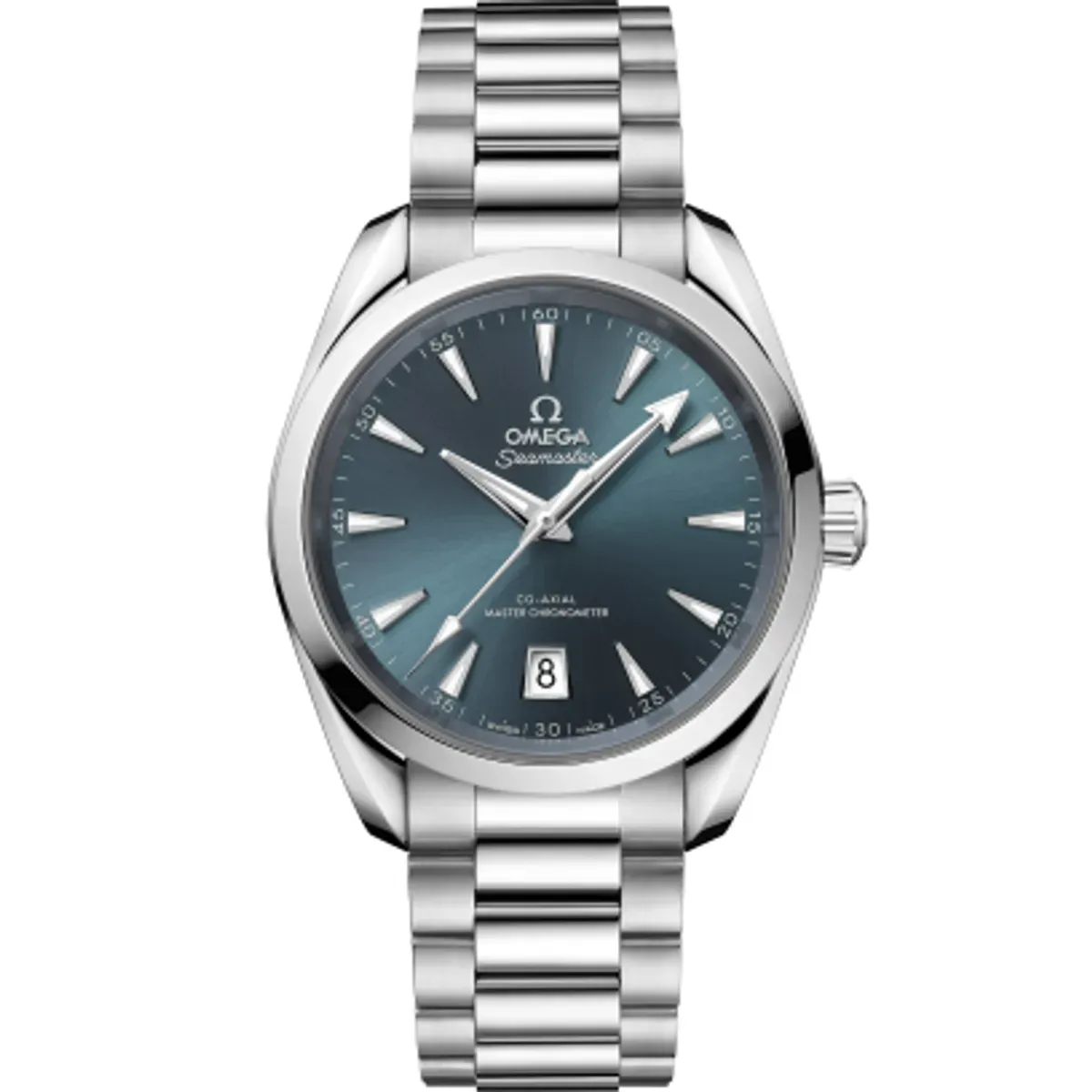
| Seamaster | The dive and water focused line, and the most versatile range | Diver 300M (James Bond), deeper rated Planet Ocean, extreme professional Ploprof, and the dressier everyday Aqua Terra |
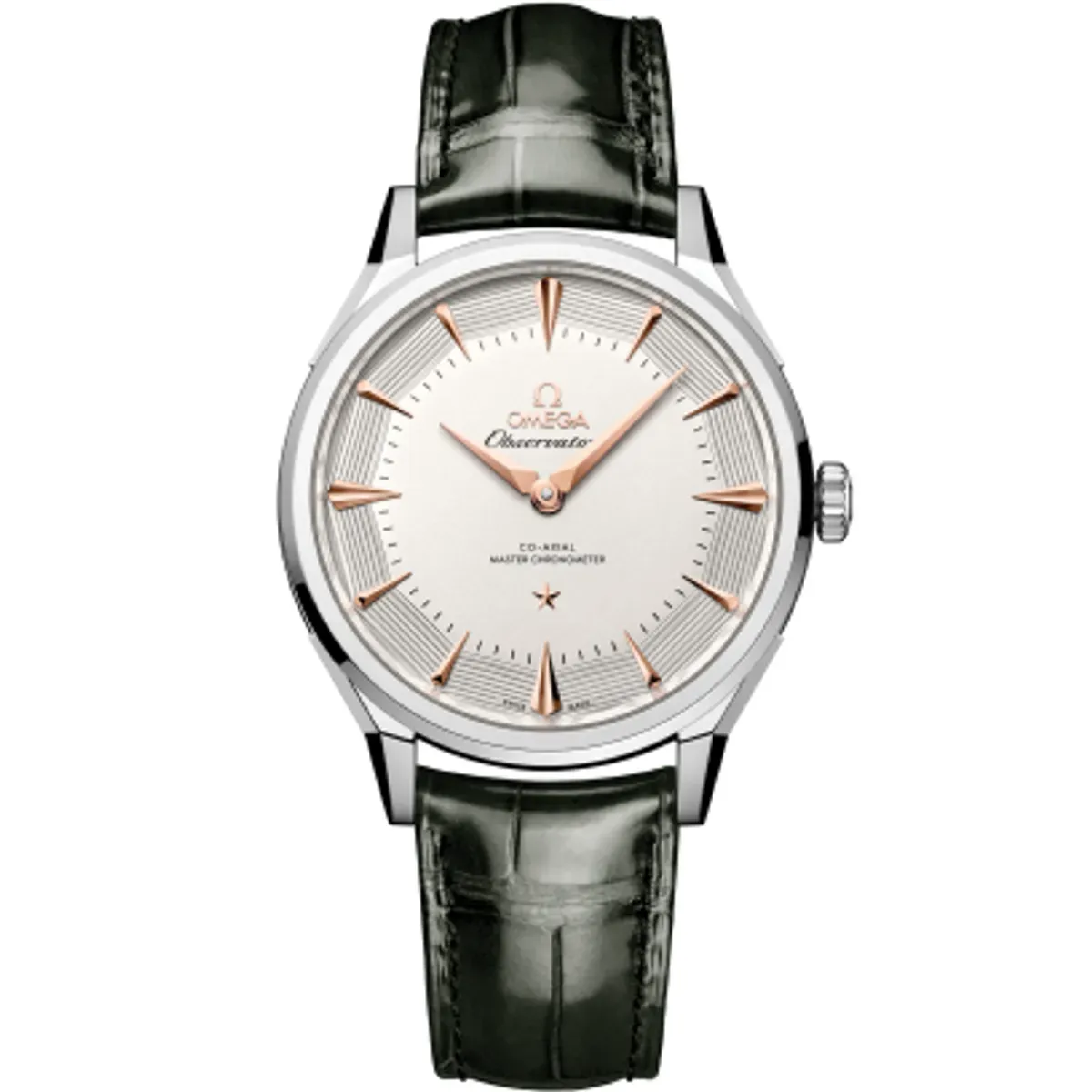
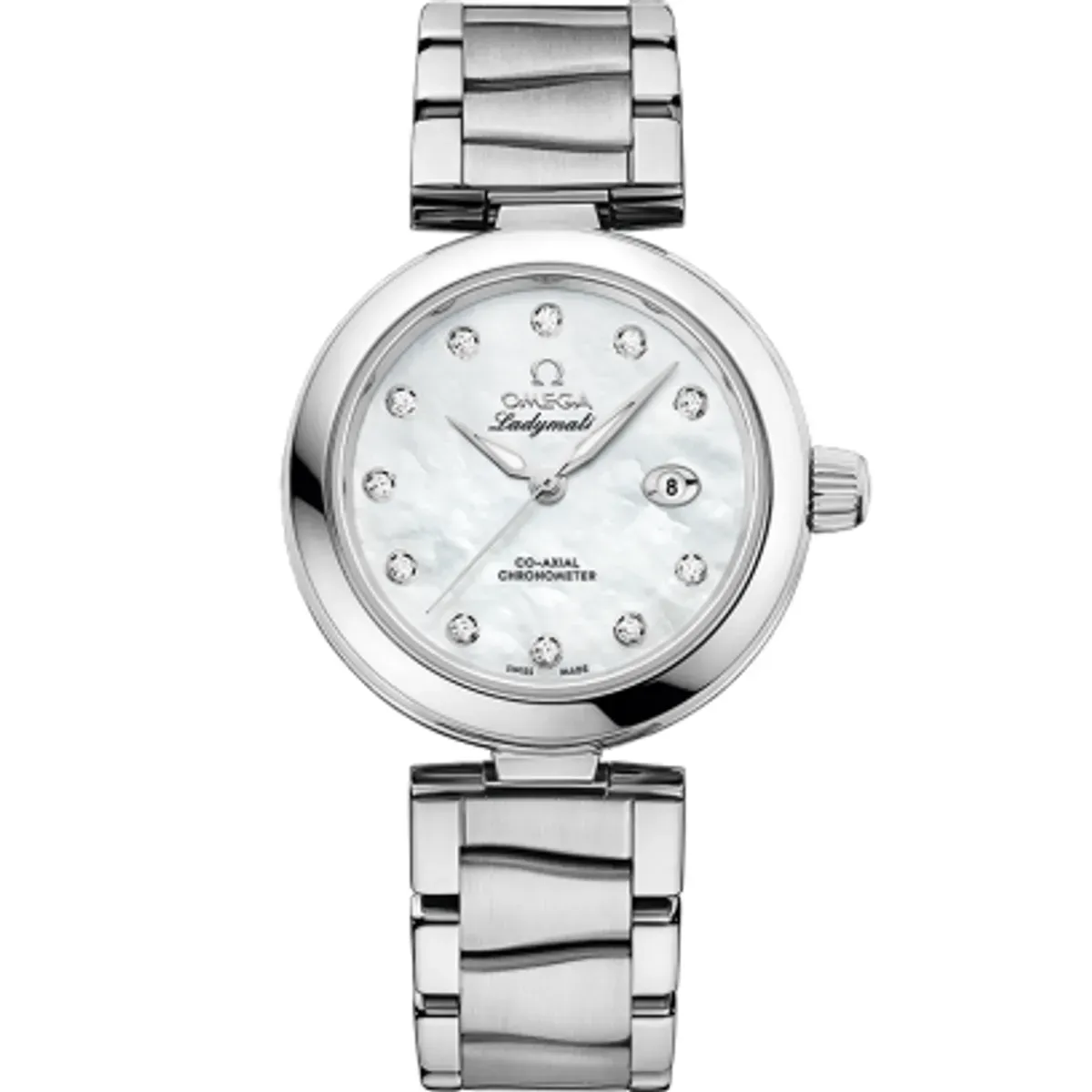
| Constellation | The design driven, dressier collection | Signature case "claws," historic "pie pan" dial, usually on an integrated bracelet |
| De Ville | The most formal and classical collection | Thin and refined pieces such as the Trésor and Prestige, aimed at traditional dress wear |
Why the brand stands out
Real technical leadership. The Coaxial escapement and the METAS Master Chronometer standard are substantive engineering achievements, not slogans. Few competitors guarantee both high accuracy and strong magnetic resistance across their core catalog.
An unmatched cultural portfolio. The combination of the Moon landing, the Olympic Games, and James Bond gives Omega a storytelling depth that almost no other watchmaker can claim. Each of these is independently powerful, and together they cover science, sport, and cinema.
Strong value for the prestige. Among the major Swiss luxury houses, Omega is frequently cited as offering the best ratio of horological quality to price. A buyer gets serious mechanical watchmaking and real innovation while paying less than the figures attached to brands like Rolex, Patek Philippe, or Audemars Piguet.
Vertical integration and stability. Backing from The Swatch Group provides research muscle and manufacturing security, which supports both quality and a steady flow of new technology into the products.
Weaknesses and limitations
Resale value trails Rolex. On the secondary market, most Omega models depreciate more than comparable Rolex references, and they rarely command the waitlists or premiums that define the most sought after Rolex pieces. For a buyer who thinks partly in investment terms, this is a real drawback.
Status perception sits a notch lower. Among buyers who are driven mainly by visible prestige, Omega is often seen as the intelligent or knowledgeable choice rather than the ultimate aspirational one. It is respected by enthusiasts but does not carry quite the same social signal as the tier above it.
A large and sometimes fragmented catalog. Omega produces many collections, many references, and frequent small updates. This breadth can confuse newcomers and can make the brand identity feel less focused than rivals that sell a tighter range.
Case sizes and thickness. Some models, especially within the Planet Ocean range and the ceramic pieces, run large and thick. They wear well on bigger wrists but can overwhelm smaller ones, which limits their universal appeal.
Service cost and complexity. The Coaxial movement is excellent, but servicing it is relatively expensive and is best handled through Omega's own network. Over the life of the watch, this raises the total cost of ownership.
The summary view
Omega is best understood as the technically excellent and heritage rich value choice in luxury Swiss watchmaking. It pairs genuine innovation with one of the deepest cultural stories in the industry, and it delivers that package at prices below the very top tier.
Its main limitations are not really about the watches themselves but about positioning: it does not match Rolex on resale strength or pure status, and its broad catalog can feel less disciplined than some competitors. For a buyer who values engineering, history, and value over hype, it is one of the most compelling brands available.