IWC Schaffhausen
8models
6collections
0reviews
IWC Schaffhausen
High-endEngineering-led design, robust complications (chronographs & calendars), pioneering use of titanium, ceramic & Ceratanium®
Schaffhausen, Switzerland · est. 1868
part of Richemont
$5,000–$30,000+
My tier · 2
IWC was founded in 1868 by the American watchmaker Florentine Ariosto Jones in Schaffhausen, a town on the Rhine in northeastern Switzerland. Jones, born in Rumney, New Hampshire in 1841, set out to pair American factory methods with Swiss handcraft. He chose Schaffhausen for its hydro power drawn from the Rhine and its pool of skilled labor.
More about IWC Schaffhausen
History
Revenue never matched the ambition, and Jones returned to Boston in 1876. After financial trouble the company passed to the Rauschenbach family in 1880, who kept building watches to his designs. In 1885 IWC produced the Pallweber pocket watches, notable for a digital jumping display of hours and minutes.
Under the industrialist Ernst Jakob Homberger, IWC created two of its lasting families. The first Special Pilot's Watch arrived in 1936, and the first Portugieser followed in 1939. IWC has been a subsidiary of the Richemont Group since 2000.
Ownership: from LMH to Richemont
For much of the late twentieth century IWC sat inside a German industrial group. In 1991 the watch executive Günter Blümlein formed LMH (Les Manufactures Horlogères), which held 100 percent of IWC, 60 percent of Jaeger LeCoultre, and 90 percent of A. Lange & Söhne. LMH itself was owned by Mannesmann, the German engineering and telecoms conglomerate.
When Vodafone took over Mannesmann in 2000, the watch brands were put up for sale. After a contest that drew LVMH and the Gucci group, the Richemont Group acquired LMH for about CHF 2.8 billion in 2000. IWC has operated as a Richemont subsidiary ever since, with access to shared movement resources and a global retail network.
This era also produced IWC's boldest mechanics. The Ref. 3770 of 1990 was the first wristwatch sized grande complication to combine a chronograph, a minute repeater, and a perpetual calendar. The Il Destriero Scafusia of 1993 added a tourbillon and a split seconds chronograph, proving that Schaffhausen could compete at the very top.
Engineering and signature calibers
IWC is defined by mechanical engineering rather than decoration. Albert Pellaton joined as technical director in 1944 and built the brand's reputation for automatic winding. His bidirectional pawl winding system turns rotor motion in both directions into winding force, which makes the movements wind quickly and resist wear.
The modern 52000 calibre family, launched in 2015, carries the refined Pellaton system on two barrels for a seven day power reserve. It beats at 4 Hz (28,800 vibrations per hour) with a Breguet hairspring, and uses ceramic winding components for near wear free running. The compact 32000 family added silicon escapement parts and strong resistance to magnetic fields.
IWC also kept alive a tradition of accessible high complications. The Da Vinci Perpetual Calendar of 1985, engineered by Kurt Klaus, ran a fully mechanical perpetual calendar programmed for centuries and set entirely through the crown. That logic still underpins the calendar and moon phase pieces across the range.
Material innovation
Few houses have shaped watch materials as consistently as IWC. The brand pioneered titanium cases in the early 1980s, bringing lightness and strength to tool watches. It then presented the world's first ceramic watch, the Da Vinci Perpetual Calendar (Ref. 3755), in 1986, using hard zirconium oxide.
The most ambitious step is Ceratanium®, introduced in 2017 on an Aquatimer and developed over roughly five years. It starts as a special titanium alloy that forms a ceramic surface when fired, so a single material gains the lightness of titanium and the scratch resistance of ceramic. The all black result is now a signature of the brand's modern tool watches.
Pilot's Watches: a wartime heritage
IWC's aviation story began with the Special Pilot's Watch of 1936, built for the cockpit with a rotating bezel and an antimagnetic movement. The defining piece arrived in 1940 as the Big Pilot's Watch 52 T.S.C. (Ref. IW431), a 55 millimeter observation watch weighing 183 grams. It used a large conical crown for gloved hands and a hacking seconds function so crews could synchronize to the second.
These watches, known in German as Beobachtungsuhren or observation watches, drew on a pocket watch caliber whose lineage runs back to IWC's 1888 movements. After the war the Mark XI of 1948, powered by the calibre 89, became standard issue for Royal Air Force navigators and set the template for legible tool watches. The modern Big Pilot, revived in 2002, still echoes that original dial.
Grande complications and dial craft
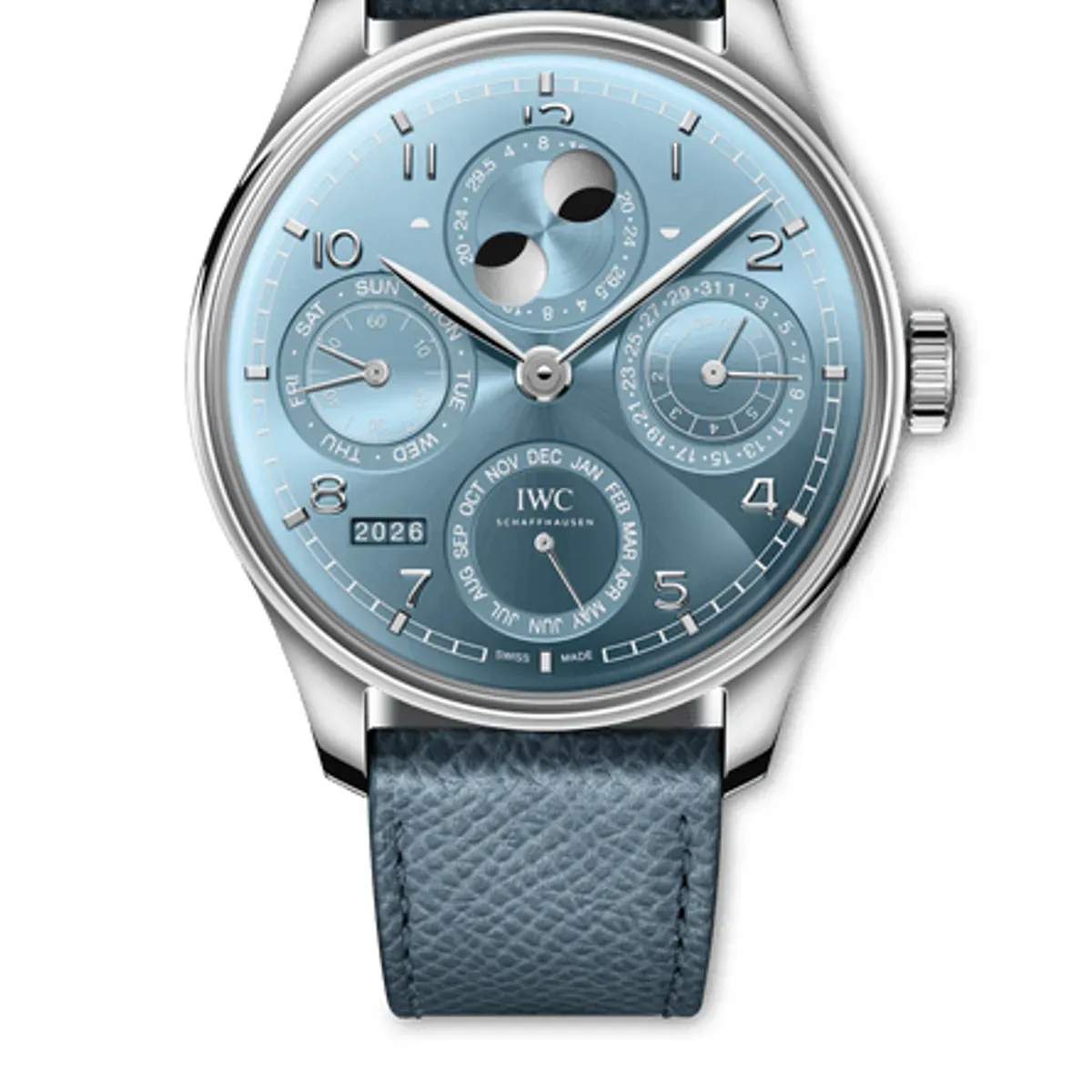
Alongside tool watches, IWC builds serious complications. The Da Vinci Perpetual Calendar by Kurt Klaus pioneered crown set perpetual logic in 1985, and the brand later layered minute repeaters, tourbillons, and split seconds chronographs into single cases. The Portugieser line in particular hosts the constant force tourbillon and a perpetual calendar with a double moon phase for the northern and southern hemispheres.
Dial craft is a quiet strength. The Portugieser railway minute track, applied Arabic numerals, and feathered leaf hands have stayed consistent for decades. That restraint gives IWC a recognizable visual grammar that resists passing trends.
Manufacture and craftsmanship
IWC concentrates production in Schaffhausen and nearby Merishausen. In 2018, during its 150th anniversary year, the brand opened a new Manufakturzentrum in Merishausen for movement components, manufacture calibers, and cases, with workspace for roughly 400 employees. The glass and steel building reflects the engineering led identity that the CEO, a trained architect, has emphasized.
The consolidation let IWC bring more case and movement work in house and standardize quality across the range. It also underpins the brand's longer service promise and its continued push into proprietary materials.
Partnerships and culture
IWC has tied its image to aviation, motorsport, and film. Since 2007 it has been an official licensee of the US Navy, building TOP GUN watches named after the Navy Fighter Weapons School, with rugged ceramic and Ceratanium cases. The first TOP GUN piece in 2007 used a black zirconium oxide ceramic case.
The brand is a partner of the Mercedes-AMG Petronas Formula One Team and counts drivers such as Lewis Hamilton among its ambassadors. Through the Laureus Sport for Good foundation, co founded with Mercedes Benz, IWC links its marketing to youth sport charity. These ties reinforce a message of precision, performance, and engineering under stress.
Model lineup
| Collection | Identity | Highlights |
|---|---|---|
| Portugieser | Precision dress icon born in 1939 | Traces to Ref. 325, clean railway minute track, seven day calibre 52010, perpetual calendar with double moon phase |
| Pilot's Watches | Cockpit instrument legibility | Mark XI (1948) issued to the RAF, the oversized Big Pilot, TOP GUN ceramic and Ceratanium editions |
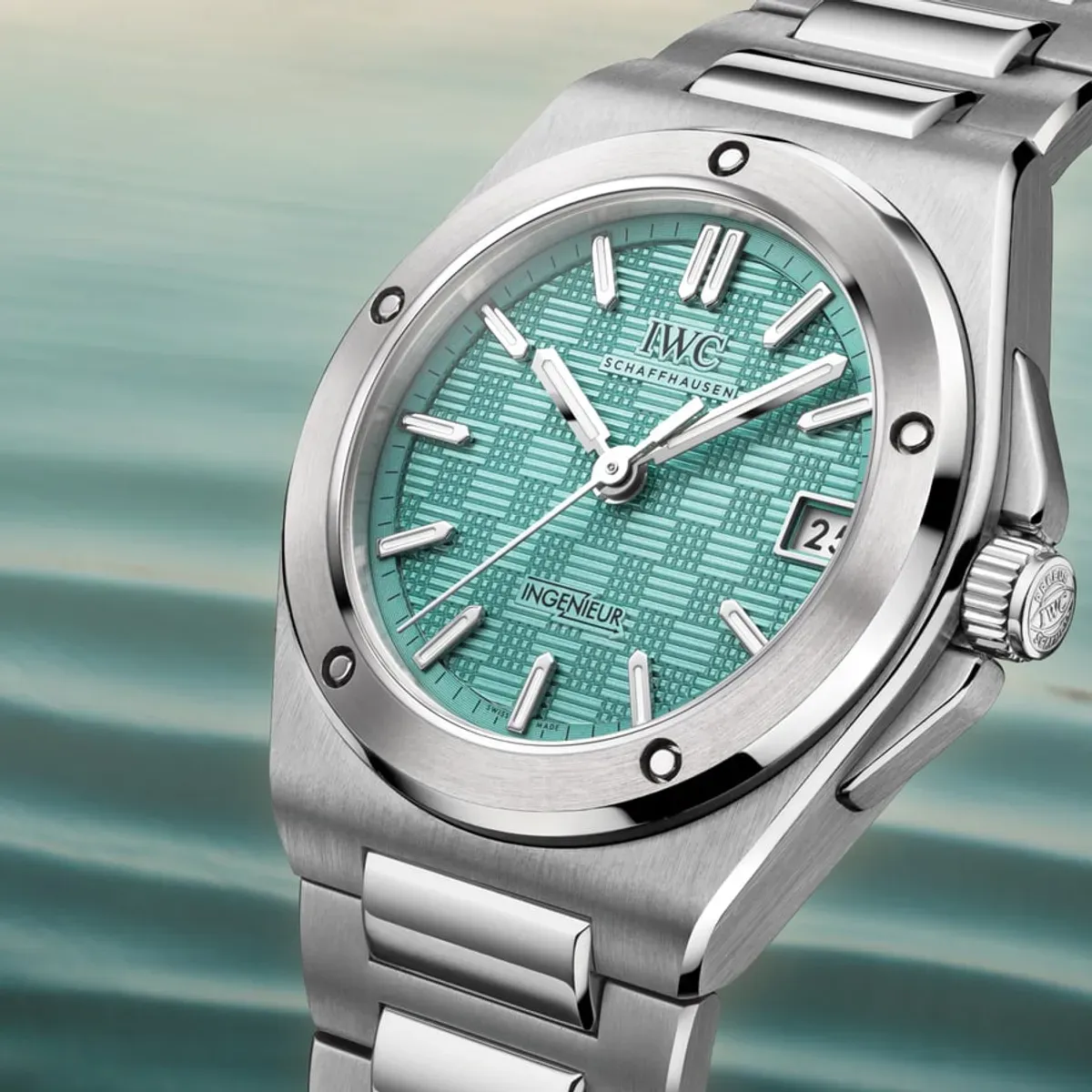
| Ingenieur | Antimagnetic luxury sports watch | Born 1955, the Genta SL Ref. 1832 (1976) with integrated bracelet and screwed bezel, revived in 2023 |
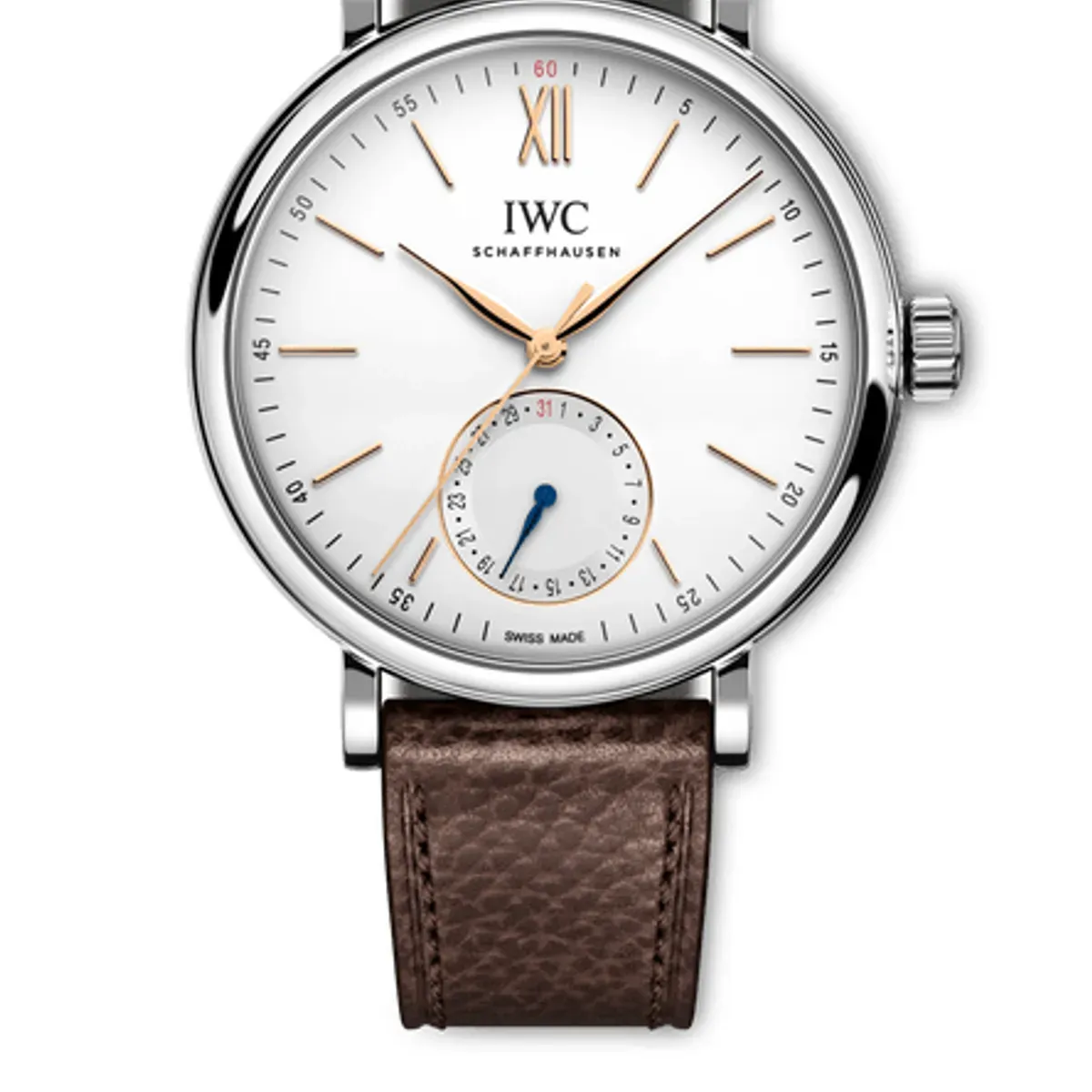
| Portofino | Slim everyday dress watch | Pared back dials, moon phase and eight day hand wound versions |
| Da Vinci | Complication showcase | First ceramic watch (1986), the Kurt Klaus perpetual calendar lineage |
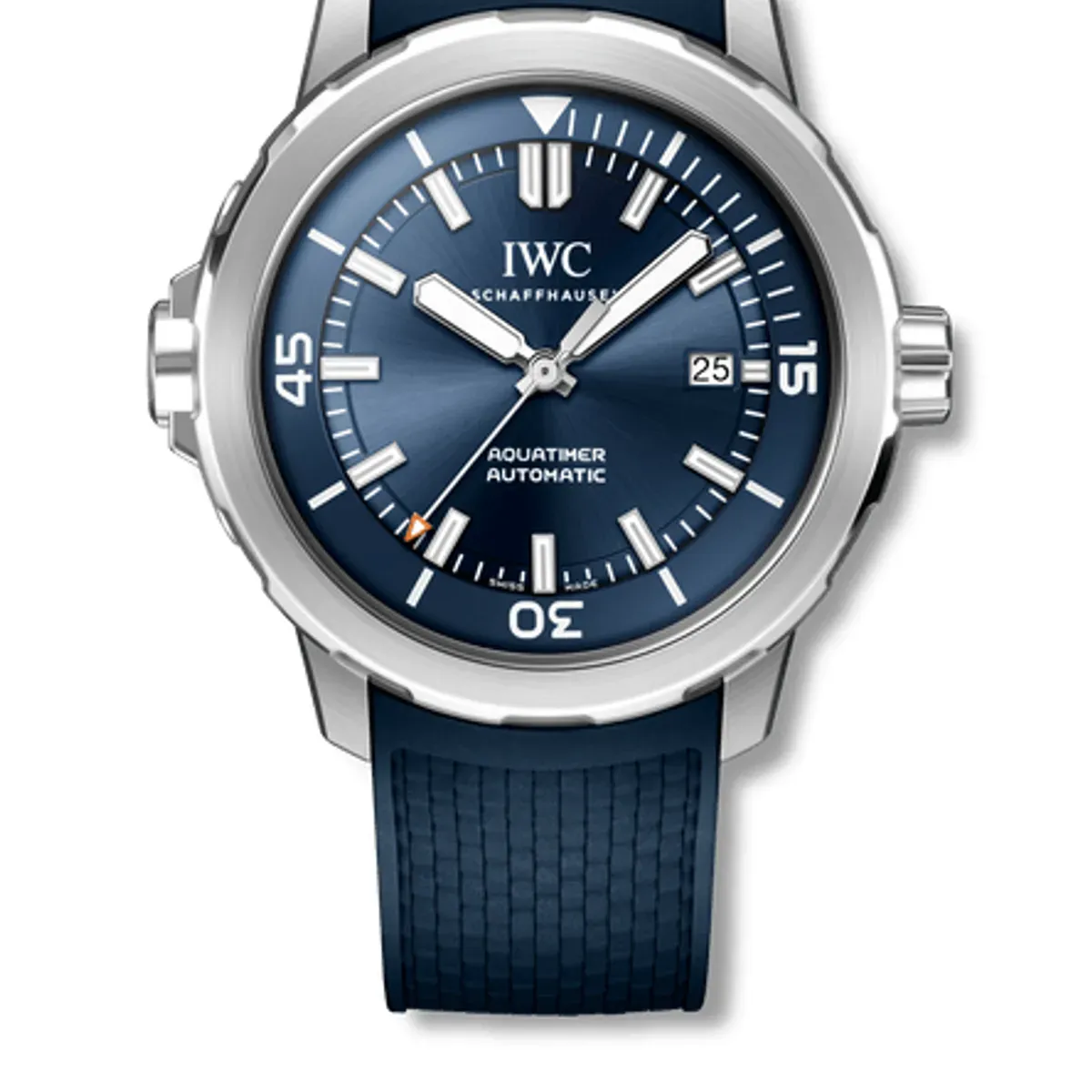
| Aquatimer | Professional dive watch | Born 1967, internal and external rotating bezel (SafeDive), Ceratanium debut in 2017 |
Why it stands out
Engineering led identity: IWC sells robustness and mechanical logic rather than gem set glamour, which gives the brand a clear and consistent character.
In house winding heritage: the Pellaton system and the seven day calibre families deliver long autonomy and durability that few rivals match at the price.
Material pioneering: titanium in the 1980s, the first ceramic watch in 1986, and Ceratanium in 2017 give IWC a genuine claim to leadership in case materials.
Everyday wearability: large legible dials, strong water resistance, and tough cases make the watches usable tools rather than safe queens.
Strong value within luxury: the brand offers manufacture movements and real complications at prices below the Geneva grandes maisons.
Recognizable icons: the Portugieser and the Big Pilot are instantly identifiable and anchor the catalog.
Proven complication know how: from the Kurt Klaus perpetual calendar to full grande complications, IWC shows it can build at the top tier when it chooses to.
Strong service and warranty backing: the consolidated manufacture and an extended care program give buyers confidence in long term ownership.
Weaknesses
Mixed movement sourcing: some entry level references have used shared Richemont or outsourced bases rather than full manufacture calibers, which can blur the engineering story.
Large case sizes: the historic preference for big diameters limits comfort on smaller wrists, even as 40mm options have grown.
Softer resale value: secondary market prices hold less firmly than Rolex or Patek Philippe, so depreciation can be steep.
Conservative design cadence: the aesthetic evolves slowly, which rewards loyalists but offers little surprise.
Mid tier prestige perception: despite high quality, IWC is not ranked at the haute horology tier of Patek Philippe or A. Lange & Söhne.
Heavy marketing footprint: the focus on celebrity ambassadors and film tie ins can feel promotional and may distract purists from the watchmaking.
Overlapping group siblings: sharing a parent with Jaeger LeCoultre and A. Lange & Söhne invites direct comparison, and some buyers view those names as more prestigious.
Summary
IWC Schaffhausen is the engineer's luxury watch brand, built on robust mechanics, long power reserves, and genuine material innovation. Its strongest assets are the Portugieser and Pilot's Watch families, the Pellaton driven calibers, and a pioneering record in titanium, ceramic, and Ceratanium.
Core models sit roughly in the $5,000 to $30,000+ range, with complications climbing higher, which positions IWC as serious value within Swiss luxury. The trade offs are large cases, softer resale, and a prestige rank just below the very top houses. For a buyer who prizes durability and clear engineering over status signaling, IWC is one of the most rational choices in fine watchmaking.
The deeper appeal lies in coherence. A brand born in 1868 from an American engineer's bet on Swiss craft still sells watches whose value rests on mechanics, materials, and legibility rather than fashion. For collectors who want a clear thesis behind a purchase, IWC offers one of the most consistent stories in the industry.