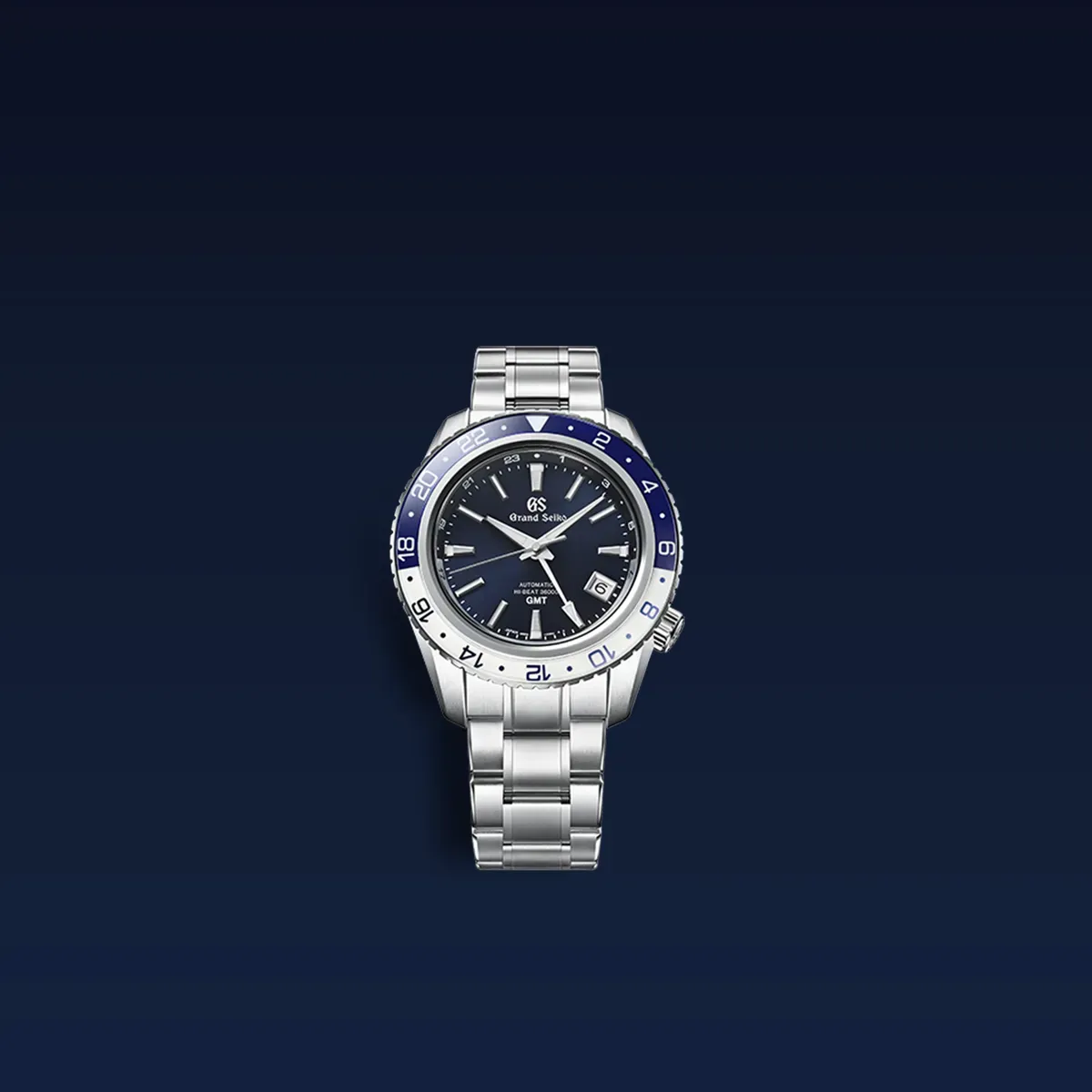
Grand Seiko
5models
5collections
198reviews
Grand Seiko
LuxuryExceptional finishing, Spring Drive, nature-inspired "texture" dials
Shizukuishi / Shiojiri, Japan · est. 1960
part of Seiko Group
$3,000–$15,000+
My tier · Wishlist
Grand Seiko began in 1960 as a project to build "the ideal watch" and has become the most serious rival to Swiss luxury in the modern market. Its case is built on three pillars: Spring Drive, obsessive zaratsu finishing, and dials that translate Japanese landscape into texture. Since 2017 it has stood as an independent brand, no longer a line within Seiko.
More about Grand Seiko
History
The first Grand Seiko appeared in 1960 from the Suwa factory, built to chronometer standards with the explicit goal of beating Switzerland at precision. Through the 1960s Seiko entered the Neuchâtel and Geneva observatory competitions, and by 1968 its movements ranked among the very best submitted. The Swiss learned the challenge was real years before quartz proved it.
The 44GS of 1967 codified designer Taro Tanaka's Grammar of Design: flat, distortion free surfaces, wide polished bevels, and faceted hands built to catch light. The high beat 61GS followed in 1968. Quartz then made mechanical Grand Seiko commercially pointless, and the line went quiet through the 1980s.
Revival came in stages: quartz Grand Seiko in 1988, the mechanical 9S caliber family in 1998, and Spring Drive models from 2004. International distribution began seriously in 2010, and in 2017 Grand Seiko became a standalone brand with its own dial signature. The Evolution 9 design language arrived in 2020.
Spring Drive: A Third Way of Telling Time
Spring Drive is a mainspring powered movement regulated by a quartz referenced electromagnetic brake, with no battery and no escapement. Engineer Yoshikazu Akahane pursued the idea from 1977 through roughly 600 prototypes before launch in 1999. The payoff is mechanical soul with quartz discipline: about one second per day, and only 10 seconds per month for the newest 9RA calibers.
The visible signature is the perfectly smooth glide of the seconds hand, since time is braked rather than counted in steps. No other manufacturer produces anything comparable in series. It remains the single strongest technical argument for the brand.
Finishing, Dials, and the Two Studios
Zaratsu polishing, done by hand against rotating tin plates, produces the mirror flat, distortion free case surfaces the Grammar of Design demands. Dials translate the scenery around the studios: the Snowflake texture from 2005 mimics drifted snow near the Shinshu studio, the White Birch of 2021 renders forest bark, and Mt. Iwate patterns echo the peak visible from Shizukuishi.
Production splits between two homes. The Shizukuishi studio in the north builds mechanical 9S watches, while Shinshu in Nagano builds Spring Drive and quartz. Both operate at finishing levels the Swiss reserve for far higher price tags.
The Movement Bench
The mechanical side peaked with the 9SA5 of 2020: a free sprung balance, a novel dual impulse escapement, an 80 hour reserve, and a slimmer profile. The 9F quartz family from 1993 is quietly one of the best quartz movements ever made, rated to 10 seconds per year, with a sealed cabin and backlash control so the seconds hand hits its markers dead on.
At the summit sits the Kodo Constant Force Tourbillon of 2022, the brand's first grand complication, which took a prize at the GPHG the same year. It signaled that Grand Seiko intends to compete above the 50,000 dollar line too. The bench strength beneath these flagships is deep and entirely in group.
Model lineup
| Collection | Identity | Highlights |
|---|---|---|
| Heritage | The historical core | Snowflake, White Birch, 44GS and 62GS shapes, most Spring Drive references |
| Evolution 9 | The modern flagship style | 2020 design language, wider lugs, low center of gravity, 9SA5 and 9RA calibers |
| Elegance | The dress side | Slim cases, urushi and textured dials, hand wound Spring Drive |
| Sport | The tool adjacent range | Divers, GMTs, and chronographs with Spring Drive 9R86 |
| Masterpiece / Kodo | The summit | Constant force tourbillon and micro artist level pieces |
Why it stands out
- Spring Drive exclusivity. A genuinely unique movement technology, unmatched and unlicensed, with visible daily benefits.
- Finishing per dollar. Zaratsu cases and faceted hands at 5,000 dollars compete with Swiss work at three times the price.
- Dial artistry. Nature textured dials give each reference an identity rivals need limited editions to approximate.
- 9F quartz seriousness. The only luxury brand treating quartz as haute horlogerie, at 10 seconds a year.
- Full in group production. Movements, cases, dials, and hairsprings all come from the Seiko group's own industrial base.
Weaknesses
- Status shortfall. Outside enthusiast circles the name still reads as "expensive Seiko," a perception the 2017 split only partly fixed.
- Soft resale. Most references trade well below retail, punishing owners who buy at list and change their minds.
- Bracelet ergonomics. Clasps without tool free micro adjustment remain standard, a persistent gap at these prices.
- Limited edition flood. Dozens of similar textured dial editions dilute focus and confuse the secondary market.
- Case wearability. Wide lug profiles on many references wear larger than dimensions suggest, narrowing the audience.
Summary
Grand Seiko delivers the strongest pure product argument in luxury watchmaking: unique movement technology, superb finishing, and dial craft, priced below Swiss equivalents. Its unsolved problems are social rather than mechanical, brand prestige and resale value, and they are slowly improving as collector culture catches up. The trajectory since 2017, capped by the Kodo, points unmistakably upward. For buyers who value the object over the audience, it is arguably the best value in high end watchmaking today.
Models in depth
https://www.grand-seiko.com/kr-ko
Collections at a glance
Grand Seiko organizes its catalog into five collections. The overview below follows the official website lineup as of July 2026.
| Collection | Positioning | Where it is made | Series within the collection |
|---|---|---|---|
| Masterpiece | The pinnacle, art level pieces crafted to last for generations | Micro Artist Studio in Nagano for Spring Drive, Atelier Ginza in Tokyo for mechanical | Single lineup of hand finished flagships |
| Evolution 9 | The modern flagship style built on the Evolution 9 Style of 2020: evolved aesthetics, legibility, and wearing comfort | Shizukuishi and Shinshu studios | Runs only the newest calibers: 9SA and 9SC mechanical, 9RA and U.F.A. Spring Drive |
| Heritage | The heart of the brand, reviving the designs of the earliest models with current movements | Shizukuishi and Shinshu studios | 44GS, 62GS, Spring Drive, Refined Essentials |
| Sport | Legibility and durability: divers, chronographs, and GMTs | Shizukuishi and Shinshu studios | Tokyo Lion, Diver, Spring Drive Chronograph, Triple Time Zone, GMT |
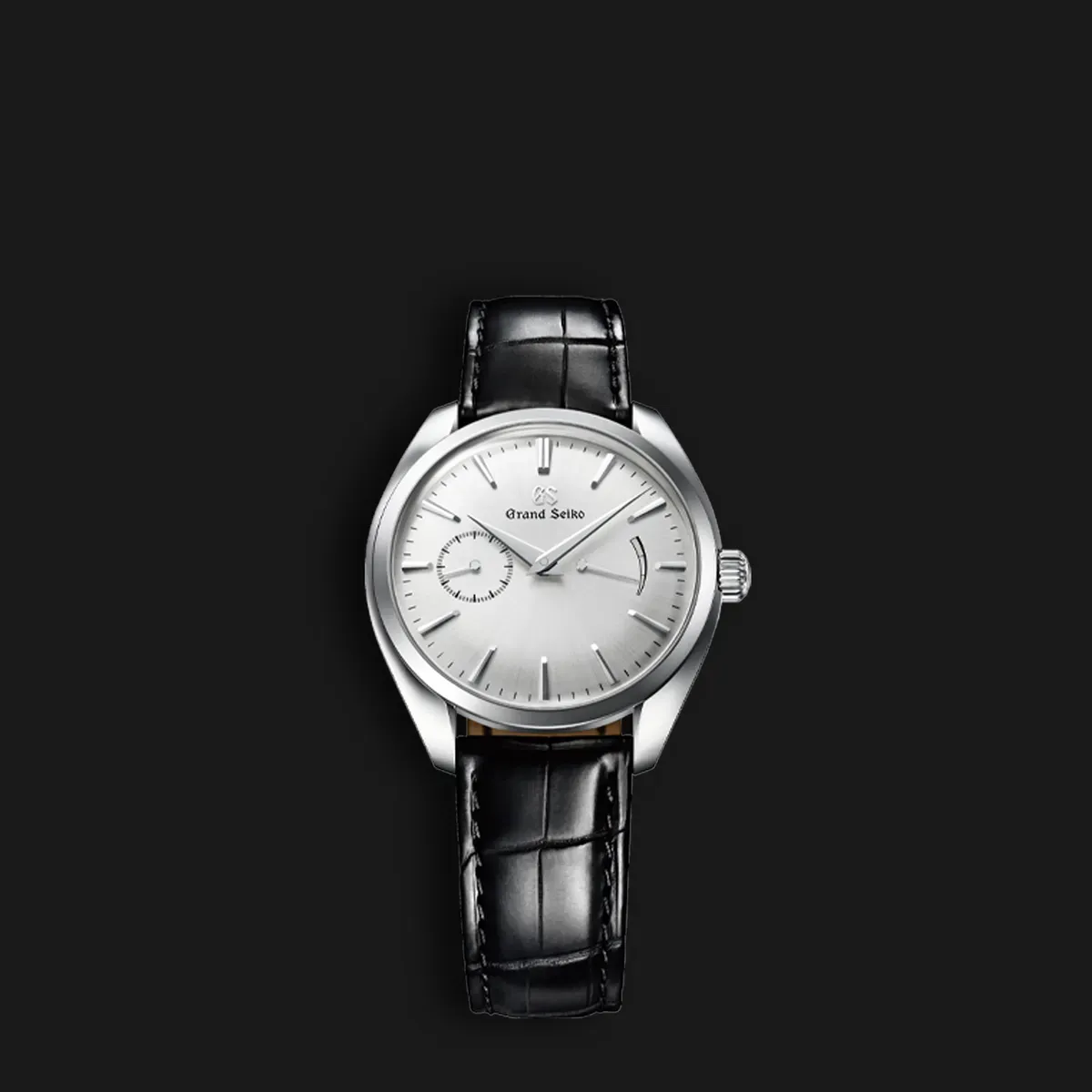
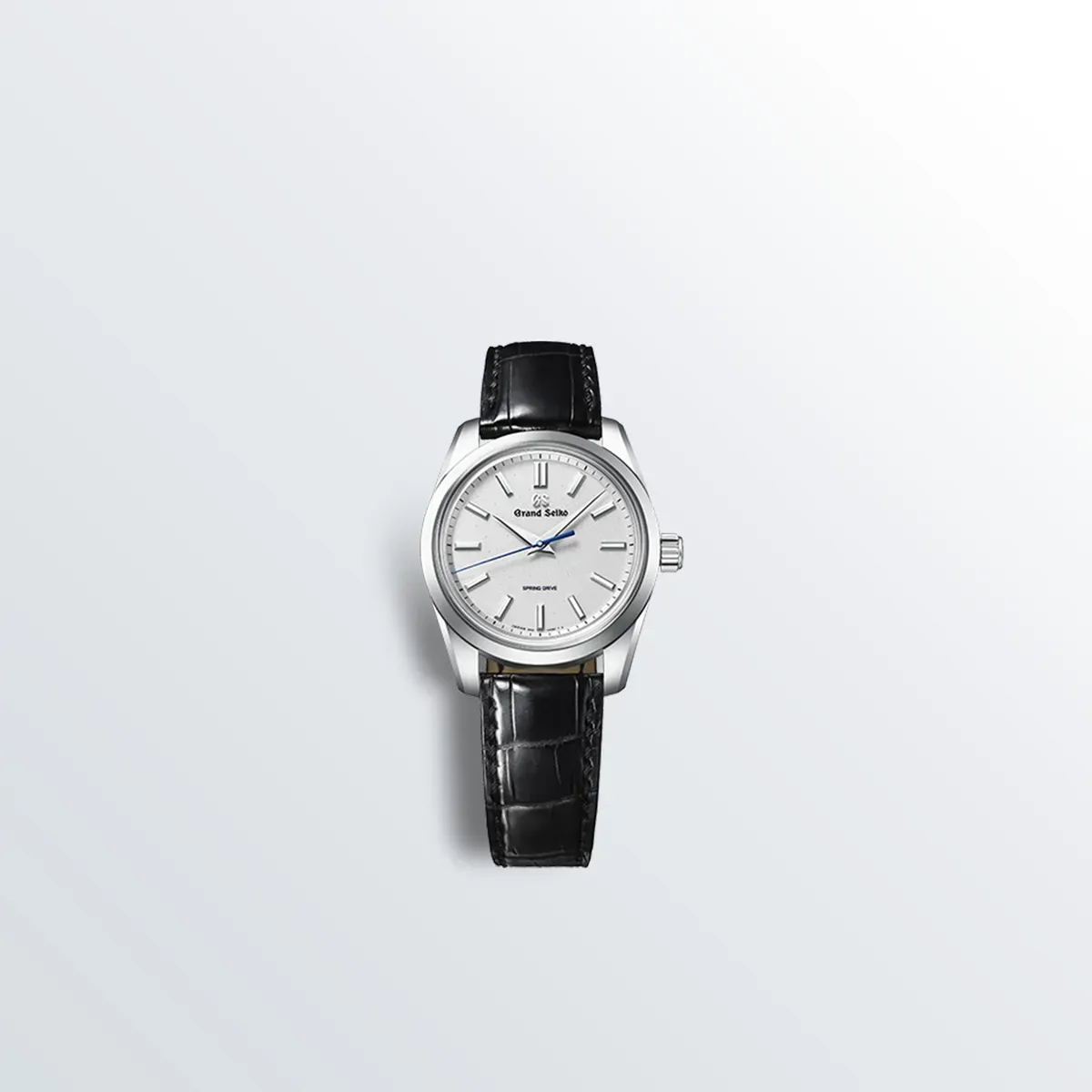
| Elegance | Dress refinement for landmark occasions, everyday durability included | Shizukuishi and Shinshu studios | Thin Dress, Re creation of the first Grand Seiko, Contemporary Classics |
Reference
Structure of a Grand Seiko reference (example: SBGA293)
| Part | Example | Meaning |
|---|---|---|
| 1st letter | S | Seiko brand family (nearly all GS references start with S, ladies' models start with ST) |
| 2nd letter | B | Product category, essentially a men's Grand Seiko watch |
| 3rd + 4th letters | GA | Movement family. This is the most informative part of the code |
| 3 digits | 293 | Sequential release number within that prefix family. Higher numbers are generally later releases |
Common prefix families and their movements
| Prefix | Movement type | Caliber family | Example from your screenshot |
|---|---|---|---|
| SBGA | Spring Drive automatic | 9R65 | SBGA293, SBGA407 (Skyflake) |
| SBGY | Slim manual wind Spring Drive | 9R31 | SBGY043 |
| SBGM | Mechanical automatic GMT | 9S66 | SBGM255, SBGM257 |
| SBGJ | Hi-Beat 36000 automatic GMT | 9S86 | SBGJ249, SBGJ251 |
| SBGK | Slim manual wind mechanical | 9S63 | SBGK007 |
| SBGH | Hi-Beat 36000 time only | 9S85 | not shown |
| SBGE | Spring Drive GMT | 9R66 | not shown |
| SBGW | Manual wind mechanical | 9S64 | not shown |
| SBGX / SBGP | Quartz | 9F | not shown |
| SBGC | Spring Drive chronograph | 9R86/9R96 | not shown |
| SLGA / SLGH / SLGW | Evolution 9 generation calibers | 9RA2 / 9SA5 / 9SB5 | not shown |
So a quick mental shortcut: the fourth letter tells you the engine. A = standard Spring Drive, J = Hi-Beat GMT, M = regular mechanical GMT, K and Y = slim hand wound dress pieces.
All the Spring Drive prefixes in the current Grand Seiko system:
| Prefix | What it is | Caliber | Notes |
|---|---|---|---|
| SBGA | Spring Drive automatic, time and date | 9R65 | The workhorse prefix. Snowflake SBGA211, your screenshot's SBGA293 and SBGA407 |
| SBGE | Spring Drive GMT | 9R66 | Sport and travel oriented pieces |
| SBGY | Slim manual wind Spring Drive | 9R31 | Elegance dress pieces like the SBGY043 in your screenshot, and the Omiwatari SBGY007 |
| SBGC | Spring Drive chronograph GMT | 9R86 / 9R96 | The big sport chronographs |
| SBGD | 8 day power reserve manual wind | 9R01 | Masterpiece Collection, made at the Micro Artist Studio |
| SBGZ | Ultra thin manual wind Spring Drive | 9R02 | Also Micro Artist Studio, hand finished platinum pieces like SBGZ001 |
| SLGA | Evolution 9 Spring Drive automatic | 9RA2 / 9RA5 | The newer 5 day movement, e.g. the White Birch Spring Drive SLGA009 |
| SLGC | Evolution 9 Spring Drive chronograph | 9R96 based | Tentagraph sibling territory, chronograph GMT in the newer case language |
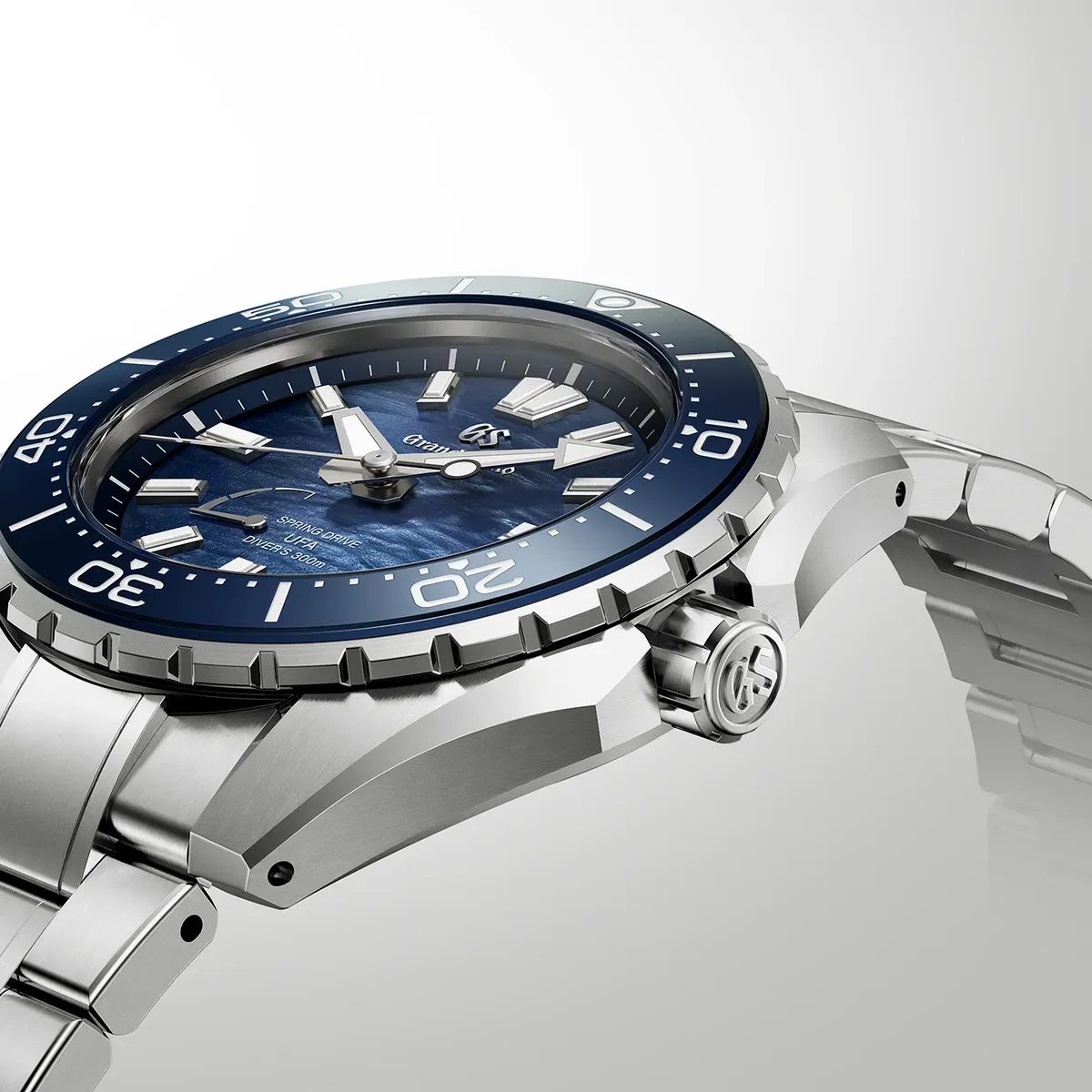
| SLGB | Spring Drive U.F.A. | 9RB2 | The ultra fine adjustment caliber accurate to ±20 seconds per year, launched 2025 |
Quick way to spot them on a dial or spec sheet: any caliber starting with 9R is Spring Drive, and any prefix containing A, E, Y, C, D, Z after SBG, or the SLGA and SLGB families, will be Spring Drive powered. In your screenshot that means SBGY043, SBGA293, and SBGA407 are the three Spring Drive pieces.
Current lineup by collection
The tables below cover every reference featured on the official collection pages. The full catalog extends further within each series, so treat these as the brand's own curated core.
Masterpiece Collection
| Reference | Movement | Notes |
|---|---|---|
| SBGD228 | Spring Drive 9R01, manual winding, 8 day reserve | New limited edition, October 2026 release |
| SBGZ011 | Spring Drive 9R02, manual winding | New limited edition, July 2026 release |
| SBGD223 | Spring Drive 9R01 | Limited edition |
| SBGD201 | Spring Drive 9R01 | Platinum flagship from the Micro Artist Studio |
| SBGD202 | Spring Drive 9R01 | 8 day power reserve flagship |
| SBGZ003 | Spring Drive 9R02 | Hand engraved platinum case |
Evolution 9 Collection (USD list prices from the official US site)
| Reference | Movement | Notes |
|---|---|---|
| SLGB023 | Spring Drive U.F.A. 9RB2 | New, USD 12,400 |
| SLGB025 | Spring Drive U.F.A. 9RB2 | New, USD 12,400 |
| SLGB003 | Spring Drive U.F.A. 9RB2 | USD 11,400 |
| SLGB001 | Spring Drive U.F.A. 9RB2 | Limited edition, U.F.A. debut piece |
| SLGW003 | Manual winding Hi Beat 9SA4 | USD 11,600 |
| SLGH005 | Hi Beat 36000 automatic 9SA5 | White Birch, USD 9,800 |
| SLGC001 | Tentagraph chronograph 9SC5 | USD 14,700 |
| SLGA021 | Spring Drive 9RA5 | Lake Suwa dial, USD 9,800 |
| SLGA019 | Spring Drive 9RA5 | USD 11,000 |
| SLGA015 | Spring Drive 9RA5 | USD 12,600 |
Heritage Collection
| Reference | Movement | Notes |
|---|---|---|
| SBGA413 | Spring Drive 9R65 | Shunbun, seasons series dial |
| SBGA415 | Spring Drive 9R65 | Textured dial three hand model |
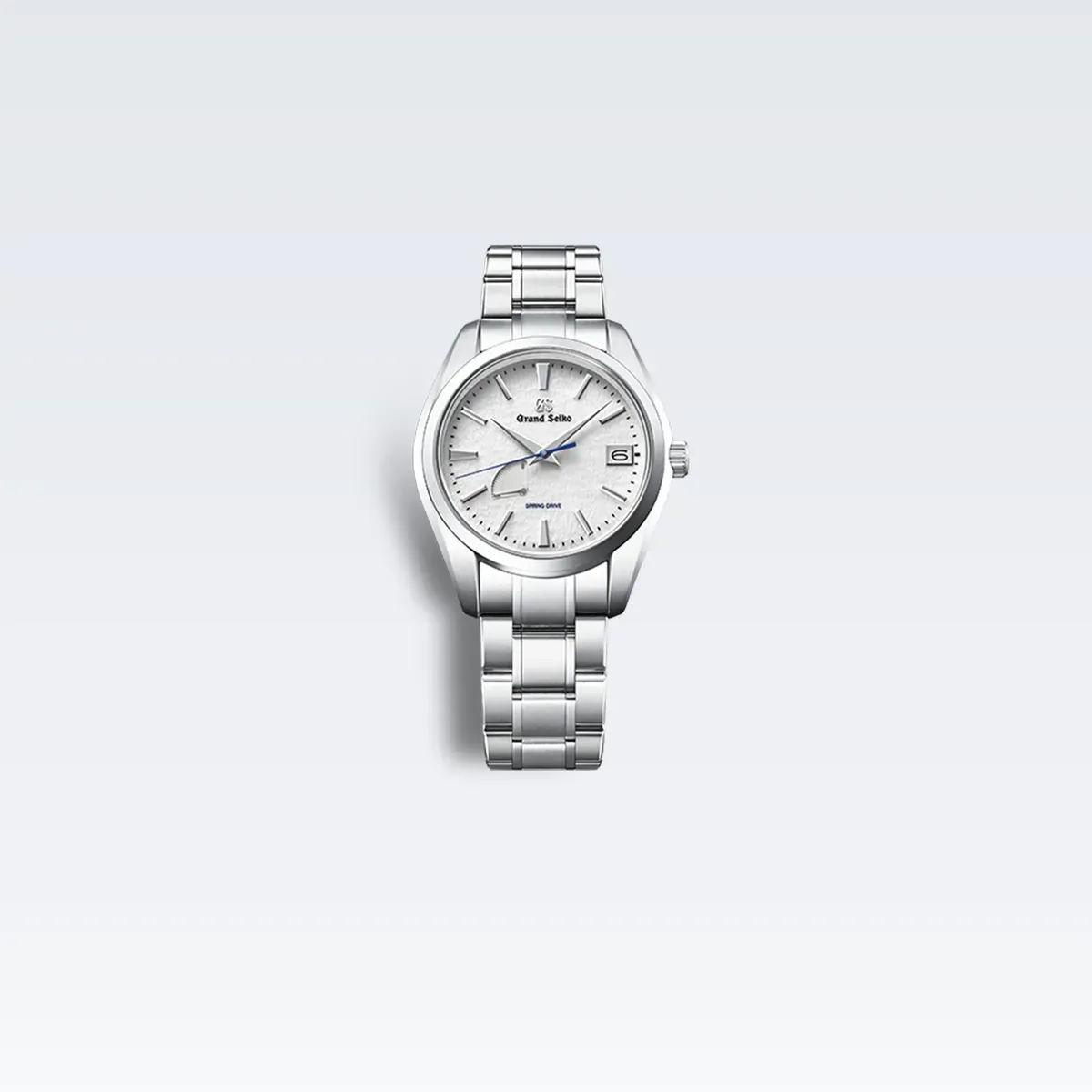
| SBGA211 | Spring Drive 9R65 | The Snowflake, the collection icon |
| SBGH341 | Hi Beat 36000 automatic 9S85 | Classic GS case geometry |
| SBGH343 | Hi Beat 36000 automatic 9S85 | Classic GS case geometry |
| SBGH347 | Hi Beat 36000 automatic 9S85 | Classic GS case geometry |
| SBGX363 | 9F quartz | New, January 2027 release |
| SBGX365 | 9F quartz | New, January 2027 release |
Sport Collection
| Reference | Movement | Notes |
|---|---|---|
| SBGJ237 | Hi Beat 36000 automatic GMT 9S86 | Mechanical GMT |
| SBGE295 | Spring Drive GMT 9R66 | Travel GMT |
| SLGC009 | Tentagraph chronograph 9SC5 | Evolution 9 style sport chronograph |
| SBGA481 | Spring Drive 9R65 | Tokyo Lion series |
| SBGC253 | Spring Drive chronograph GMT 9R96 | Flagship sport chronograph |
| SBGE253 | Spring Drive GMT 9R66 | Rotating bezel GMT |
| SBGE255 | Spring Drive GMT 9R66 | Rotating bezel GMT |
| SBGE257 | Spring Drive GMT 9R66 | Rotating bezel GMT |
Elegance Collection
| Reference | Movement | Notes |
|---|---|---|
| SBGM221 | Automatic GMT 9S66 | Cream dial classic GMT |
| SBGW301 | Manual winding 9S64 | Slim classic dress watch |
| SBGY007 | Manual winding Spring Drive 9R31 | Omiwatari ice ridge dial, Thin Dress series |
| SBGA407 | Spring Drive 9R65 | Skyflake blue textured dial |
| SBGY043 | Manual winding Spring Drive 9R31 | New, Thin Dress series |
| SBGM255 | Automatic GMT 9S66 | Contemporary Classics GMT |
| SBGM257 | Automatic GMT 9S66 | Contemporary Classics GMT |
| SBGA293 | Spring Drive 9R65 | Everyday dress three hand model |
Historical models and how the line evolved
The official history frames 1960 to 1972 as a single sustained climb: first prove precision, then codify beauty, then chase the physical limits of the mechanical watch. Every vintage reference below still shapes a current series.
| Year | Model | Breakthrough |
|---|---|---|
| 1960 | First Grand Seiko (Caliber 3180) | In house certification equal to the superior grade of the chronometer standard, large balance wheel, movable stud, fine regulation |
| 1964 | Self Dater | Second generation with calendar and 50 meter water resistance, precision made practical |
| 1966 | Grand Seiko Standard | An internal accuracy norm stricter than the Swiss chronometer standard, later tightened to plus 5 to minus 3 seconds per day |
| 1967 | 44GS | First Grand Seiko from Daini Seikosha, birth of the Grand Seiko Style and Taro Tanaka's Grammar of Design |
| 1967 | 62GS | First automatic Grand Seiko, bezel free case, zaratsu faceting, crown at 4 o'clock |
| 1968 | 61GS | Japan's first automatic 10 beat movement, Magic Lever winding, better isochronism |
| 1968 | 45GS | Manual 10 beat, thinner than the 44 and 57 series, instant date change |
| 1968 | 19GS | Small 10 beat caliber refined for women's watches |
| 1969 | 61GS V.F.A. and 45GS V.F.A. | Very Fine Adjusted, ±1 minute per month, the mechanical accuracy summit of the era |
| 1970 | 56GS | Slim automatic 8 beat answering demand for lighter, thinner watches |
| 1970 | 61GS Special | Specially adjusted 10 beat rated to ±3 seconds per day |
| 1972 | 19GS V.F.A. | ±2 minutes per month, a new accuracy benchmark for women's mechanical watches |
Phase 1, precision before identity (1960 to 1966). The first Grand Seiko was a pure accuracy statement, certified in house to the superior grade of the international chronometer standard. The Self Dater then added a calendar and water resistance, turning the concept into a daily tool. By 1966 the brand formalized its own Grand Seiko Standard, deliberately set above the Swiss chronometer norm.
Phase 2, design becomes doctrine (1967). Early Grand Seiko had no exterior identity, so Tanaka studied how watches caught the eye at the Wako store in Ginza and concluded the brand needed a sparkle with quality. The result was the 44GS, the first watch designed from the start around his Grammar of Design: flat distortion free surfaces, razor sharp hands, and mixed polished and hairline finishes. The 62GS applied the same zaratsu language to the first automatic model, with a bezel free case and a discreet 4 o'clock crown.
Phase 3, the frequency and accuracy race (1968 to 1972). The 61GS and 45GS pushed to 10 beats per second, while observatory competition experience in Neuchatel and Geneva fed directly into their calibers. The V.F.A. models then chased the absolute limit at ±1 minute per month, and the 61GS Special hit ±3 seconds per day. In parallel the 56GS pursued thinness and comfort, and the 19GS line extended serious mechanics to women's sizes.
Phase 4, rupture and rebirth (1970s to 1998). At the 1968 Geneva competition, quartz already took the top three wristwatch places, a warning that soon made high end mechanical watchmaking commercially unviable. Grand Seiko went quiet, returned with quartz models in 1988, and made quartz a craft statement with the 9F caliber in 1993. The 9S mechanical family in 1998 and Spring Drive completed the revival, with each engine reborn as a modern caliber family.
Phase 5, history as product architecture (today). The current catalog is essentially the 1960s roadmap re executed: Heritage runs dedicated 44GS and 62GS series, and Elegance sells a re creation of the 1960 original. The V.F.A. obsession returns as Spring Drive U.F.A. at ±20 seconds per year, and the 10 beat race lives on in the Hi Beat 9SA5 and the Tentagraph. What changed is sequencing, precision came first in 1960 and design followed in 1967, whereas Evolution 9 in 2020 launched design grammar and new calibers as one package.