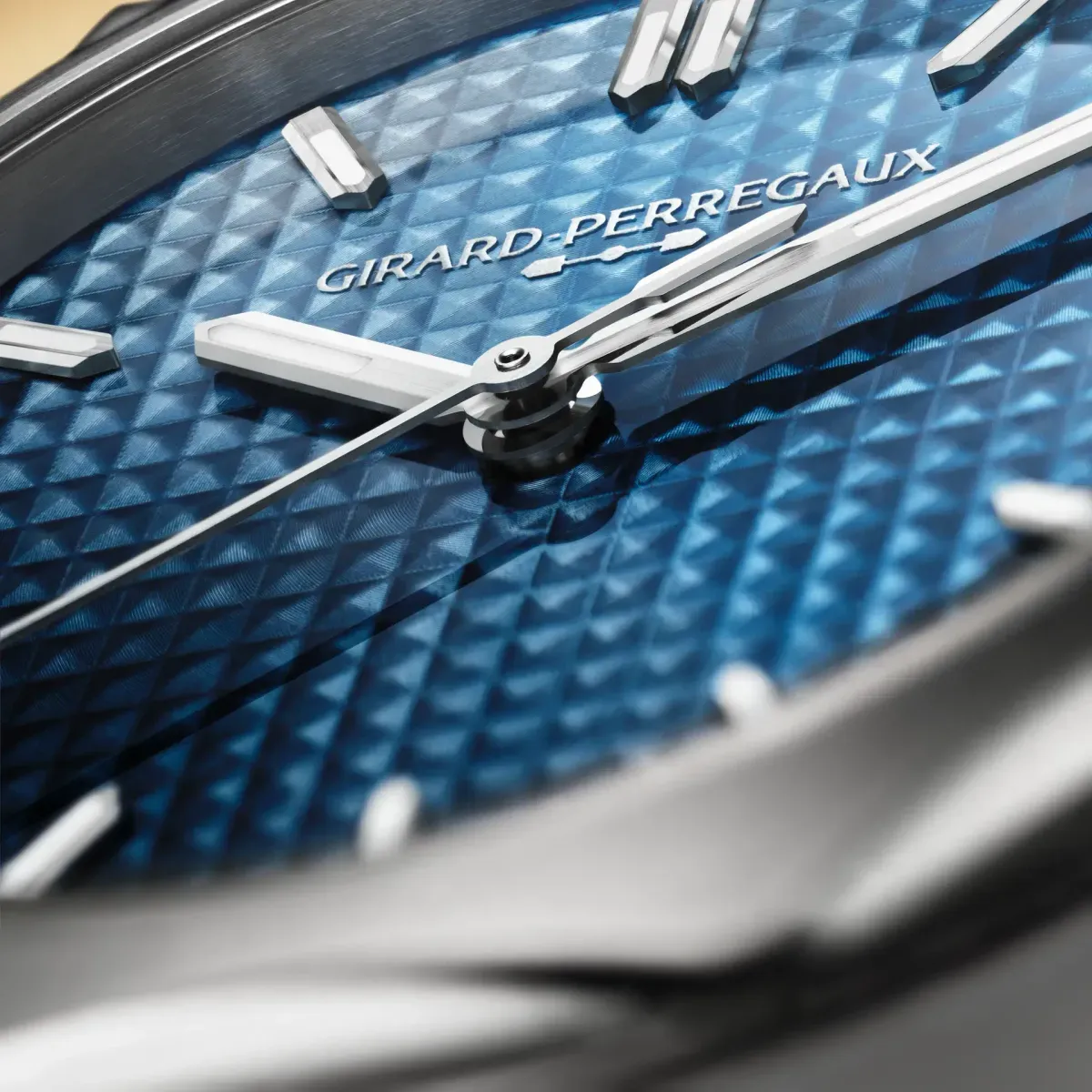
Girard-Perregaux
3models
6collections
21reviews
Girard-Perregaux
High-endHistoric manufacture; iconic Three Gold Bridges tourbillon
La Chaux-de-Fonds, Switzerland · est. 1791
$4,700 to $300,000
My tier · 2
Girard-Perregaux traces its roots to 1791 and the Geneva workshop of Jean François Bautte, one of the earliest fully integrated watch manufactures. The modern firm took shape when Constant Girard married Marie Perregaux and founded Girard-Perregaux in 1856 in La Chaux-de-Fonds. Constant Girard's masterpiece, the Tourbillon with Three Gold Bridges, won a gold medal at the 1889 Paris Universal Exhibition.
More about Girard-Perregaux
History
In 1880 the company produced wristwatches for officers of the German Imperial Navy, one of the earliest documented serial wristwatch orders in history. The 20th century brought technical firsts: the Gyromatic HF of 1966 ran at 36,000 vibrations per hour, and in 1971 the quartz caliber GP 350 helped establish 32,768 Hz as the universal frequency of quartz watchmaking.
The Laureato arrived in 1975, an integrated bracelet sports watch with an octagonal bezel, originally quartz. Under the Italian entrepreneur Luigi Macaluso from 1992 the brand rebuilt its haute horlogerie standing. Kering took control in 2011, then a management buyout in 2022 returned Girard-Perregaux and sister brand Ulysse Nardin to independence under the Sowind Group.
Key Dates
| Year | Milestone |
|---|---|
| 1791 | Jean François Bautte opens his integrated workshop in Geneva |
| 1856 | Constant Girard and Marie Perregaux found the firm in La Chaux-de-Fonds |
| 1880 | Wristwatches delivered to officers of the German Imperial Navy |
| 1884 | The Three Bridges movement architecture is patented |
| 1889 | Tourbillon with Three Gold Bridges wins gold at the Paris Universal Exhibition |
| 1966 | Gyromatic HF reaches 36,000 vibrations per hour |
| 1971 | Caliber GP 350 helps establish the universal quartz frequency |
| 1975 | The Laureato debuts with an octagonal bezel and quartz movement |
| 1992 | Luigi Macaluso begins the haute horlogerie revival |
| 2011 | Kering takes control of the brand |
| 2013 | Constant Escapement L.M. wins the Aiguille d'Or at the GPHG |
| 2022 | Management buyout restores independence under the Sowind Group |
The Three Bridges Signature
No other brand owns a movement architecture as a visual trademark. The three parallel bridges, patented in 1884, turned structure into decoration and still define the flagship pieces. Modern interpretations include the Neo Bridges, the Free Bridge, and the La Esmeralda Tourbillon, direct descendant of the 1889 medal winner.
This gives the brand something rare: an haute horlogerie icon that is mechanical rather than a case shape.
Model Lineup
| Collection | Identity | Highlights |
|---|---|---|
| Laureato | 1975 integrated sports watch, octagonal bezel on tonneau base | Laureato 42 and 38, Chronograph, Absolute line |
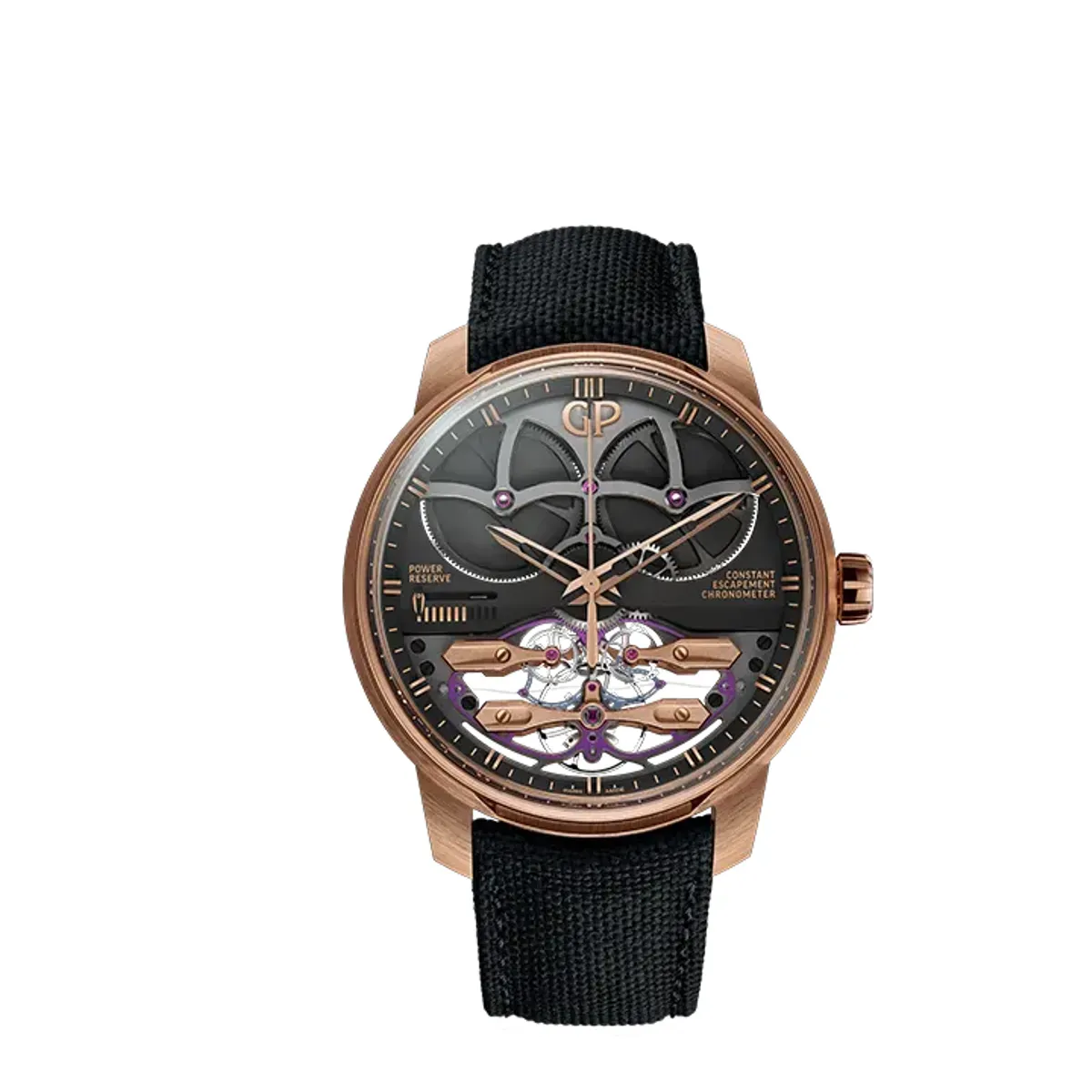
| Bridges | Movement architecture as design | Free Bridge, Neo Bridges, Three Gold Bridges Tourbillon |
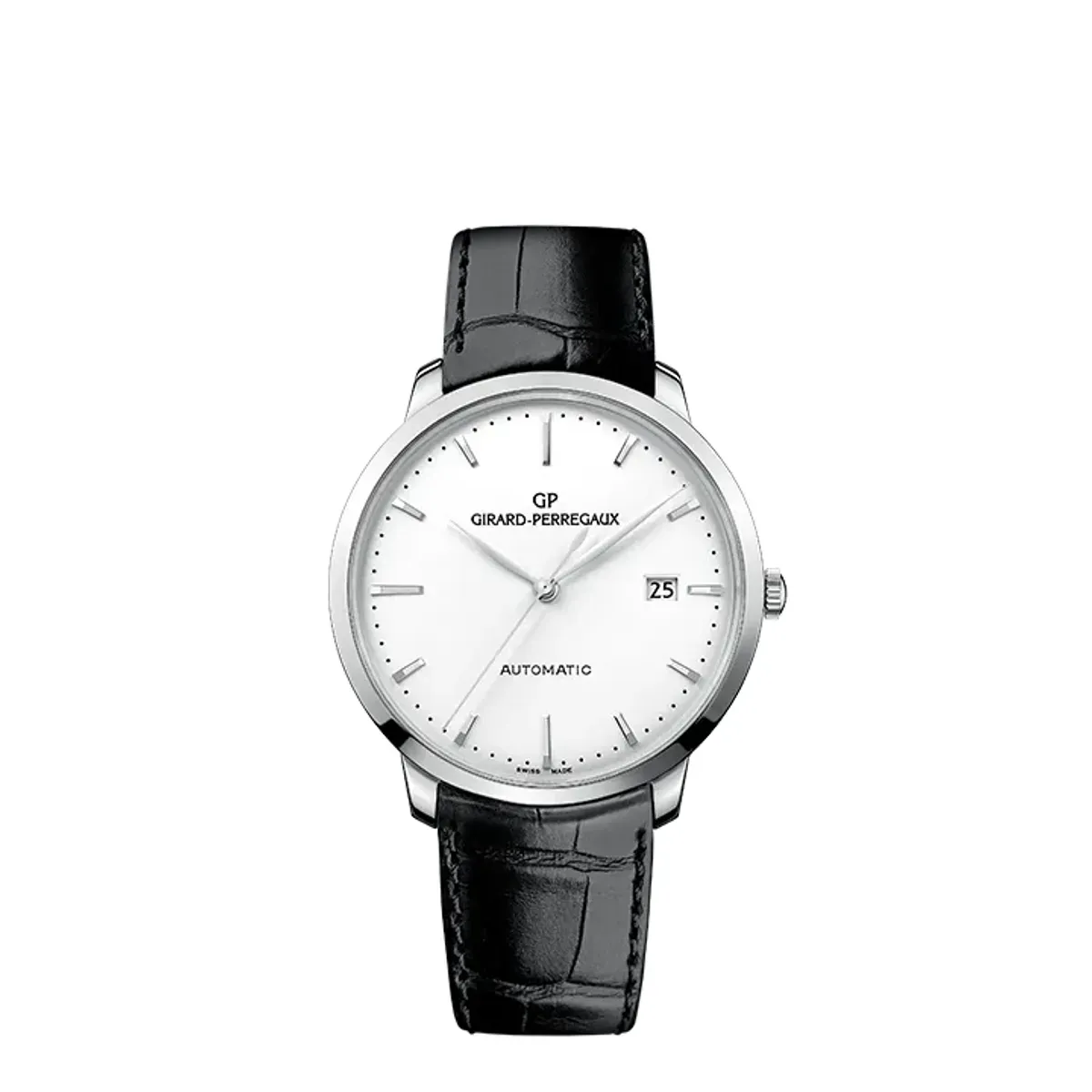
| 1966 | Round classical dress line | Date, moon phase, precious metals |
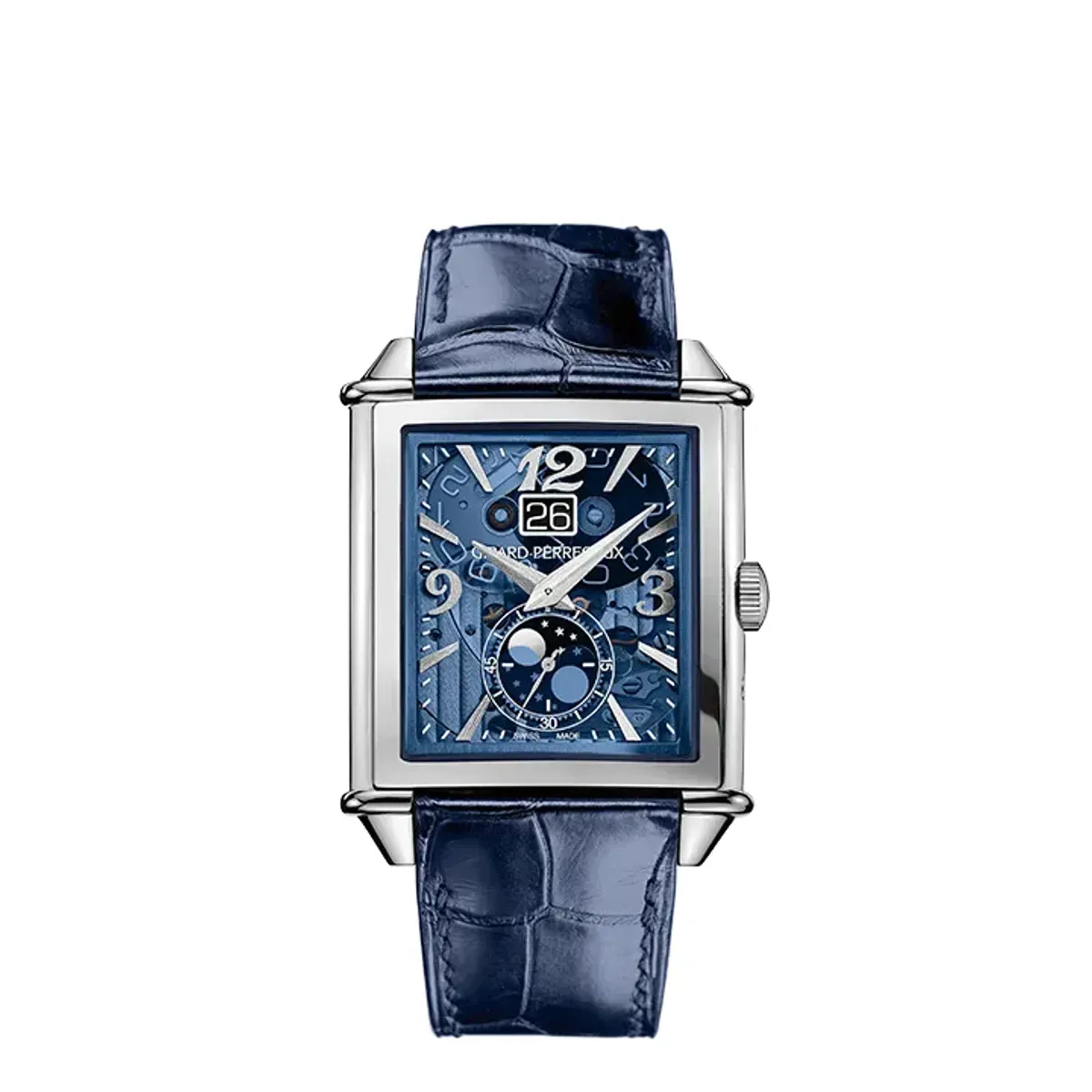
| Vintage 1945 | Art deco rectangular case | Curved case, small seconds |
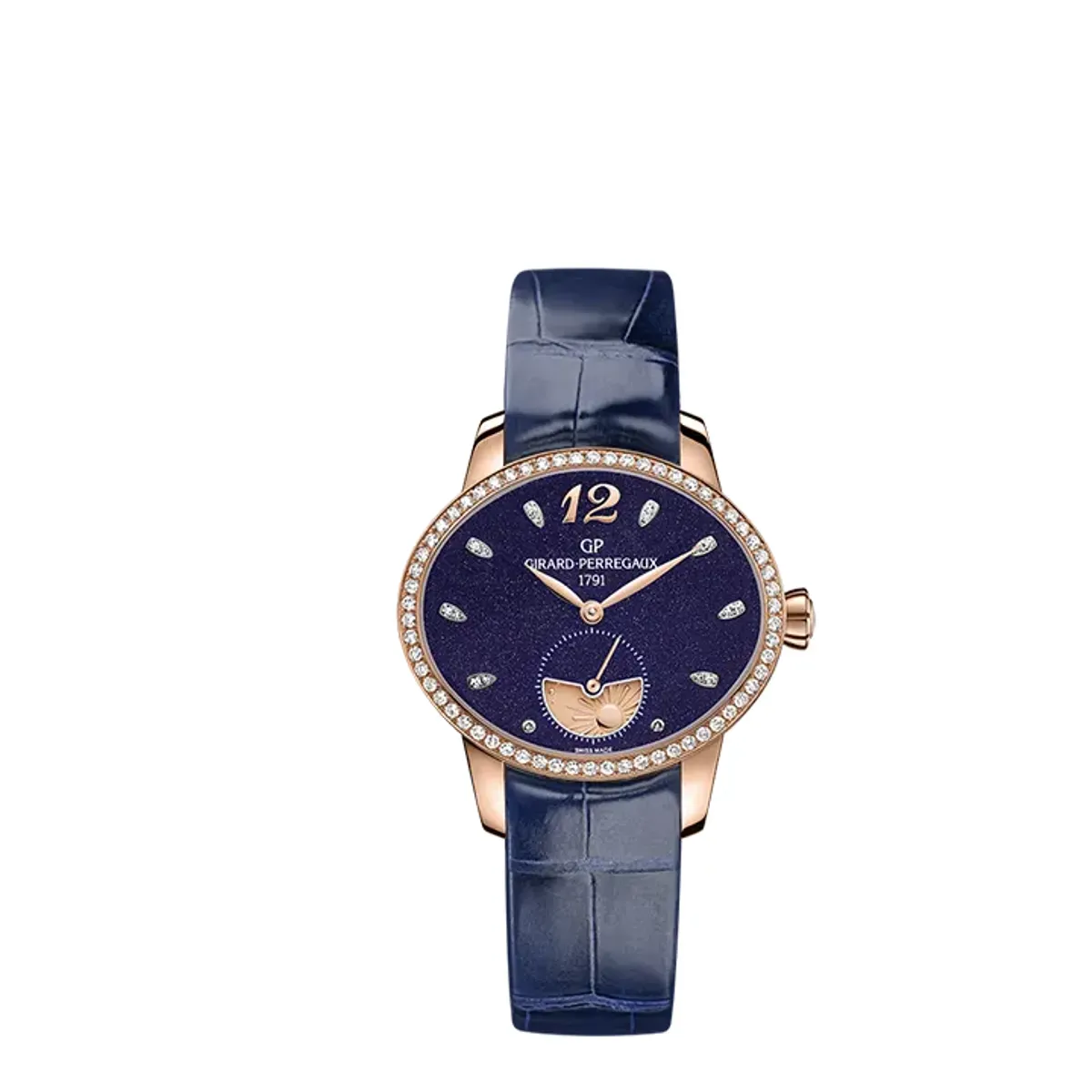
| Cat's Eye | Oval line aimed at women | Complications rare in ladies watches |
| Casquette | 1970s LED cult piece revived in 2022 | Casquette 2.0 in ceramic and titanium, limited runs |
Manufacture and Movements
Girard-Perregaux builds its own calibers in La Chaux-de-Fonds, covering everything from base automatics to grand complications. The manufacture produces plates, bridges, and escapement components in house and finishes them by hand. That vertical depth is rare among brands trading at these prices.
| Caliber | Character | Found In |
|---|---|---|
| GP01800 | Modern automatic with roughly 54 hours of reserve | Laureato 42 and core three hand models |
| GP03300 | Compact automatic workhorse | Laureato 38, 1966, Vintage 1945 |
| GP09400 | Tourbillon held by three arrow shaped bridges | Neo Bridges and Neo Tourbillon pieces |
| GP09600 | Hand wound tourbillon in classical dress | La Esmeralda Tourbillon |
| Constant Escapement | Constant force delivered through a flexing silicon blade | Constant Escapement L.M. |
The Constant Escapement deserves special mention. It delivers identical torque to the balance from full wind to the end of the power reserve, solving a problem watchmakers chased for centuries. It won the Aiguille d'Or, the industry's highest award, at the 2013 Grand Prix d'Horlogerie de Genève.
The Laureato in Depth
The Laureato launched in 1975, three years after the Royal Oak and one year before the Nautilus. It began life as a quartz watch, which at the time read as a statement of modernity rather than a compromise. The name means graduate in Italian, a nod to the film The Graduate, and the octagonal bezel over a round base was reportedly shaped with Italian architectural input.
Automatic movements arrived in the 1990s, and the Evo3 chronographs of the 2000s kept the line alive through lean years. The modern range dates to the 2016 anniversary relaunch, followed by a full collection in 2017 that sharpened the case and standardized the integrated bracelet. Today it spans 34, 38, and 42 millimeter sizes, a chronograph, skeleton models, and the composite cased Absolute line.
The result is arguably the strongest value proposition in integrated steel sports watches. Comparable finishing and in house content from the big Genevan names costs two to four times more, with waitlists on top.
Why It Stands Out
- Technical firsts across three centuries. From the 1889 tourbillon to 36,000 vph in 1966 to the quartz frequency standard in 1971, the record is genuine and deep.
- A mechanical icon. The Three Bridges are a protected identity no competitor can imitate without embarrassment.
- Manufacture credentials. Movements, including high frequency and tourbillon calibers, are built in house in La Chaux-de-Fonds.
- Integrated sports value. The Laureato delivers genuine 1970s lineage at roughly half the price of comparable Royal Oak or Nautilus references.
Weaknesses
- Awareness deficit. Public recognition lags far behind the horological record, a gap decades of ownership churn made worse.
- Laureato comparison trap. The design is forever read as an alternative to the Royal Oak rather than on its own terms.
- Soft resale. Most references trade well below retail, reflecting brand power rather than build quality.
- Catalog churn. Strategy shifts under Kering and after the buyout left collectors unsure what the core range is.
Market Position and Value
Retail pricing starts around 4,700 USD for entry pieces and runs past 300,000 USD for the grand tourbillons. A steel Laureato 42 retails near 13,000 USD, undercutting every direct rival with comparable manufacture content. That gap is the practical argument for the brand.
The secondary market is less kind. Most steel references trade meaningfully below retail, so buyers should purchase to keep rather than to trade. The upside is that lightly worn examples are outstanding value for a second owner.
How It Compares
| Rival | Comparable Model | The Girard-Perregaux Angle |
|---|---|---|
| Audemars Piguet | Royal Oak | The Laureato offers genuine 1970s lineage at a fraction of the price with no waitlist |
| Patek Philippe | Nautilus | Similar integrated elegance with vastly better availability |
| Vacheron Constantin | Overseas | The Overseas carries more brand heat, the Laureato undercuts it sharply on price |
| Zenith | Defy | Both are revived manufactures, Girard-Perregaux has the deeper complication record |
| Ulysse Nardin | Freak | Sister brand under Sowind, more avant garde, Girard-Perregaux is the classical pillar |
Collecting Notes
- Laureato 38 and 42 in steel are the core value picks, especially the green and copper dials.
- Free Bridge and Neo Bridges pieces deliver the house signature without tourbillon pricing.
- Three Gold Bridges tourbillons are the trophies, historically significant and made in small numbers.
- Casquette 2.0 revived the 1976 LED original in ceramic and titanium and sold out quickly in 2022.
- Vintage 1990s and 2000s references are plentiful and cheap, but budget for a factory service before daily wear.
Summary
Girard-Perregaux is one of watchmaking's most substantial names trapped in one of its weakest brand positions. The buyer gets documented history, a unique mechanical signature, and manufacture content at prices that reflect the awareness gap rather than the substance. Buy the Laureato or a Bridges piece on value grounds, and treat the discount as the market subsidizing your good taste.
If awareness ever catches up with the substance, today's prices will look like a gift. Until then the brand rewards buyers who care more about watchmaking than about being recognized across the room. That is exactly the kind of collector Girard-Perregaux has always served best.