Breitling
3models
9collections
145reviews
Breitling
LuxuryAviation chronographs; slide-rule bezels and COSC-certified movements
Grenchen, Switzerland · est. 1884
part of Independent
$3,500–$10,000
My tier · 2
Breitling built the modern chronograph twice: once mechanically through its pusher patents, and once commercially through the pilot's watch. Independent of the big groups, chronometer certified across the board, and repositioned sharply since 2017, it is one of the most interesting mid luxury cases in the industry. This write up covers the history, the movements, and the strategy.
More about Breitling
History
Leon Breitling opened his workshop in Saint Imier in 1884, moving to La Chaux de Fonds in 1892 to specialize in chronographs and timers. His son Gaston Breitling separated the chronograph pusher from the crown in 1915, placing it at 2 o'clock. Willy Breitling added the independent reset pusher in 1934, completing the two pusher layout every mechanical chronograph uses today.
Aviation defined the middle century. The Huit Aviation Department, founded in 1938, supplied cockpit instruments including to the RAF. The Chronomat arrived in 1941 with a patented slide rule, and the Navitimer of 1952 wrapped a full circular slide rule around a pilot's chronograph, soon adopted by the AOPA. Astronaut Scott Carpenter wore the 24 hour dial Cosmonaute in orbit in 1962.
The 1940s and 1950s made Breitling the default cockpit supplier, with the slide rule bezel letting pilots compute fuel burn, climb rates, and conversions before electronic flight computers. Civil aviation's golden age and the Navitimer grew together. The watch became a membership badge for professional pilots.
Breitling helped develop the automatic Caliber 11 with Heuer in 1969, then the quartz crisis shut the company down in 1979. Ernest Schneider bought the name and relaunched it in 1984 with a new Chronomat built with the Frecce Tricolori jet team. CVC Capital acquired control in 2017 and installed Georges Kern, previously of IWC, as CEO, with majority ownership later passing to Partners Group.
The B01 and Chronometer Discipline
The Caliber B01, launched in 2009, is one of the best integrated chronograph movements in its class: column wheel, vertical clutch, and a 70 hour power reserve. It is respected enough that Tudor uses it in the Black Bay Chrono as the MT5813, in an exchange that gives Breitling a Tudor based three hand caliber known as the B20.
The quality floor is unusually high. Since 1999 every Breitling movement is a COSC certified chronometer, a blanket policy matched at scale only by Rolex.
The caliber family has since expanded. The B04 adds a GMT function, the B09 serves hand wound heritage pieces, and the B19 perpetual calendar chronograph marked the 140th anniversary in 2024 with a 96 hour reserve.
Instruments Beyond the Chronograph
Breitling's professional tools went beyond stopwatch functions. The Aerospace of 1985 made the analog digital multifunction quartz a pilot staple, and the Emergency of 1995 built a personal locator beacon into a wristwatch and has been credited with real rescues. The Cosmonaute and decades of onboard aircraft chronographs round out a genuine instrument catalog.
Thermocompensated SuperQuartz movements, accurate to about ten seconds a year, still power the professional line. Breitling is one of the few luxury houses that treats quartz as engineering rather than embarrassment.
The Kern Era Repositioning
From 2018 Kern rebuilt the design language around modern retro: cleaner Navitimers, the revived Top Time and Premier lines, and the Superocean Heritage. Case sizes and decoration were pulled back from the oversized 2000s style that had defined the Schneider years. Marketing moved from fighter jets to "squads" of ambassadors across film, sport, and surf culture.
Design discipline shows in the details: domed crystals, softened lugs, and restrained dials replaced the riveted bezels and dial clutter of the 2000s. The Navitimer's 2022 refresh even flattened the slide rule for legibility. Enthusiast response has been strongly positive.
The company is also collecting heritage assets. Breitling acquired the dormant collector favorite Universal Geneve in 2023 with plans to relaunch it as a sister brand. Boutique expansion and a certified pre owned program round out a genuinely modern retail strategy.
The numbers have followed. Partners Group's investment reportedly valued the company above 4 billion Swiss francs, and a future public listing is regularly discussed. The Universal Geneve relaunch, planned around 2026, is the first test of whether Breitling can run a second brand.
Model lineup
| Collection | Identity | Highlights |
|---|---|---|
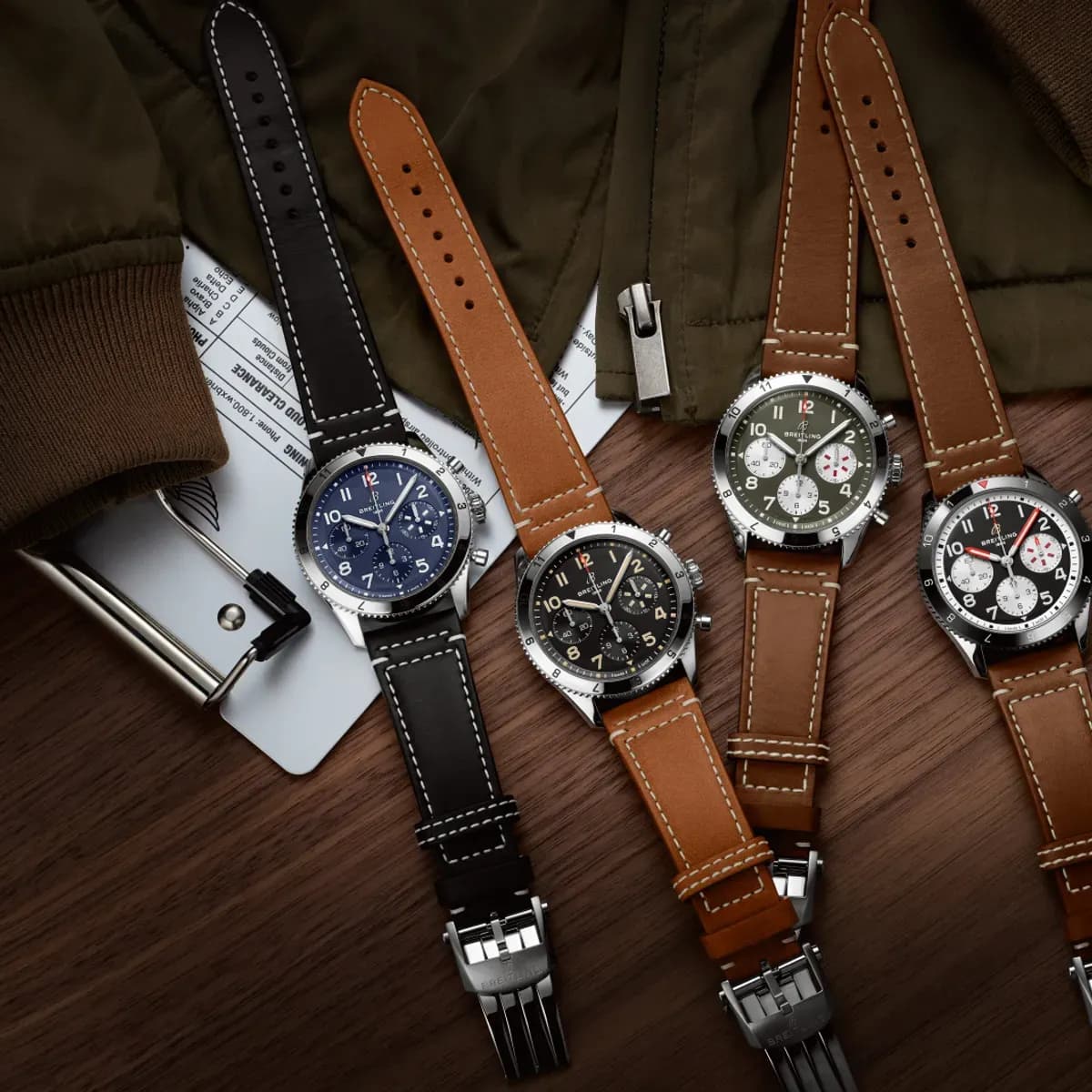
| Navitimer | The pilot's icon | 1952 circular slide rule, B01 chronographs, 41 to 46mm |
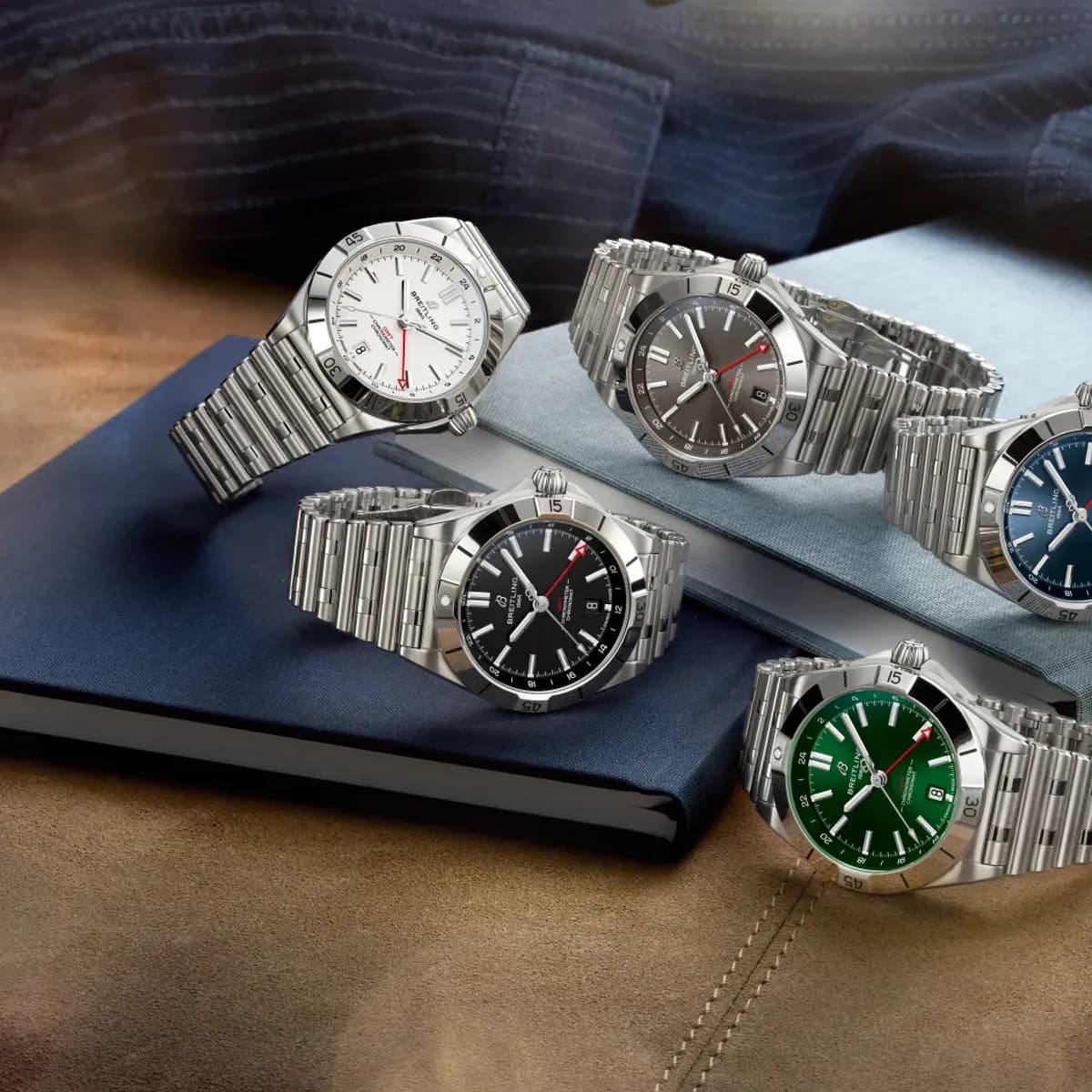
| Chronomat | The all purpose flagship | 1984 relaunch defined modern Breitling, Rouleaux bracelet, B01 power |
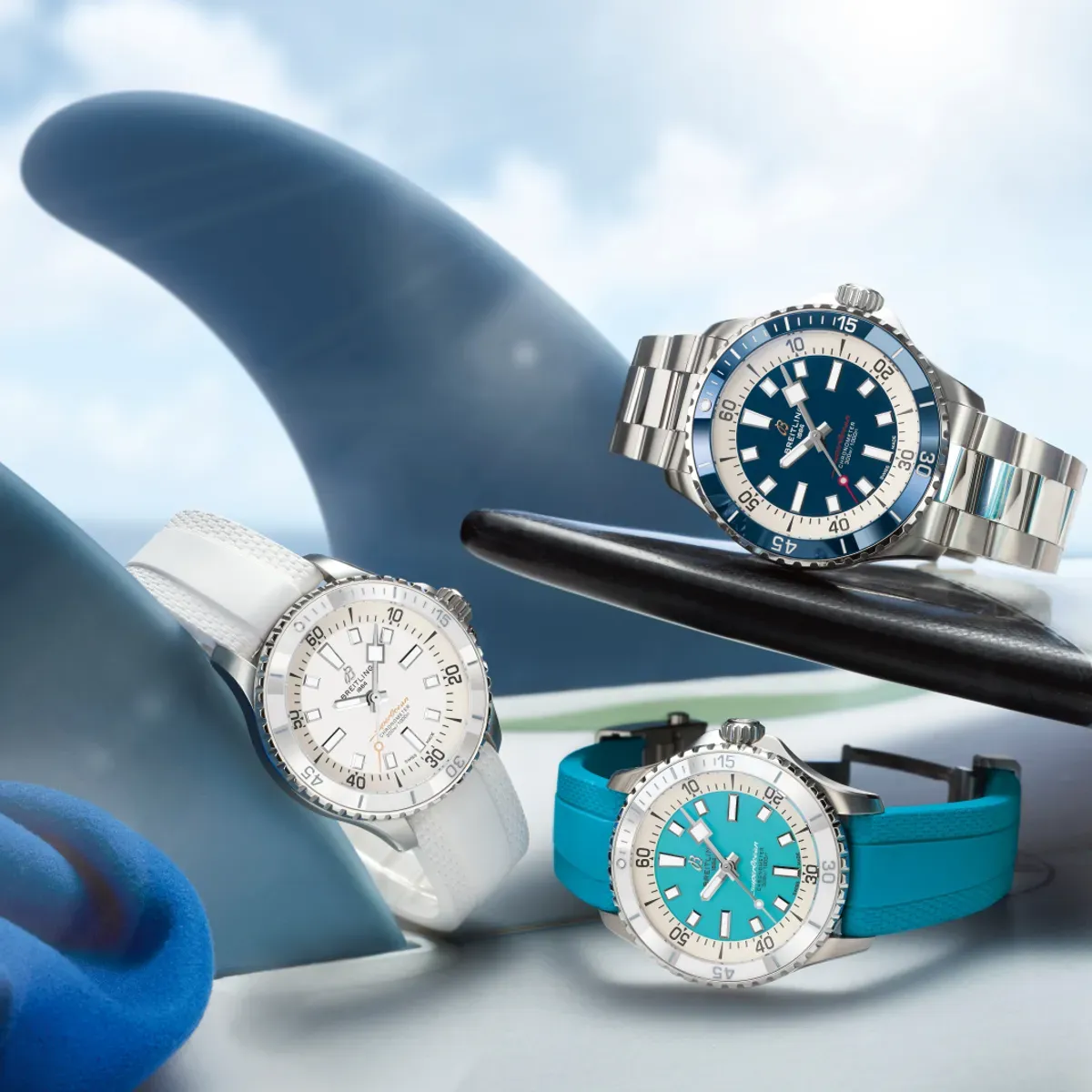
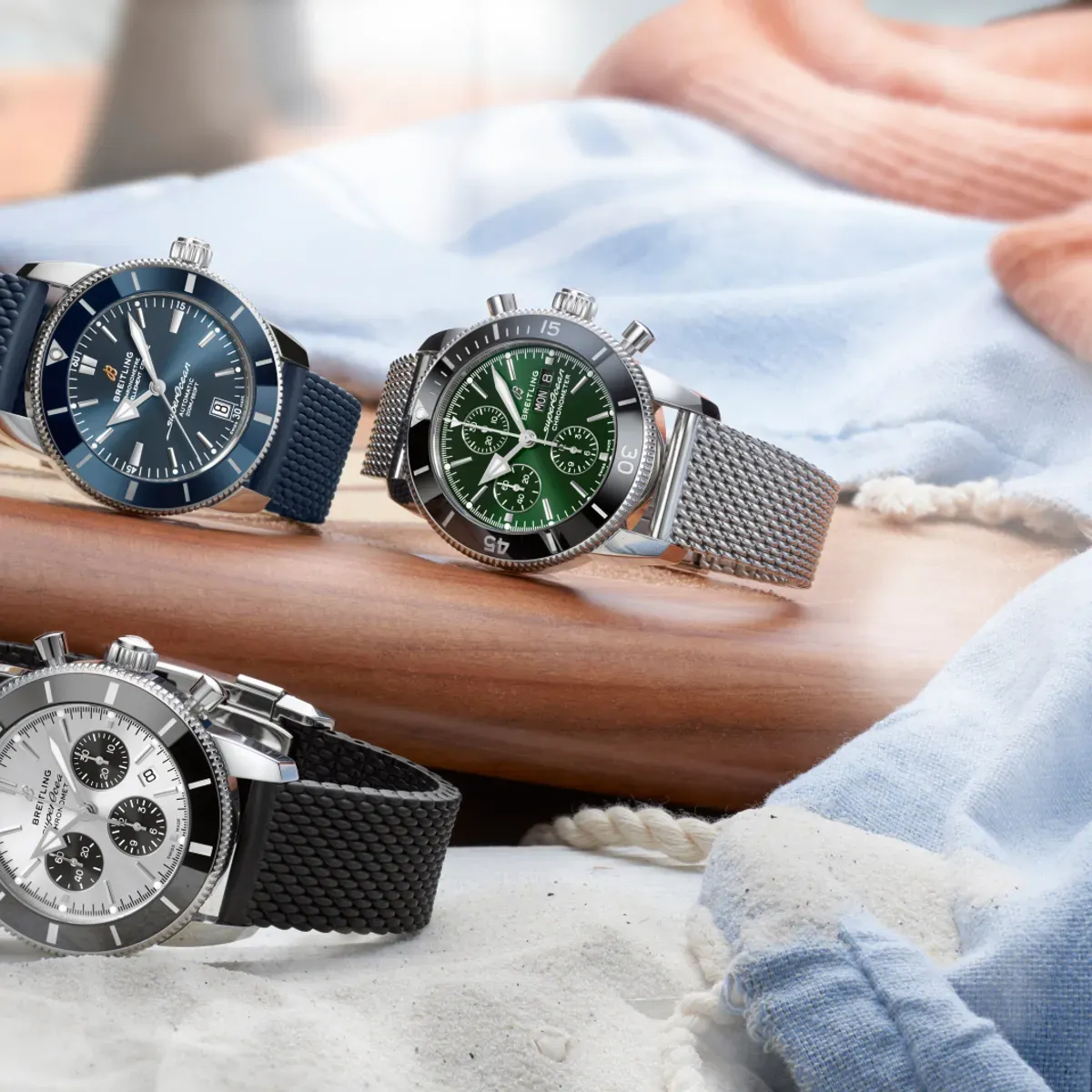
| Superocean | The modern diver | Bold colors, 300m ratings, strong recent redesign |
| Superocean Heritage | The retro diver | Inspired by the 1957 original, mesh bracelets, B20 caliber |
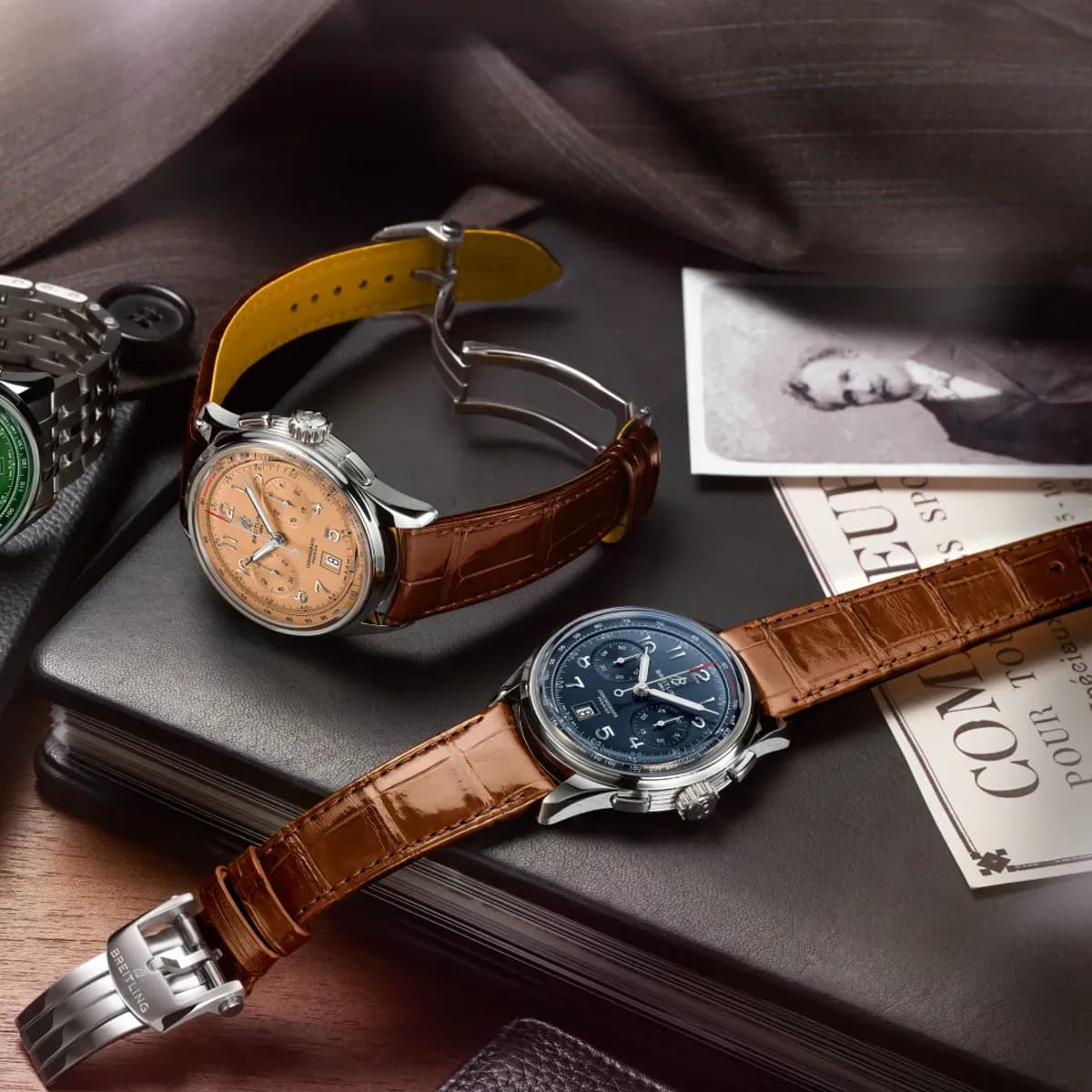
| Premier | The elegant chronograph | 1943 lineage, dressier take on the B01 |
| Avenger | The tool extreme | Oversized pilot chronographs, the last echo of the 2000s style |
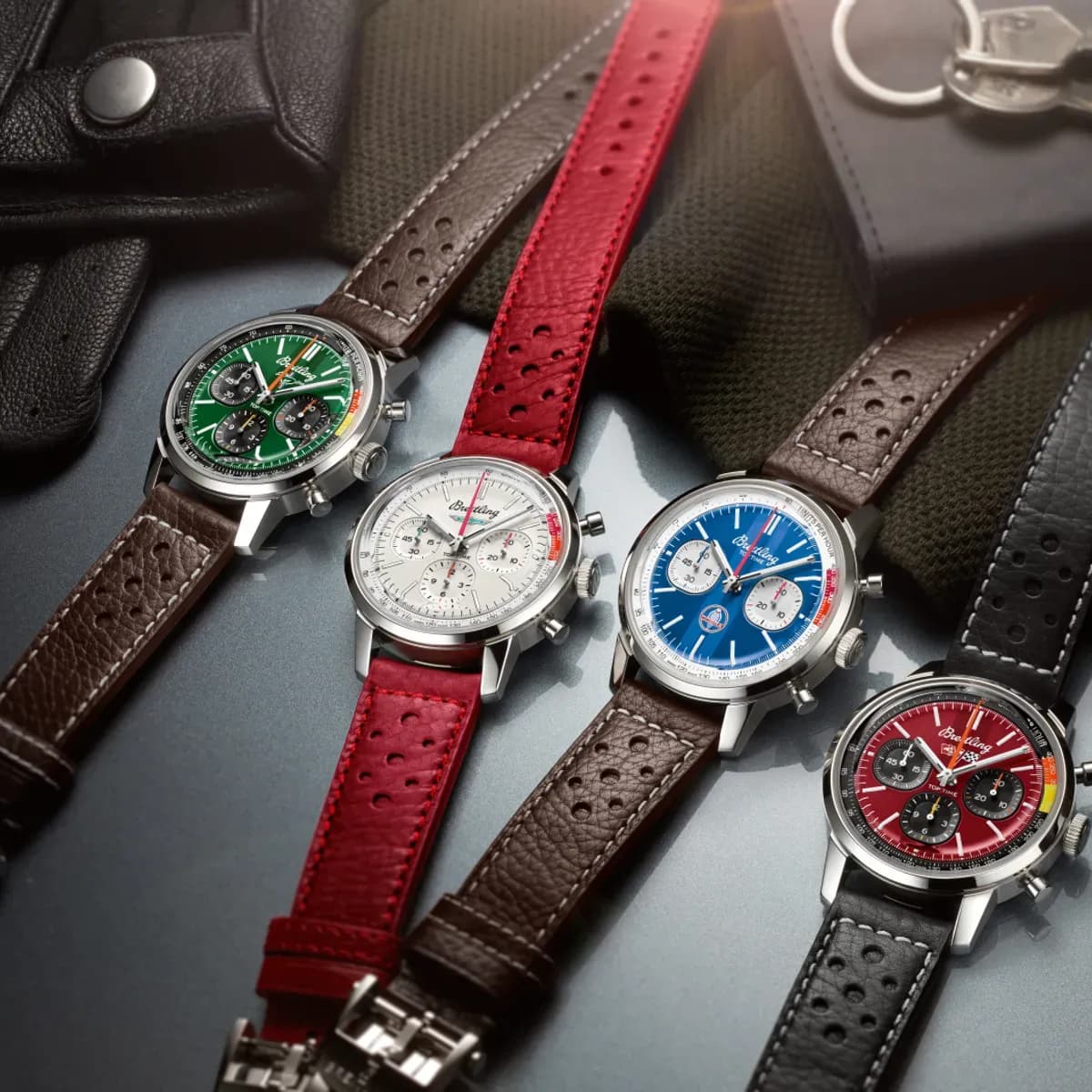
| Top Time | The playful retro line | 1960s revival, car themed editions with Triumph and Deus |
| Endurance Pro | The entry sports watch | Breitlight composite case, thermocompensated SuperQuartz |
Why it stands out
- Chronograph pedigree. The 1915 and 1934 pusher patents make Breitling a genuine author of the modern chronograph, not a borrower.
- The B01. An in house, column wheel, 70 hour chronograph caliber strong enough that competitors buy it is rare currency at this price.
- Blanket COSC certification. Every watch is a certified chronometer, a clean and verifiable quality claim.
- Distinct identity. Slide rule bezels and instrument dials are recognizable across a room, with no resemblance to Rolex or Omega.
- Quartz done seriously. SuperQuartz precision and the Emergency's beacon give the professional line substance no fashion quartz can match.
Weaknesses
- Ownership churn. Two private equity owners since 2017 raise questions about long horizon decisions and an eventual exit or listing.
- Image lag. The oversized, polished 2000s association still shadows the brand among enthusiasts who have not looked recently.
- Soft resale values. Secondary prices sit meaningfully below retail, trailing Rolex, Tudor, and Omega.
- Catalog sprawl. Eight plus collections with overlapping divers and chronographs blur the message the Kern era otherwise sharpened.
- Slide rule niche. The Navitimer's defining bezel reads as clutter to buyers outside aviation romance, capping the icon's mainstream reach.
- Price creep. B01 chronographs now push past 9,000 dollars, territory where Omega and even Rolex references compete directly.
Summary
Breitling pairs authentic chronograph history with one of the best value manufacture movements in Swiss watchmaking. The Kern repositioning has been the most successful brand turnaround of the past decade, trading bling for archive driven design. Private equity ownership and weak residuals remain the caveats. For a buyer who wants a B01 Navitimer or Chronomat to wear rather than trade, the value case is strong.
If the Universal Geneve revival lands, Breitling becomes a group in miniature and the industry's most interesting independent consolidation story. If it stalls, the core catalog still stands on movements and history that are entirely real.