A. Lange & Söhne
4models
6collections
12reviews
A. Lange & Söhne
Big 5German haute horlogerie; three-quarter plate, hand engraving, outsized date
Glashütte, Germany · est. 1845 / 1990
part of Richemont
$25,000–$200,000+
My tier · 3
A. Lange & Söhne was founded on 7 December 1845 by Ferdinand Adolph Lange in Glashütte, a poor mining town in Saxony. Lange started with 15 apprentices and deliberately encouraged them to spin off their own specialist workshops, seeding an entire German watchmaking cluster alongside colleagues like Julius Assmann and Moritz Grossmann. His stated ambition was to prove that Germany could rival Switzerland in precision watchmaking.
More about A. Lange & Söhne
History
His sons carried the firm into its golden pocket watch era. Richard Lange contributed 27 patents through scientific research, while Emil Lange won world fame with the Century Tourbillon at the 1900 Paris World Exhibition. By the early twentieth century the name stood for the finest German pocket watches money could buy.
The twentieth century nearly erased the company. The main factory building was bombed on the final night of the Second World War, and in 1948 the East German state expropriated the family and folded the firm into the state owned Glashütte combine. The name A. Lange & Söhne effectively disappeared for over four decades.
After reunification, Walter Lange, the founder's great grandson, registered Lange Uhren GmbH on 7 December 1990, exactly 145 years to the day after the original founding. Working with industry strategist Günter Blümlein, he unveiled the first four watches of the new era on 24 October 1994: the Lange 1, Saxonia, Arkade, and Tourbillon "Pour le Mérite". In 2000 the brand was acquired by Richemont, and Walter Lange remained its public face until his death in 2017 at age 93.
Walter Lange and the Refounding
The 1990 to 1994 rebirth is the defining story of modern Lange, not merely a chapter of it. Walter Lange was in his mid sixties and could have retired; instead he rebuilt a manufacture in a town his family had been forced to leave in 1948. That narrative of restitution gives the brand an emotional depth few competitors can claim.
Blümlein's strategic discipline mattered just as much. He insisted the new Lange launch only with proprietary movements, precious metal cases, and a design language rooted in Saxon pocket watches rather than Swiss convention. The result was a debut collection so coherent that the Lange 1 became an instant icon and remains essentially unchanged today.
The refounding also repositioned Glashütte itself. Lange's return anchored the revival of the entire town as a watchmaking center, which now hosts Glashütte Original, Nomos, Moritz Grossmann, and Tutima. In that sense Walter Lange repeated what Ferdinand Adolph Lange did in 1845.
Movement Architecture and Finishing
Lange is fundamentally an engineering and finishing led brand. Every movement is developed and decorated in house, and the visual signature is unmistakable: a three quarter plate in untreated German silver, blued screws, screwed gold chatons, and a hand engraved balance cock unique to each watch. No two balance cocks are identical because each engraver has a personal hand.
The most famous internal ritual is double assembly. Each movement is fully assembled, regulated, then taken completely apart, cleaned, and assembled a second time with the final polished parts. It is economically irrational and precisely the point.
The caliber count is remarkable for the output. Since 1994 the manufacture has developed well over 70 in house calibers while producing only around 5,000 to 5,500 watches per year. Landmark movements include the L901.0 of the Lange 1, the L951.1 of the Datograph, the L043.1 of the Zeitwerk, and the automatic L155.1 Datomatic of the Odysseus. The brand also uses Honeygold, a proprietary hardened gold alloy reserved for special editions.
Signature Complications
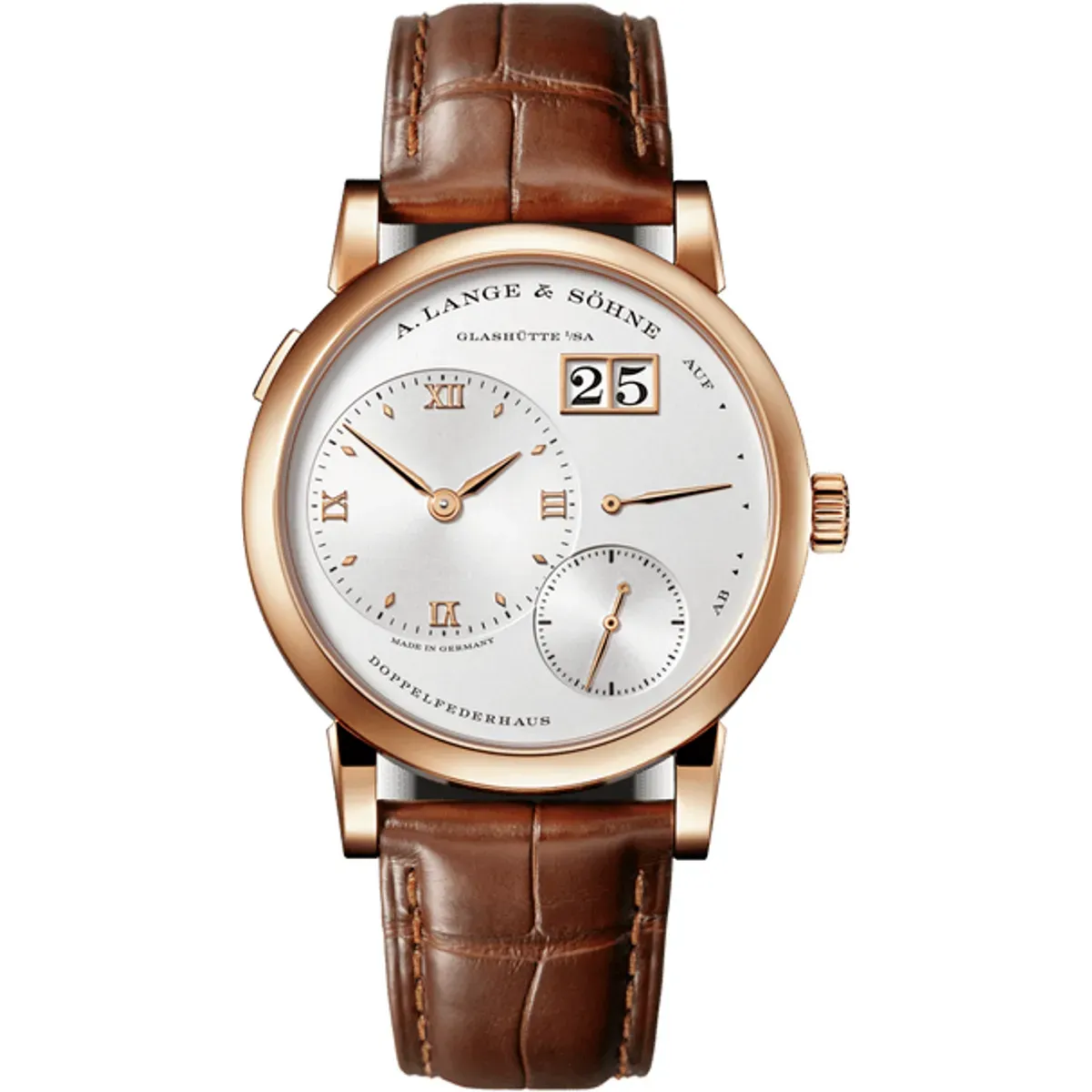
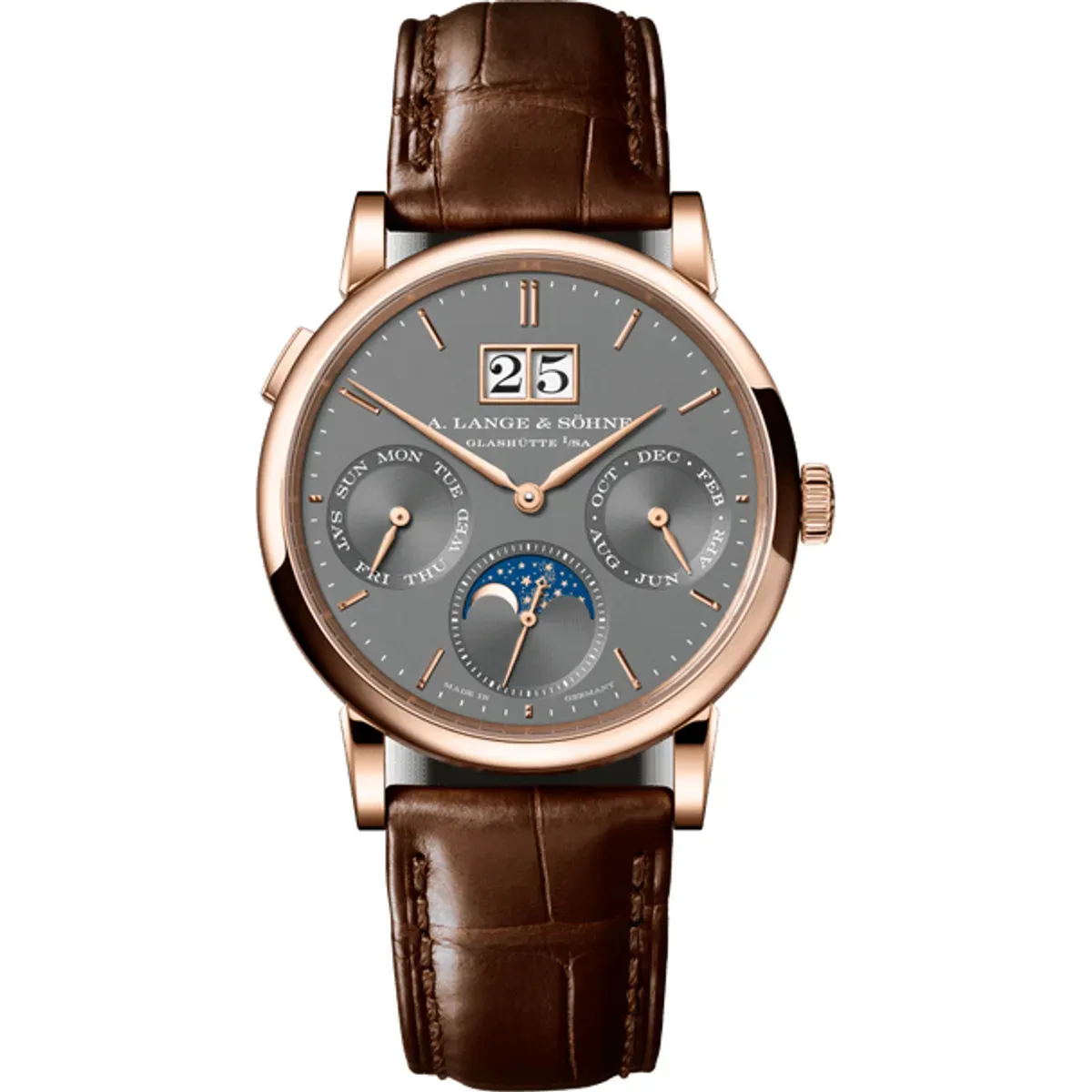
The outsized date is the brand's most visible invention. Introduced on the Lange 1 in 1994, it was inspired by the five minute digital clock of the Semper Opera in Dresden, built with input from Ferdinand Adolph Lange. It anchors the Lange 1's off center dial, which is arranged so that no displays overlap.
The Datograph, launched in 1999, redefined the modern chronograph. Its flyback movement with a precisely jumping minute counter is widely cited by watchmakers, including Philippe Dufour, as the finest series produced chronograph caliber of its era. It forced the Swiss establishment, Patek Philippe included, to answer with their own in house chronographs.
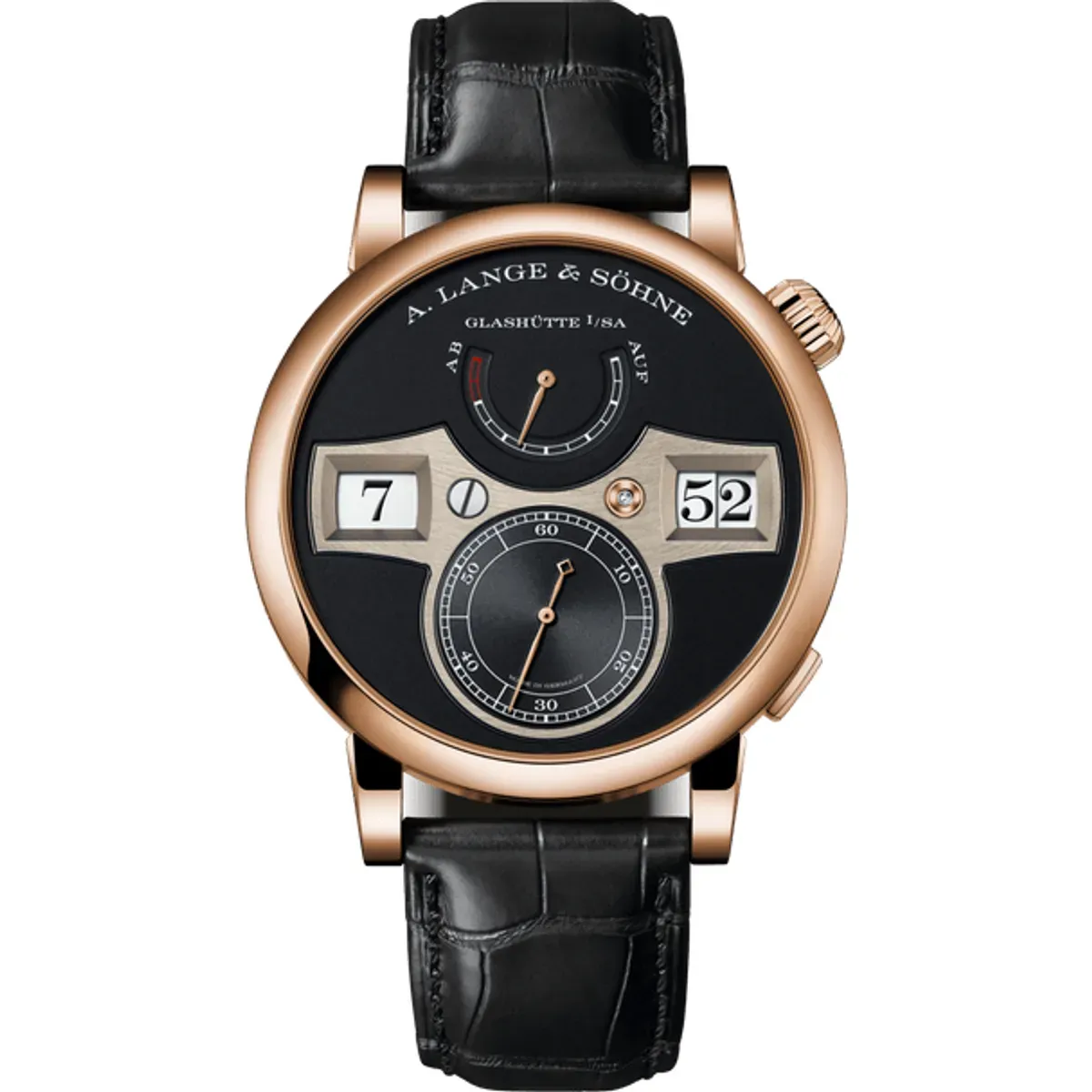
The Zeitwerk, launched in 2009, is a mechanical digital watch with jumping hours and minutes driven by a constant force escapement. Its minute repeater variant chimes the actual digits displayed, a genuinely novel complication. At the extreme end sits the Grand Complication of 2013, priced around 2 million euros and built in six pieces.
Model Lineup
| Collection | Identity | Highlights |
|---|---|---|
| Lange 1 | The flagship: off center dial built on golden ratio proportions with the outsized date | Lange 1, Lange 1 Moon Phase, Grand Lange 1, Lange 1 Time Zone, Lange 1 Perpetual Calendar, the Lumen editions |
| Saxonia | Restrained round dress watches, the purest expression of Saxon classicism | Saxonia Thin, Saxonia Moon Phase, Saxonia Annual Calendar, Langematik Perpetual, Minute Repeater Perpetual (2025) |
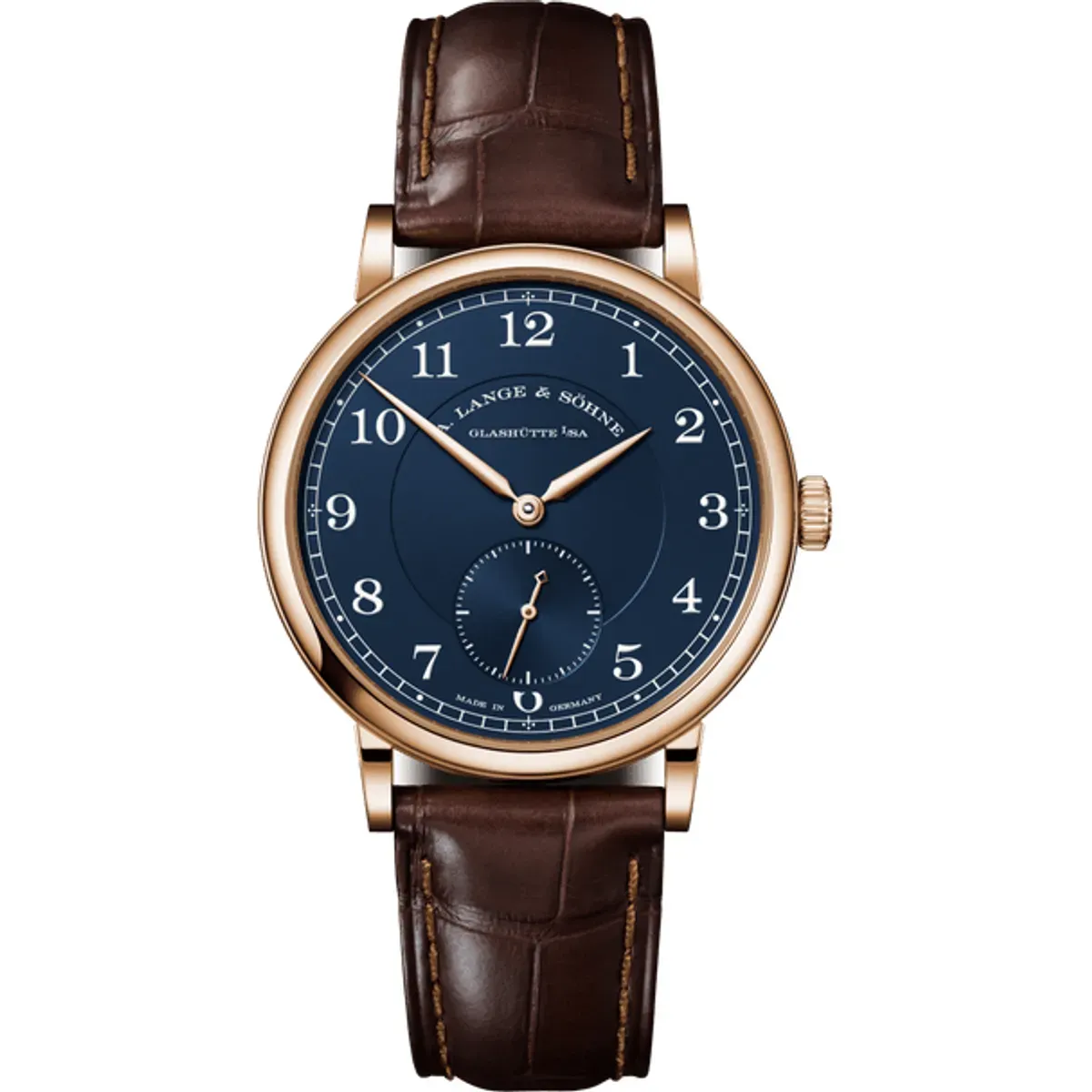
| 1815 | Pocket watch codes honoring the founder's birth year: Arabic numerals, railway minute track | 1815, 1815 Up/Down, 1815 Chronograph, 1815 Rattrapante Perpetual Calendar, Tourbillon "Pour le Mérite" lineage |
| Datograph and chronographs | The chronograph benchmark within the Saxonia family tree | Datograph Up/Down, Datograph Perpetual Tourbillon, Double Split, Triple Split |
| Zeitwerk | Mechanical digital time with jumping numerals and constant force | Zeitwerk, Zeitwerk Date, Zeitwerk Striking Time, Zeitwerk Minute Repeater |
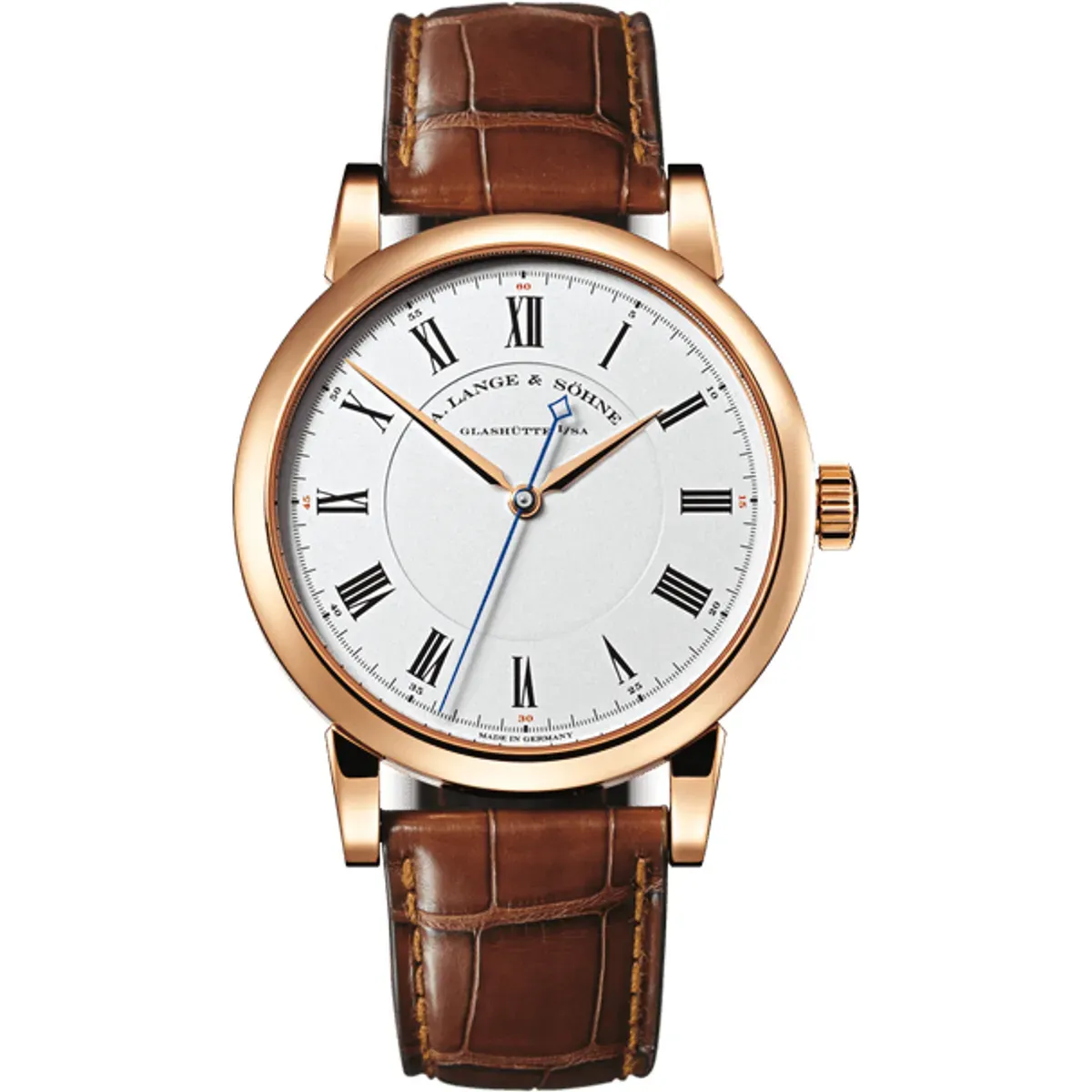
| Richard Lange | Scientific observation watches focused on precision and legibility | Richard Lange, Richard Lange Jumping Seconds, Richard Lange Perpetual Calendar "Terraluna" |
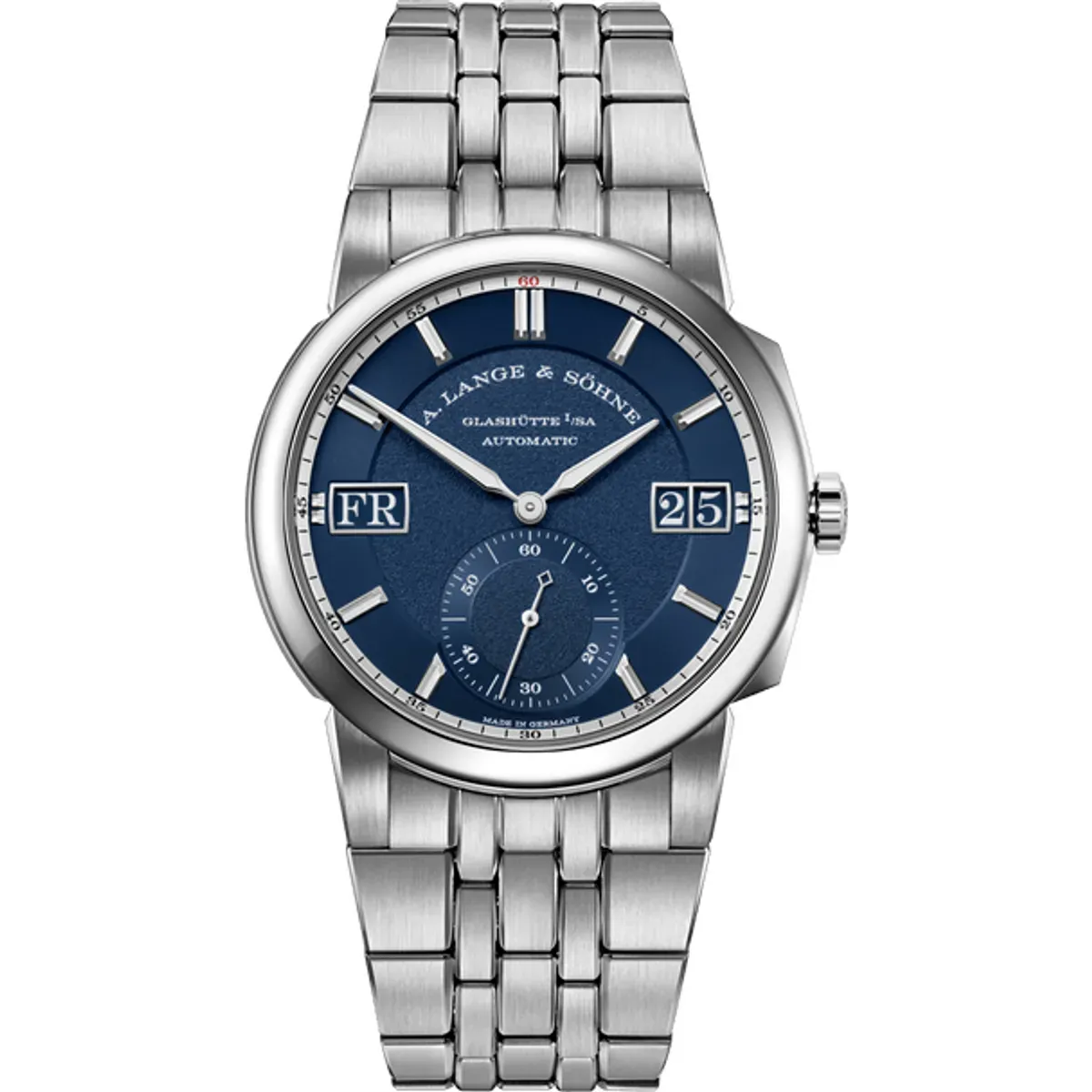
| Odysseus | The first sports collection, launched 2019, and the only steel and titanium line | Odysseus in steel, white gold, titanium, and Honeygold (2025), caliber L155.1 Datomatic |
Why It Stands Out
- Finishing at the absolute summit. Hand engraved balance cocks, black polished steel parts, and double assembly place Lange in the same finishing conversation as Patek Philippe and Vacheron, and many collectors argue it wins that comparison under a loupe.
- Genuine movement invention, not just decoration. The outsized date, the Datograph's jumping minute counter, the Triple Split rattrapante, and the Zeitwerk's digital display are original mechanisms rather than restyled classics.
- A design language owned outright. The off center Lange 1 dial and the German silver three quarter plate are instantly identifiable across a room, which very few brands outside the Big 5 achieve.
- Scarcity with substance. Roughly 5,000 to 5,500 watches per year, almost entirely in precious metals, means production is a fraction of Patek Philippe's and a rounding error next to Rolex.
- A refounding story no one else has. The 1845 founding, expropriation in 1948, and resurrection in 1990 by the founder's great grandson give the brand authentic historical weight rather than marketed heritage.
Weaknesses
- Resale values lag the top Swiss names. Outside the Datograph, steel rarities, and limited Honeygold pieces, many gold dress models trade below retail on the secondary market, a persistent gap versus Patek Philippe and Audemars Piguet.
- One sports watch is a thin hedge. The Odysseus arrived only in 2019, so Lange remains heavily exposed to the shrinking classic dress watch segment while demand keeps shifting toward steel sports pieces.
- Awareness outside the enthusiast bubble is limited. As a status signal to the general public, the brand carries far less recognition than Rolex or Patek, which matters at these prices.
- Case thickness on complicated models. Several complications, including some Lange 1 variants and the Zeitwerk, wear noticeably thick compared to the thinnest Swiss competition.
- Corporate ownership dilutes the independence story. As a Richemont maison since 2000, Lange cannot claim the family owned purity of Patek Philippe, Rolex, or Audemars Piguet, and pricing has climbed steadily under group strategy.
Market Position and Collectibility
Lange sits at the very top of the positioning pyramid, competing directly with Patek Philippe, Audemars Piguet, and Vacheron Constantin rather than with other German brands. Core pricing runs from roughly 25,000 dollars for an 1815 or Saxonia to well past 200,000 dollars for perpetual tourbillons, with grand complications far beyond that.
Collectibility is concentrated. The Datograph, early first generation Lange 1 references, Pour le Mérite tourbillons, and anything in steel or Honeygold command strong premiums and auction attention. Standard precious metal dress models are comparatively soft, which cuts both ways: weak for owners reselling, attractive for buyers entering the brand.
The collector consensus is that Lange is the connoisseur's choice within the Big 5 tier. It is bought for the movement side of the sapphire caseback, and its owners tend to be second or third watch buyers rather than first time luxury customers.
Summary
A. Lange & Söhne is the strongest argument that haute horlogerie has a second home outside Switzerland. Founded in 1845, erased by history in 1948, and reborn on 24 October 1994, it has compressed more legitimate invention into three decades than most maisons manage in a century.
Its case rests on engineering and finishing: the Datograph, the Zeitwerk, the outsized date, and movements that are demonstrably built past the point of commercial logic. The tradeoffs are equally clear, namely soft resale on core dress models, a late and scarce sports offering, and Richemont corporate gravity.
For a collector, Lange is the brand you graduate into once movement quality becomes the deciding criterion. Within the Big 5 tier it is arguably the best pure watchmaking value, if not the best store of value.